
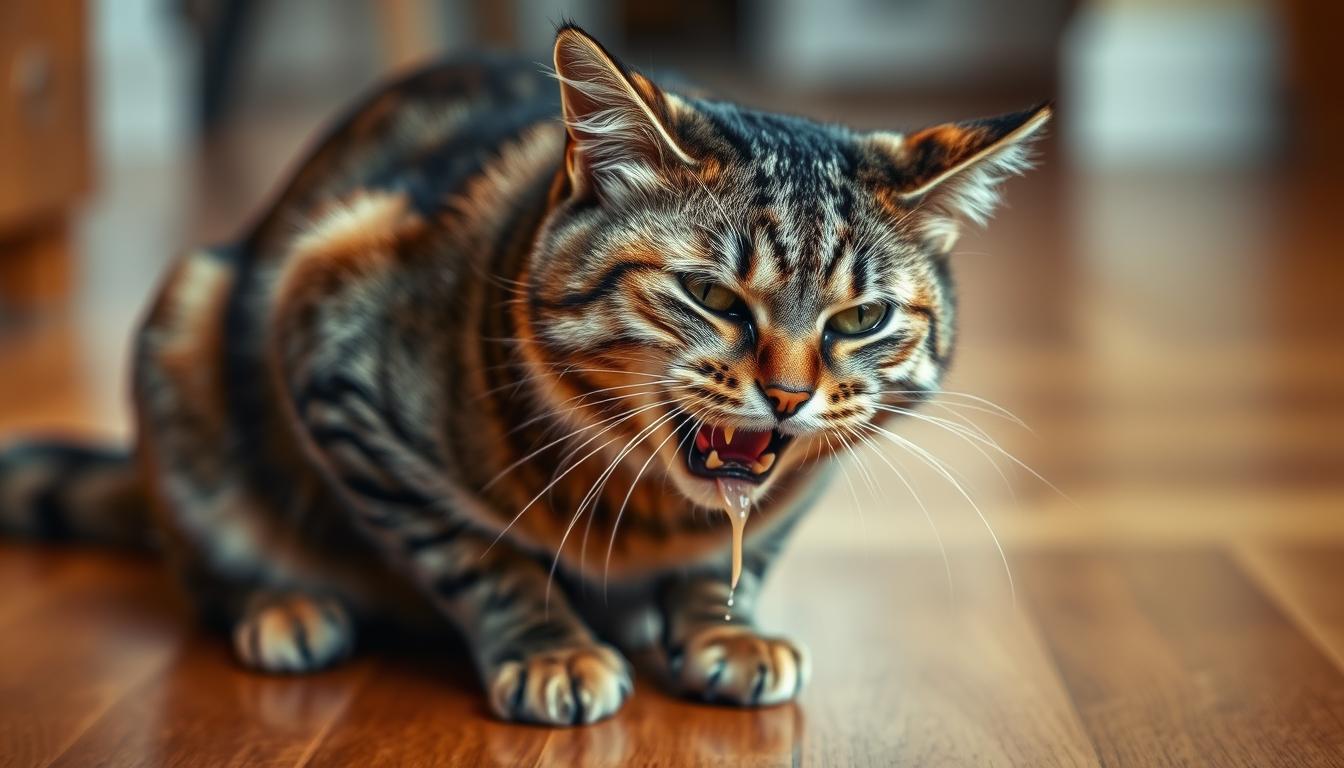
Finding a pile of food beside the cat’s bowl does not immediately reveal what went wrong. A cat may have swallowed dinner too quickly and brought it back up, or the episode may be the first visible sign of a digestive disorder, toxin exposure or intestinal obstruction.
The distinction often becomes clearer by watching what happens before the food appears. Regurgitation is usually passive. The cat lowers its head and undigested food comes out with little warning or effort. Vomiting is an active process that may include lip licking, drooling, repeated swallowing, crouching, retching and forceful abdominal contractions.
Timing matters, but it cannot diagnose the cause on its own. Food that returns within minutes of a meal often points toward rapid eating or an esophageal problem. Vomiting later in the day can be connected to food intolerance, hairballs, parasites, inflammation or disease elsewhere in the body.
A single episode in a cat that immediately returns to normal may only require close observation. Repeated episodes, blood, pain, weakness, appetite loss or an inability to keep water down call for veterinary advice.
Key Takeaways
- Undigested food appearing soon after a meal may be regurgitation rather than vomiting.
- Eating too quickly is common, but repeated regurgitation still deserves attention.
- Hairballs, abrupt food changes, parasites, intestinal inflammation, foreign objects and several chronic diseases can cause vomiting.
- Blood, severe lethargy, abdominal pain, repeated unproductive retching or suspected toxin exposure require urgent veterinary care.
- Slow feeders and smaller meals may help a healthy cat that gulps food, but home remedies should not replace a diagnosis.
First Work Out if the Cat Vomited or Regurgitated
Owners frequently use the word “vomiting” for both events, yet veterinarians treat them as different clinical problems. A description of the cat’s behavior, the appearance of the material and the time between eating and the episode can narrow the investigation considerably.
| Clue | Regurgitation | Vomiting |
|---|---|---|
| Effort | Usually passive, with little or no abdominal movement | Active retching and visible abdominal contractions |
| Timing | Often occurs during a meal or soon afterward | May occur at any time, including several hours after eating |
| Appearance | Undigested food, sometimes in a tube-shaped mass | Partially digested food, liquid, foam, bile, hair or blood |
| Signs beforehand | Often little warning | Nausea may cause drooling, lip licking, restlessness or repeated swallowing |
| Area commonly involved | Mouth, throat or esophagus | Stomach, intestines or a disease affecting another organ |
The veterinary explanation of vomiting and regurgitation in cats notes that coughing can also be mistaken for vomiting, especially when a cat crouches and stretches its neck. Recording an episode on a phone can give the veterinarian information that is difficult to reconstruct later.
Common Reasons Cats Bring Food Back Up After Eating
Rapid eating is one of the simplest explanations. Some cats swallow large pieces of dry food with minimal chewing, take in air and overfill the stomach. Competition can make the behavior worse in homes where several animals eat close together. Food commonly returns almost unchanged within minutes.
A sudden diet change can also cause trouble. Switching formulas overnight changes the fat, protein, fiber and moisture entering the digestive tract. Even a food marketed for sensitive stomachs can cause an upset if introduced too quickly.
Food allergy is possible, although vomiting alone does not prove that a particular ingredient is responsible. Cats with adverse food reactions may also develop diarrhea, frequent bowel movements, itching or excessive grooming. Randomly changing brands every few days makes the pattern harder to identify and may create additional stomach upset.

Other causes range from temporary irritation to serious disease:
- Hair swallowed during grooming
- Intestinal parasites
- Constipation
- Gastroenteritis
- Inflammatory bowel disease
- Pancreatitis
- Kidney or liver disease
- Hyperthyroidism, particularly in older cats
- Diabetes
- Medication side effects
- String, rubber bands, plastic or other swallowed objects
- Toxic plants, human medication or household chemicals
The Cornell Feline Health Center’s guidance on recurrent vomiting recommends prompt evaluation when episodes occur more than once a week or appear with weakness, lethargy, appetite loss, blood, diarrhea or changes in thirst and urination. A cat does not need to reach that frequency if the symptoms are severe.
Timing and Appearance Provide Clues, Not a Diagnosis
Food returning almost immediately can fit rapid eating or regurgitation, but an esophageal obstruction or swallowing disorder can look similar. A cat that repeatedly stretches its neck, drools, struggles to swallow or regurgitates both food and water should be examined.
Partially digested food appearing later suggests it reached the stomach. Yellow liquid is usually bile, and white foam may contain stomach fluid and mucus.
Owners can read more about the possible reasons a cat vomits yellow bile or foam, but color alone cannot establish a cause.
A small streak of fresh red blood can follow irritation from forceful retching, yet it should still be reported to a veterinarian. Dark brown material resembling coffee grounds may represent digested blood and requires urgent attention. A foul or fecal odor, abdominal swelling or repeated vomiting without producing anything can indicate an obstruction.
| What the Owner Sees | Possible Explanation | Recommended Response |
|---|---|---|
| Undigested food within minutes | Rapid eating or regurgitation | Observe the cat closely and contact a veterinarian if it repeats |
| Food, liquid or bile with active retching | Stomach or intestinal irritation | Record the timing, food and other symptoms |
| Repeated vomiting with no food produced | Nausea, obstruction or another urgent problem | Seek veterinary care promptly |
| Fresh or digested blood | Irritation, ulcer, foreign object or bleeding | Call a veterinarian immediately |
| Vomiting plus appetite or weight loss | Chronic gastrointestinal or systemic disease | Arrange an examination and diagnostic testing |
Photographs of the material can be useful, especially when the cat has cleaned the area before the appointment.
A guide to the appearance of different types of cat vomit can help owners describe what they saw, although a photograph cannot replace a physical examination.
Hairballs Are Common, but Frequent Retching Is Not
Cats swallow loose fur whenever they groom. Most hair moves through the digestive system and leaves in the stool. Hair remaining in the stomach can collect into a wet, dense mass that is eventually vomited. The result is often cylindrical because it passed through the esophagus, despite the familiar term “hairball.”
Long-haired cats, heavy shedders and cats that groom excessively may have more trouble. Repeated licking can also point to fleas, allergies, pain, stress or skin disease. Owners who notice bald areas or damaged skin should look beyond the hairball itself and consider the reason for the cat’s excessive licking or biting.
According to Cornell’s advice on hairballs and intestinal obstruction, repeated unproductive retching, lethargy or refusal to eat for a day or two needs veterinary attention. Owners should not assume that every coughing or retching episode is an unsuccessful attempt to produce a hairball.
Regular brushing removes loose hair before the cat swallows it. Hairball gels and laxative products should only be used after discussing them with a veterinarian, particularly when vomiting is already present.
Foreign Objects and Toxins Require Faster Action
String, yarn, thread, dental floss, ribbon and elastic hair ties are particularly dangerous. One end can become trapped under the tongue or in the stomach as the intestines continue pulling the rest of the material forward. The resulting tension can bunch or injure the bowel.
Never pull string from a cat’s mouth or anus. Pulling can cut the intestinal wall. Keep the cat from chewing the visible material and contact a veterinary clinic immediately.
Lilies, pain relievers, rodent poison, cleaning products, essential oils and some flea products intended for dogs can also produce vomiting. Cornell’s list of common household hazards for cats explains that suspected poisoning requires an immediate call to a veterinarian or animal poison service.
Do not attempt to make a cat vomit with hydrogen peroxide, salt, mustard or another home preparation. The Merck Veterinary Manual’s guidance on inducing and controlling vomiting specifically warns that hydrogen peroxide can cause severe inflammation and bleeding in the feline esophagus and stomach.
Emergency warning: Contact a veterinarian immediately if poisoning is possible, the cat swallowed string or another object, the abdomen is painful or swollen, breathing is difficult, the cat collapses or repeated vomiting prevents it from keeping water down.
What a Veterinarian May Check
The first useful information often comes from the owner: when the problem began, how often it happens, what the cat ate, recent diet changes, access to plants or small objects, medication use, stool changes and any weight or appetite loss. A photograph or video can help distinguish vomiting from regurgitation or coughing.
During the examination, the veterinarian may check hydration, temperature, weight, the mouth and throat, abdominal pain and possible masses. Tests are selected according to the cat’s age, history and physical findings rather than ordered as a fixed package.
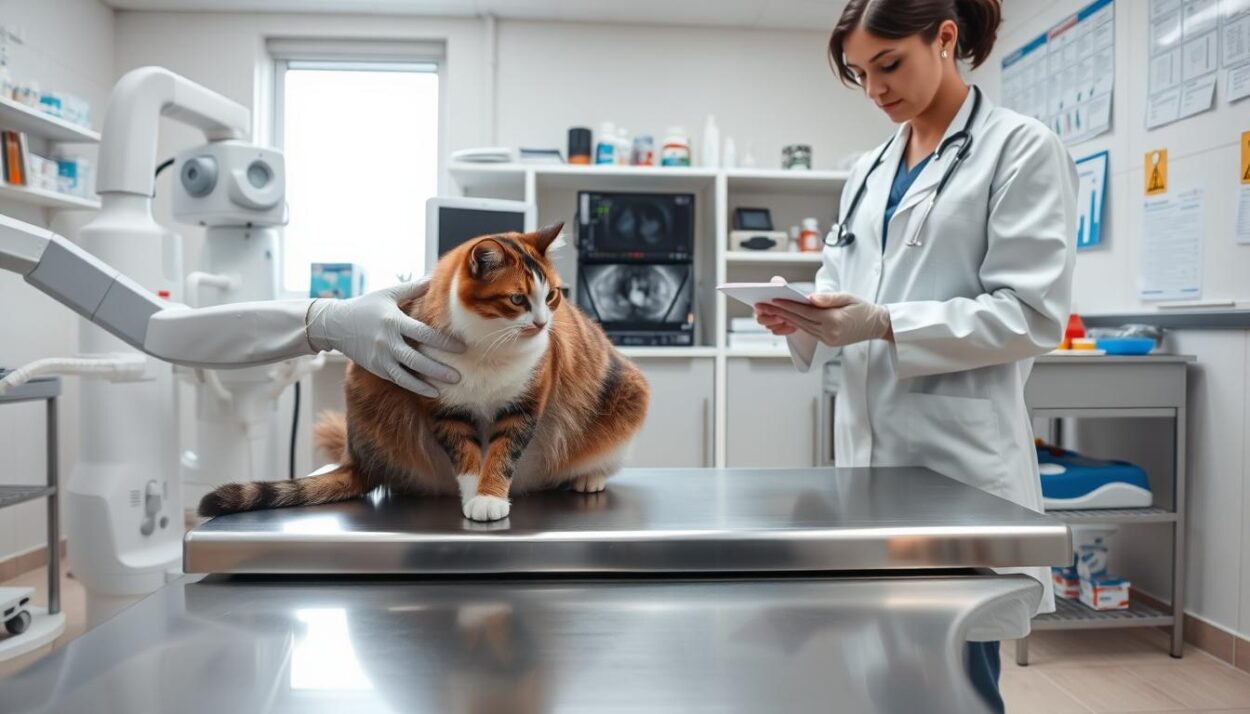
| Test or Procedure | What It Can Help Assess |
|---|---|
| Complete blood count | Anemia, infection and inflammatory changes |
| Blood chemistry | Kidney and liver function, glucose, electrolytes and dehydration |
| Urinalysis | Kidney function, hydration, diabetes and urinary disease |
| Thyroid testing | Hyperthyroidism, especially in middle-aged and older cats |
| Fecal examination | Parasites and other intestinal problems |
| X-rays | Some foreign objects, gas patterns, masses and organ enlargement |
| Ultrasound | The stomach, intestines, pancreas, liver and other abdominal organs |
| Endoscopy or biopsy | Foreign material, structural disease and microscopic intestinal changes |
Gastrointestinal parasites can cause vomiting, diarrhea, appetite changes, dehydration and poor coat condition. Cornell’s information on intestinal parasites in cats also explains why routine veterinary care and fecal testing remain important, even for animals that spend most of their time indoors.
Safe Steps at Home After One Mild Episode
If a cat vomits once and then behaves normally, note the time, photograph the material and watch for another episode. Check that the cat is alert, walking normally, interested in its surroundings and able to drink without vomiting again.
Do not automatically withhold food for an entire day. Cats that stop eating can develop serious complications, and the risk is greater in overweight cats, kittens, older cats and animals with diabetes or another medical condition. Ask a veterinarian how soon to offer food if nausea continues.
A healthy cat that repeatedly gulps meals may benefit from measured portions divided into several feedings. A slow bowl, food puzzle or muffin tray can spread the food out and make swallowing more deliberate. In a multi-cat home, separate feeding stations reduce competition and allow owners to see how much each cat eats.
The American Association of Feline Practitioners’ feeding guidance recommends multiple small meals and feeding cats separately when competition or stress is present.
| Home Measure | When It May Help | Important Limitation |
|---|---|---|
| Smaller measured meals | A cat that eats a large portion rapidly | Does not treat an obstruction or underlying illness |
| Slow feeder or food puzzle | Gulping food without other symptoms | Stop using it if the cat becomes distressed or refuses food |
| Separate feeding areas | Competition in a multi-cat household | Each cat’s intake still needs monitoring |
| Regular brushing | Heavy shedding or recurrent hairballs | Frequent vomiting still requires veterinary assessment |
| Gradual food transition | A planned change to a new diet | Do not keep changing foods during active illness without advice |
Never give human nausea medicine, antacids, pain relievers, mineral oil or laxatives without veterinary instructions. Products that are safe for people or dogs can be toxic to cats.
Diet Trials and Treatment Depend on the Cause
Treatment may be as simple as changing the feeding routine, but persistent vomiting should not be managed by cycling through commercial foods and hoping that one works. A veterinarian may prescribe fluids for dehydration, medication for nausea, parasite treatment or therapy for a diagnosed chronic disease. An obstruction can require endoscopic removal or surgery.
Suspected food allergy is generally investigated with a controlled elimination diet. The cat receives a veterinary hydrolyzed-protein diet or a carefully chosen novel-protein diet for at least eight weeks. Treats, flavored medications, table food and access to another pet’s bowl can invalidate the trial.
VCA’s explanation of food allergies and elimination diets for cats notes that blood and saliva tests are not reliable substitutes for a properly managed food trial. Improvement during the diet is followed by a supervised challenge with the previous food when confirmation is needed.
Prescription anti-nausea drugs such as maropitant may be useful in selected cases, but stopping the vomiting does not identify its cause. A cat with a foreign object can temporarily appear better after symptom control even though the obstruction remains.
Prevention and Long-Term Monitoring
A feeding log is often more useful than memory. Record the brand and flavor of food, portion size, meal time, vomiting time, stool quality, medications and any unusual behavior. Weekly weights can reveal gradual loss that is difficult to see beneath a thick coat.
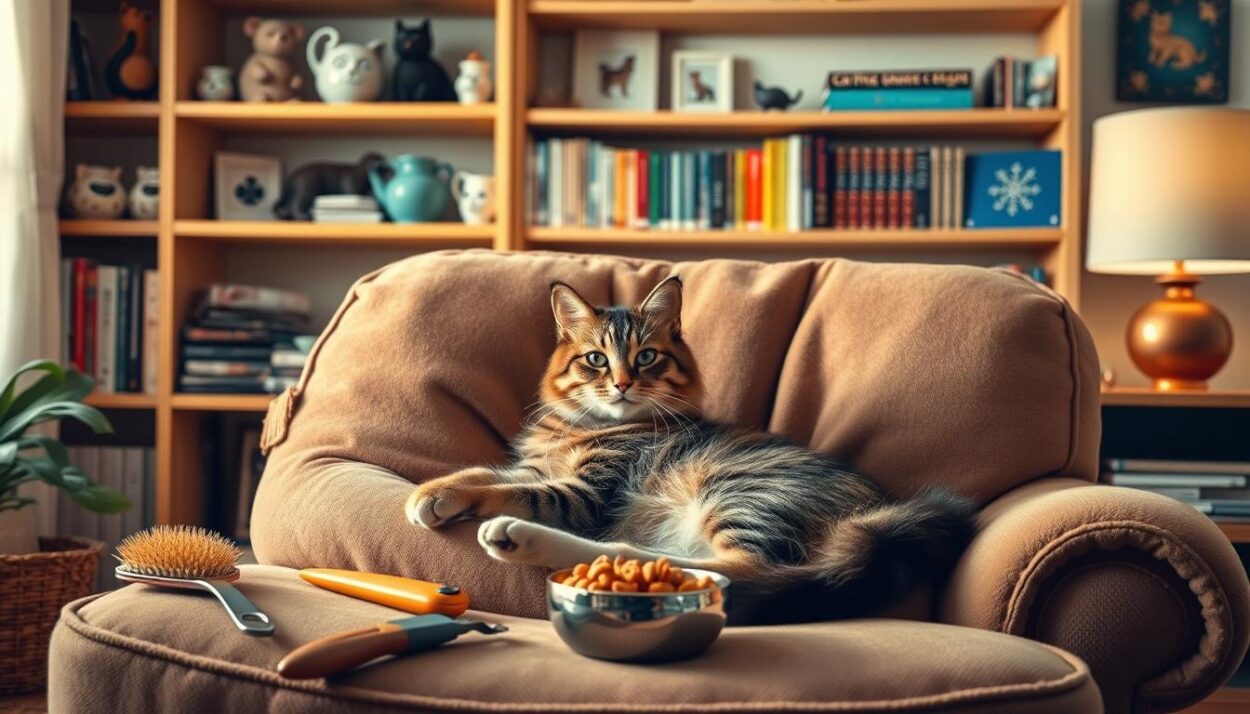
Practical prevention includes:
- Measuring food rather than repeatedly topping up the bowl
- Dividing the daily amount into several smaller meals
- Separating cats during meals if one animal guards or steals food
- Introducing a new diet gradually when the cat is otherwise healthy
- Brushing regularly, especially during seasonal shedding
- Keeping string, ribbon, rubber bands, hair ties and dental floss out of reach
- Removing toxic plants and storing medication in closed cabinets
- Scheduling veterinary examinations suited to the cat’s age and health
A cat that vomits on a recognizable schedule should still be assessed. Repeated episodes are not made harmless by becoming familiar, and chronic vomiting should not be accepted as a normal feature of feline life.
Conclusion
Food on the floor shortly after dinner may mean that a cat ate too quickly, but the owner should first look at how the episode happened. Passive return of undigested food points toward regurgitation. Retching, abdominal effort, bile or partially digested material indicates vomiting and opens a broader list of possible causes.
One isolated episode in a bright, comfortable cat can be observed closely. A recurring pattern, appetite or weight loss, blood, pain, weakness, suspected poisoning or an inability to hold down water warrants veterinary care. Photos, videos and a simple feeding log can help the veterinarian reach an answer faster and avoid a series of guesswork-driven diet changes.
FAQ
Why does my cat bring up undigested food immediately after eating?
Rapid eating is a common explanation, especially when food returns passively within minutes. Repeated episodes can also result from an esophageal disorder, swallowing difficulty or obstruction. Record a video if possible and arrange a veterinary examination if the problem continues.
Should I take food away after my cat vomits?
Do not impose a prolonged fast without veterinary advice. Cats can become seriously ill when they stop eating, with overweight cats facing particular risk. Call a veterinarian if nausea continues, the cat refuses the next meal or another medical condition is present.
Can a slow feeder prevent vomiting?
A slow feeder may help a healthy cat that gulps food and regurgitates immediately afterward. Smaller portions and separate feeding areas can also reduce competition. Continued vomiting despite slower eating suggests that the cause is not simply meal speed.
Is yellow bile an emergency?
One small episode of yellow liquid in a cat that returns to normal may not be an emergency. Repeated bile vomiting, appetite loss, pain, diarrhea, weakness or an inability to keep water down requires veterinary advice.
What should I do if string is hanging from my cat’s mouth or anus?
Do not pull it. String can become anchored inside the digestive tract, and pulling may damage or cut the intestines. Prevent the cat from chewing the visible material and seek emergency veterinary care.
Can I give my cat hydrogen peroxide to cause vomiting?
No. Hydrogen peroxide can severely injure a cat’s esophagus and stomach. Do not use salt, mustard, oil or human medication either. Contact a veterinarian or animal poison service immediately if the cat may have swallowed something toxic.
How do veterinarians test for a food allergy?
The reliable method is a supervised elimination diet using an appropriate hydrolyzed or novel protein food. The trial generally lasts at least eight weeks, and the cat must receive no other foods, treats or flavored supplements during that period.
Are frequent hairballs normal?
An occasional hairball can occur in a healthy cat, particularly during heavy shedding. Frequent hairballs, repeated unproductive retching, appetite loss, lethargy or constipation can signal a grooming, motility or intestinal problem and should be discussed with a veterinarian.