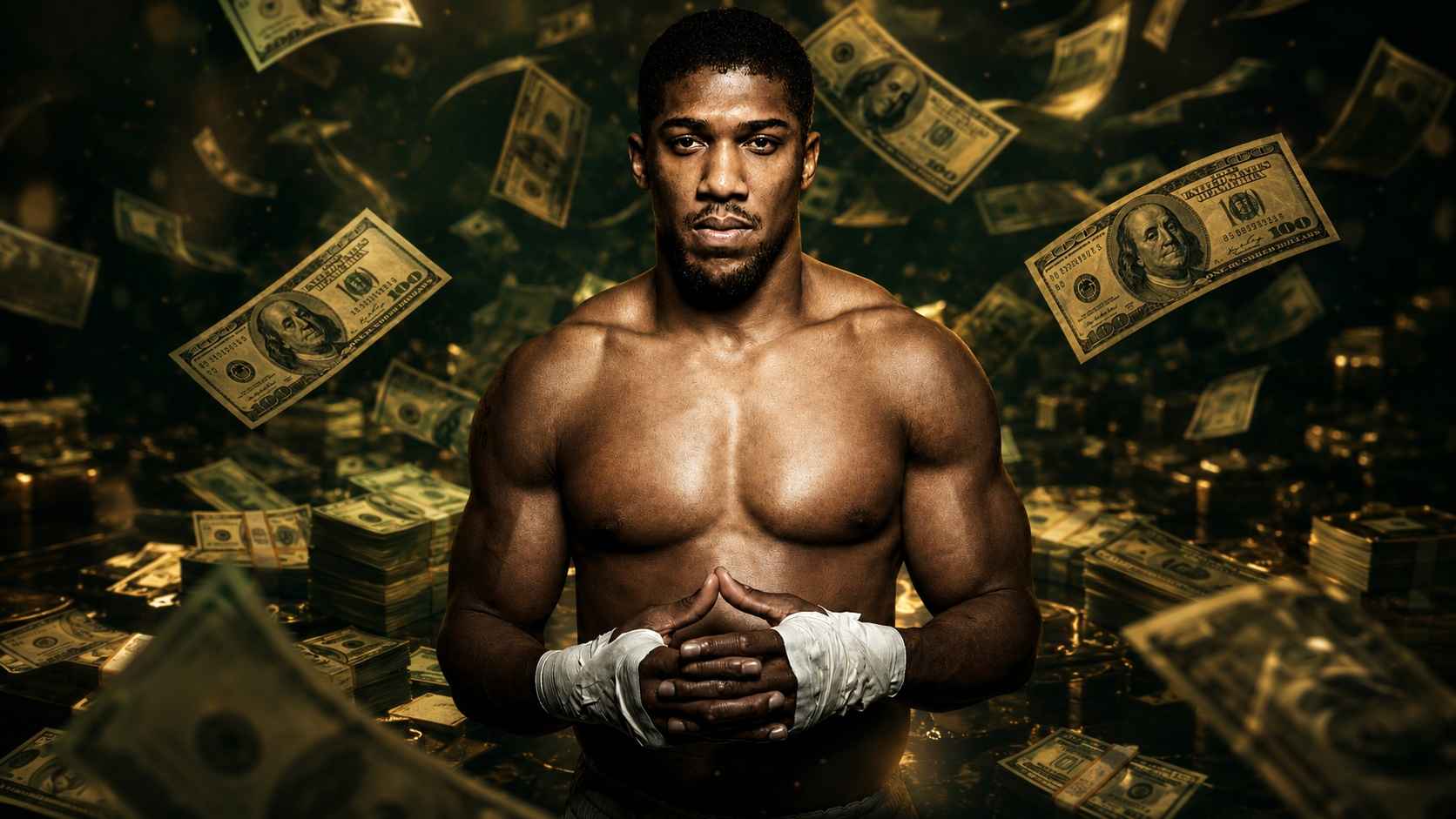
Anthony Joshua net worth is estimated at £240 million in 2026, equal to around $320 million at recent exchange rates. That places the British heavyweight among the richest active fighters in boxing.
When I look at Joshua’s financial story, the most impressive part is not a watch, mansion or sponsored private jet. It is the way he began building a company around himself before he became world champion. Plenty of fighters make fortunes. But only a few of them keep enough of that money to remain rich after the final bell.
- Estimated net worth in 2026: £240 million, or roughly $320 million
- Age: 36
- Main source of wealth: Boxing purses
- Business company: Sparta Promotions Ltd
- Management and investment operation: 258 Group
- Major investment: Minority participation in the Alpine Formula One investor group
- Next scheduled fight: Kristian Prenga on July 25, 2026
- Major fight ahead: A signed deal to face Tyson Fury later in 2026
Anthony Joshua Is Worth an Estimated $320 million in 2026
I check the msot recent estimates, and found that his net worth is around $320 million. The Times Rich List placed him eighth among Britain’s wealthiest sports figures.
Joshua also ranked ahead of Tyson Fury, whose fortune was estimated at £162 million. That difference is striking because Fury has participated in several enormous international fights of his own.
@dramadailynew How Rich Is Anthony Joshua?His fight with Jake Paul is purely for the money.#AnthonyJoshua#JakePaul#boxing#fyp#usa ♬ original sound – DramaDaily
The Fortune Was Built Under Stadium Lights
Joshua did not become this wealthy by collecting routine boxing purses in small arenas. His rise coincided with a period when British heavyweight boxing could fill football stadiums and attract television audiences across several continents.
Winning Olympic gold in London in 2012 gave him an immediate commercial advantage. He turned professional the following year, built a long knockout streak and became a world champion in 2016.
The defining financial breakthrough came against Wladimir Klitschko at Wembley Stadium in 2017. More than 90,000 spectators watched Joshua climb off the canvas and stop the former champion in one of the best heavyweight fights of the modern era.
That night changed his market value. Joshua was no longer simply a champion. He had become a stadium attraction capable of selling tickets, subscriptions, sponsorships and international broadcast rights.
Lucrative fights followed against Joseph Parker, Alexander Povetkin, Andy Ruiz Jr., Oleksandr Usyk, Francis Ngannou and Daniel Dubois. Published purse estimates vary wildly because guaranteed payments rarely tell the full story. Fighters at Joshua’s level can also receive shares of ticket sales, broadcast revenue, pay-per-view income and commercial bonuses.
Anyone who follows how combat-sports stars earn money outside their official purses will recognize the problem. The announced check is often only one piece of the deal.
The Andy Ruiz Rematch Became a Financial Turning Point
Joshua’s first fight against Andy Ruiz Jr. produced one of boxing’s great shocks. Ruiz stopped him at Madison Square Garden in 2019 and took his heavyweight titles.
Six months later, Joshua reclaimed the belts in Saudi Arabia. The rematch reportedly produced one of the largest paydays of his career.
The financial lesson mattered almost as much as the result. Joshua proved that a defeat did not destroy his value. The loss created a redemption story, and the rematch became an even larger global event.
That pattern has followed him throughout his career. Losses to Usyk and Dubois damaged his championship position, but they did not remove his ability to headline a major show. Fans still buy into the possibility of triumph, disaster or another dramatic rebuilding job.
In prizefighting, uncertainty sells. Joshua has supplied plenty of it.
The Jake Paul Fight Delivered Another Enormous Check
Joshua stopped Jake Paul in the sixth round of their December 2025 fight in Miami. The event put a former unified heavyweight champion opposite one of the internet’s most successful self-promoters.
Reports about the purse ranged from ambitious to ridiculous. Joshua said it was not the biggest payday of his career. Promoter Eddie Hearn was more specific when Forbes asked if AJ would earn more than $30 million. Hearn confirmed that he would, describing it as close to a career-high payment without revealing the final number.
The matchup made financial sense even if boxing purists hated it. Paul brought a huge online audience, Netflix supplied global distribution and Joshua supplied the sporting credibility.
AJ did not need the fight to improve his boxing legacy. He took it because prizefighters are paid to attract attention, and that event generated an extraordinary amount of it.
Sparta Promotions Is the Hard Evidence Behind the Estimate
Celebrity net-worth stories often treat career earnings as personal wealth. That calculation is badly misleading.
A fighter who grosses £50 million does not deposit £50 million into a personal savings account. Promoters, managers, trainers, medical teams, lawyers and tax authorities all take their respective shares. Training camps can also cost hundreds of thousands of pounds.
Joshua has one advantage that makes his finances easier to assess. His business structure leaves a public paper trail.
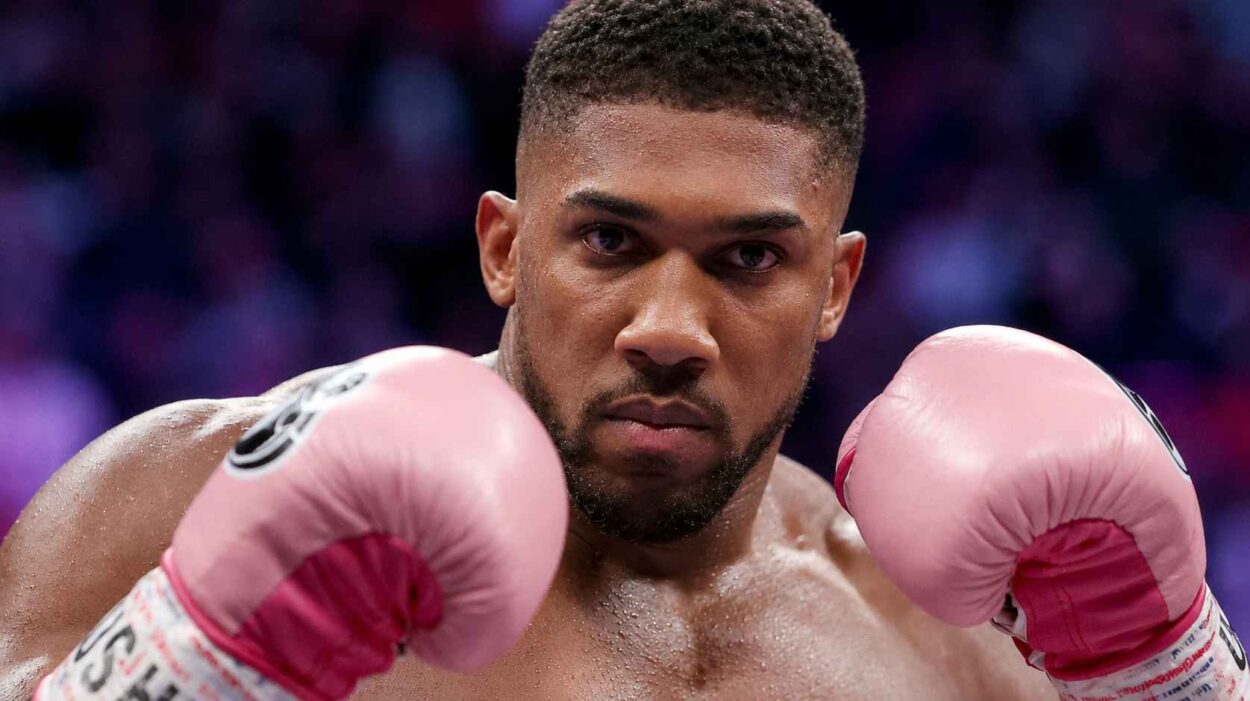
Sparta Promotions Ltd is an active British company incorporated in 2012, before Joshua entered the professional ranks. Companies House identifies Anthony Oluwafemi Olaseni Joshua as the person controlling at least 75% of its shares and voting rights.
That early start was smart. Fight income, commercial activity and associated business costs could be managed through an established corporate structure instead of being handled as a series of isolated checks.
Sparta’s existence does not prove that every company asset belongs directly to Joshua. Company wealth and personal wealth are legally different. It does show that there is a substantial operation behind the public image.
AJ Became a Brand Long Before His Career Was Finished
Joshua has worked with companies including Under Armour, Hugo Boss, Jaguar Land Rover, Audemars Piguet, DAZN, EA Sports, Meta and Beats by Dre.
The appeal is easy to understand. He has the physique of an action-film star, an Olympic gold medal, worldwide recognition and a public manner that is usually more controlled than boxing’s loudest personalities.
Brands did not need him to insult an opponent every week. Joshua could appear in a fashion campaign, sportswear advertisement or luxury promotion without becoming a reputational headache.
His commercial operation remains active in 2026. Joshua and 258 Group agreed to an exclusive representation arrangement with CAA Sports covering endorsements, publishing and speaking opportunities. Sports Business Journal reported the new partnership as Joshua prepared for the next stage of his career.
That agreement tells me he is not planning to disappear when boxing ends. His team is preparing to sell Anthony Joshua the public figure after Anthony Joshua the fighter has left the ring.
A Formula One Investment Put Him in Serious Company
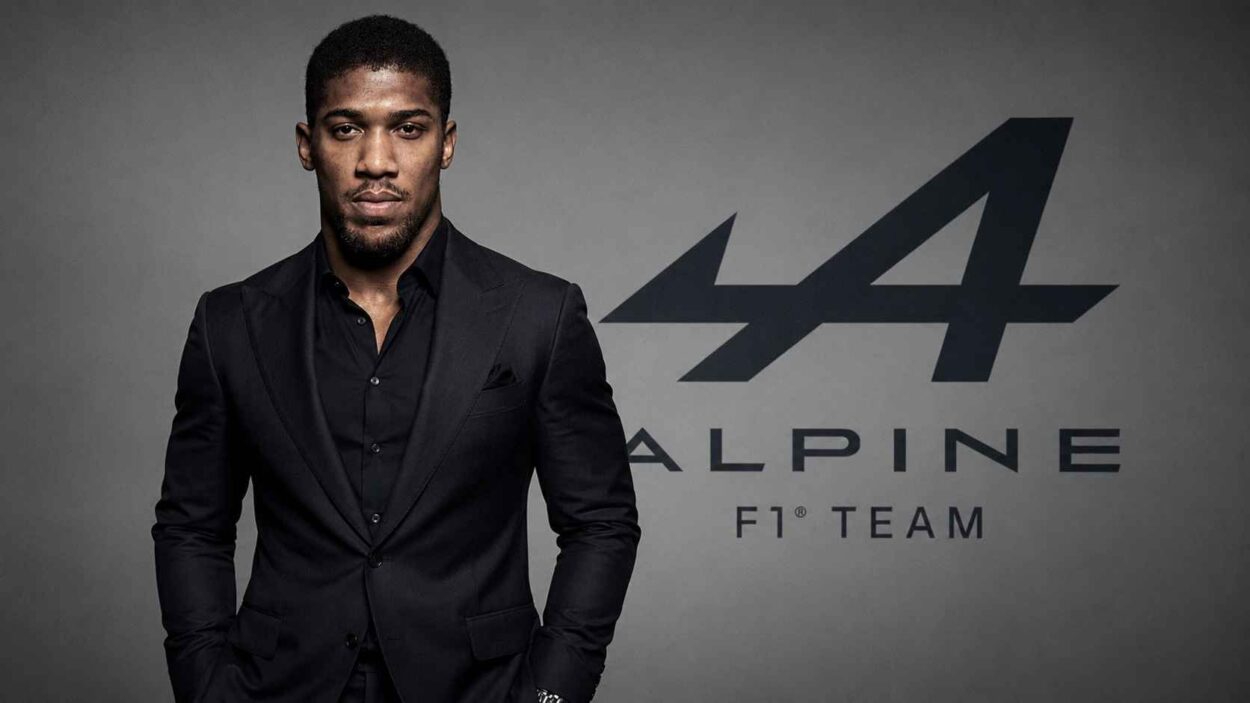
Joshua is also part of the investor group connected to the Alpine Formula One team.
In 2023, Otro Capital brought Joshua into a group that included Patrick Mahomes, Travis Kelce, Rory McIlroy and Trent Alexander-Arnold. The athletes joined an investment operation associated with a €200 million deal for a 24% stake in Alpine.
Formula One confirmed Joshua’s participation, although the size of his individual investment was not disclosed.
Buying into an F1 team is not the same as purchasing a flashy car. It provides exposure to a global sports property with sponsorship, media and long-term valuation potential.
Joshua’s wider business interests reportedly cover property, technology, health, performance and content production. Exact valuations are mostly private, so attaching invented millions to each investment would be dishonest. The direction is clear enough. He is moving money away from a career in which one punch can end the income.
The Luxury Lifestyle Is Real but Often Misunderstood
Joshua has been photographed with expensive watches, high-performance cars, private aircraft and luxury clothing. Some of those images make him look like a man burning through money at championship speed.
Sponsorship changes the calculation. Luxury brands frequently supply products, travel or vehicles to famous athletes. A photograph beside a private jet does not necessarily mean Joshua owns it. The same applies to cars used during advertising agreements.
His most consistent public message has been that family and business matter more than collecting toys. He has spent money on property and helped his family, but there is little credible evidence of the financial chaos that has ruined many former champions.
I would never describe the man as frugal. Nobody with a collection of luxury watches qualifies for that label. Yet his spending appears controlled relative to his income.
The Tyson Fury Fight Could Produce the Biggest British Boxing Payday Yet
Joshua’s next scheduled opponent is Kristian Prenga on July 25. The contest serves as his return after the December 2025 car crash in Nigeria that killed two of his close friends, Sina Ghami and Latif Ayodele.
A much larger prize is waiting if Joshua wins.
Promoter Eddie Hearn says Joshua has signed a deal to fight Tyson Fury later in 2026. The date and venue remain unsettled, but the agreement has moved further than the many failed negotiations of previous years. BBC Sport reported that the long-awaited fight had been signed, with Joshua and Fury expected to complete separate comeback assignments first.
Financially, it is the obvious fight. Britain has debated Joshua against Fury for almost a decade. Both men are former two-time heavyweight champions, both remain major attractions and both are approaching the final chapter of their careers.
The bout does not need a world title. Their names are the title.
Netflix involvement, international hosting offers, stadium ticket sales and global sponsorships could make it one of the most valuable events in British boxing history. Victory would improve Joshua’s legacy. Participation alone could add another substantial eight-figure sum to his fortune.
Final Thoughts
Anthony Joshua has spent nearly a decade as one of boxing’s largest attractions. Wembley nights, Saudi contracts, international broadcasts, Netflix exposure and commercial partnerships have created an income stream few British athletes could match.
The more interesting achievement is what apparently survived. Joshua built Sparta Promotions early, developed 258 Group, invested outside boxing and kept attracting sponsors after defeats that would have ended the earning power of a less marketable fighter.
His career has not followed a perfect Hollywood script. He lost titles, endured public criticism and rebuilt himself several times. Strangely, that imperfect journey may have made him more valuable. Every comeback created another event, another audience and another check.
The Fury fight could still provide the loudest and richest night of the entire story. Even if it never happens, Joshua has already completed boxing’s hardest financial assignment.
He made the money, and he appears to have kept a great deal of it.