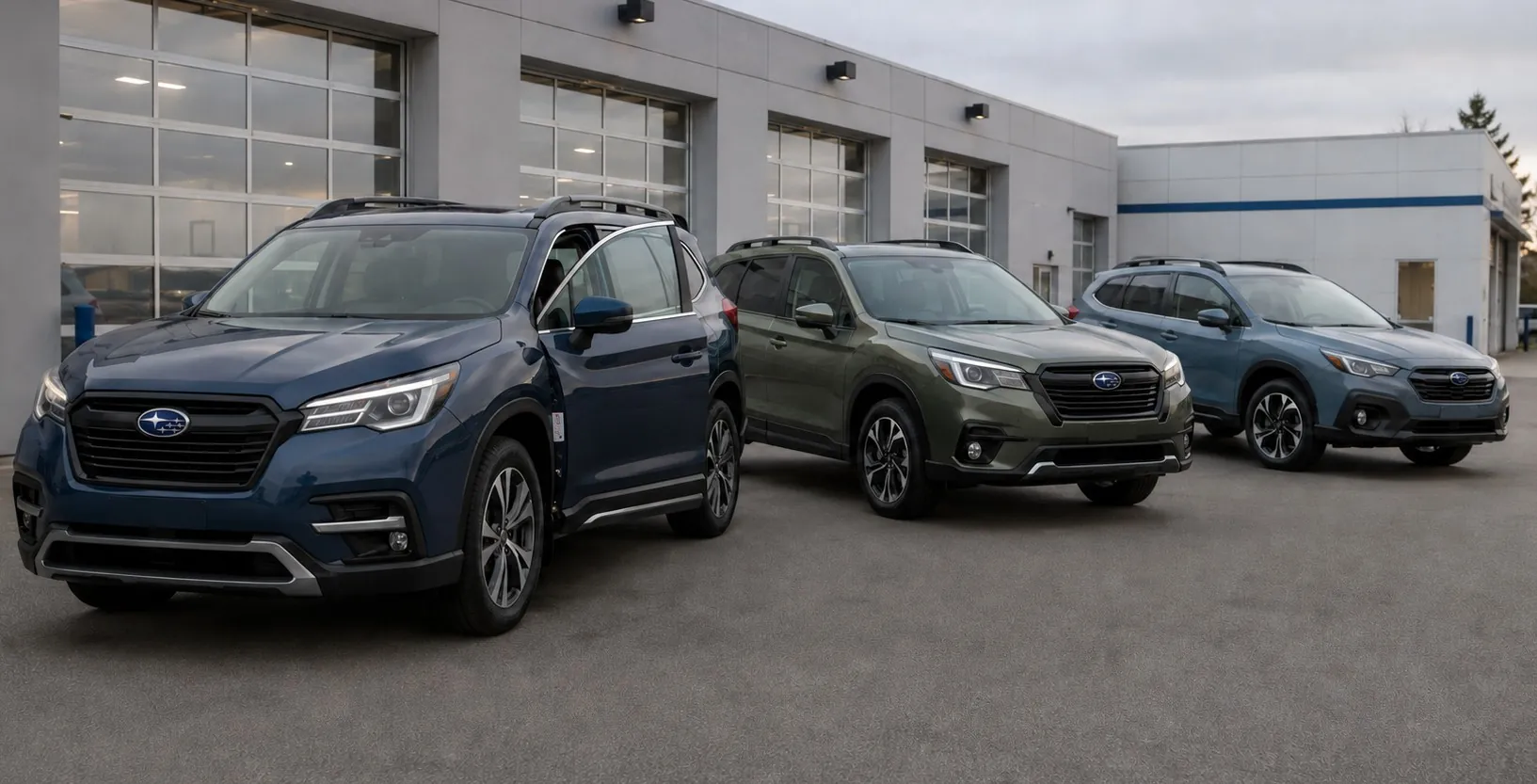
A recall covering more than half a million SUVs usually suggests a failed part, a warning to stop driving or a long appointment at the dealership. The latest Subaru recall is different. The vehicles do not need a mechanical repair.
Subaru of America is recalling 541,237 Ascent, Forester and Crosstrek vehicles because the certification label lists an incorrect Gross Axle Weight Rating for the rear axle. Owners will receive a corrected label that can be placed over the original.
I would not treat the recall as a reason to park the vehicle. Subaru has reported no related crashes or injuries in the United States. I would still check the Vehicle Identification Number before loading the SUV for a long trip, particularly if it regularly carries several passengers, luggage, camping equipment or a trailer.
Subaru Recall Details
- Subaru is recalling 541,237 vehicles in the United States.
- The recall covers selected Ascent, Forester, Forester Hybrid and Crosstrek Hybrid vehicles.
- The rear Gross Axle Weight Rating is incorrect on the certification label.
- The error could lead an owner to place too much weight over the rear axle.
- Subaru has reported no crashes or injuries connected with the problem.
- No mechanical parts need to be replaced.
- Owners can install the corrected label or ask a Subaru dealer to do it free of charge.
- Initial owner letters are expected to be mailed on August 25, 2026.
- Corrected labels are expected to become available in January 2027.
Which Subaru Vehicles Are Recalled?
The recall covers selected vehicles from four model lines. The Ascent accounts for the widest production period, stretching from the original 2019 model through 2026.
| Model | Model Years Included |
|---|---|
| Subaru Ascent | 2019 through 2026 |
| Subaru Forester | 2025 and 2026 |
| Subaru Forester Hybrid | 2025 and 2026 |
| Subaru Crosstrek Hybrid | 2026 |
A matching model and year do not prove that a specific vehicle is included. Production dates, equipment and individual VIN records determine recall coverage.
The quickest answer comes from entering the 17-character VIN in the official Subaru recall lookup. The VIN appears on the lower driver side of the windshield, the registration documents and the label inside the driver door area.
The Problem Is the Label, Not the Rear Axle
The certification label lists several federally required details about the vehicle. One of them is the Gross Axle Weight Rating, usually shortened to GAWR.
GAWR states the maximum weight that one axle can support. Subaru identified an incorrect value for the rear axle on the affected certification labels.
The filing does not say that the rear axle itself was manufactured incorrectly. It does not describe a suspension failure, weak axle, defective tire or damaged wheel bearing. The physical vehicle remains unchanged. The printed information is wrong.
Federal rules require manufacturers to place accurate weight ratings on the vehicle certification label. The full requirements for that federal certification label are set out in Part 567 of the federal motor vehicle regulations.
GAWR and GVWR Are Different Numbers
The similar abbreviations make the issue easy to misunderstand.
| Rating | What It Measures |
|---|---|
| GAWR | Maximum weight supported by one axle |
| GVWR | Maximum permitted weight of the complete loaded vehicle |
GVWR covers the entire loaded vehicle. The calculation includes the SUV, passengers, cargo, fuel and installed equipment.
GAWR applies separately to the front or rear axle. A vehicle can remain below its total GVWR and still carry too much weight on one axle if the load is distributed badly.
How the Wrong Weight Rating Creates a Safety Risk?
The problem becomes important when an owner uses the printed figure to decide how much weight the rear axle can carry. An incorrect rating could allow the owner to believe that a heavier load is safe.
Rear axle weight can rise quickly in a three-row SUV such as the Ascent. Passengers in the third row sit near the rear axle. Cargo placed behind them adds more weight in the same area. A trailer also presses down on the hitch through tongue weight.
An overloaded rear axle can affect tire loading, braking, stability and steering response. Heat buildup in heavily loaded tires can also become a concern during fast highway driving or hot weather.
The official NHTSA recall record warns that incorrect GAWR information may lead to an overloaded vehicle and increase the risk of a crash.
No related crash or injury has been reported. That finding is reassuring, but it does not make the label optional. Weight ratings exist so owners can make safe decisions before the vehicle becomes overloaded.
What Subaru Owners Should Do Now?
My first step would be a VIN search. A broad list of model years is useful for attention, but the VIN result is the answer that matters for an individual vehicle.
- Find the 17-character VIN.
- Enter it in the Subaru recall search.
- Confirm that the contact address on the registration is current.
- Keep the current certification label attached.
- Avoid relying on the disputed rear GAWR when planning a heavy load.
- Wait for the official corrected label and installation instructions.
- Contact a Subaru dealer if professional installation is preferred.
Owners should not remove the original certification label before the correction arrives. The replacement is designed to cover the incorrect information without removing the federally required label from the vehicle.
Anyone who plans to tow or carry a near-capacity load before receiving the correction should contact a Subaru dealer for the correct specifications. Guessing from another trim or model year is not a reliable substitute.
The Repair Will Not Require Mechanical Work
Subaru plans to mail corrected certification labels to affected owners. The new label will be installed over the incorrect label.
Owners can apply it themselves by following the supplied instructions. A Subaru retailer will also install it without charge. No axle, suspension or drivetrain component needs to be replaced under this recall.
Initial notification letters are scheduled for August 25, 2026. Those letters will explain the problem before the final remedy is ready. A second mailing with the corrected label is expected in January 2027.
The gap between the first notice and final remedy may look unusual for such a simple correction. Printing hundreds of thousands of vehicle-specific compliance labels requires accurate VIN matching and controlled distribution. A generic sticker would not meet the same purpose.
Can Owners Continue Driving Their Subaru?
Neither NHTSA nor Subaru has issued a stop-driving instruction for this recall. Owners can continue using their vehicles.
Normal commuting, grocery trips and ordinary passenger use should not require a change. Extra care is appropriate when the vehicle is loaded heavily or used for towing.
I would pay particular attention before a family road trip. Three-row seating, a full cargo area, a roof box and trailer tongue weight can place a surprising amount of load on an SUV.
The drivers who need the corrected figure most are those who regularly use the vehicle close to its rated capacity. Owners who never tow and rarely carry heavy cargo are less likely to encounter the condition described in the recall.
What If the SUV Was Purchased Used?
Recall repairs remain connected to the vehicle, not the person who bought it new. A used Subaru can still receive the corrected label without charge.
Mail notices may go to an earlier owner if state registration records or Subaru customer records have not been updated. A VIN search avoids waiting for a letter that may never reach the current address.
Owners can also call Subaru customer support at 844-373-6614. The VIN should be ready before calling.
A recall is different from ordinary wear or a pattern of owner complaints.
Why Such a Small Error Creates Such a Large Recall?
Nothing about a printed label looks dramatic beside a failed engine or loose wheel. The scale comes from the number of vehicles that received the same incorrect information.
Subaru estimates that all vehicles included in the 541,237-unit recall population carry the labeling problem. The company therefore cannot limit the campaign to a small batch discovered through inspection.
The recall also reaches back to the 2019 Ascent. That long model-year range explains much of the total. Newer Forester and Crosstrek Hybrid models add to it, but the Ascent has been sold for several years as a family and towing vehicle.