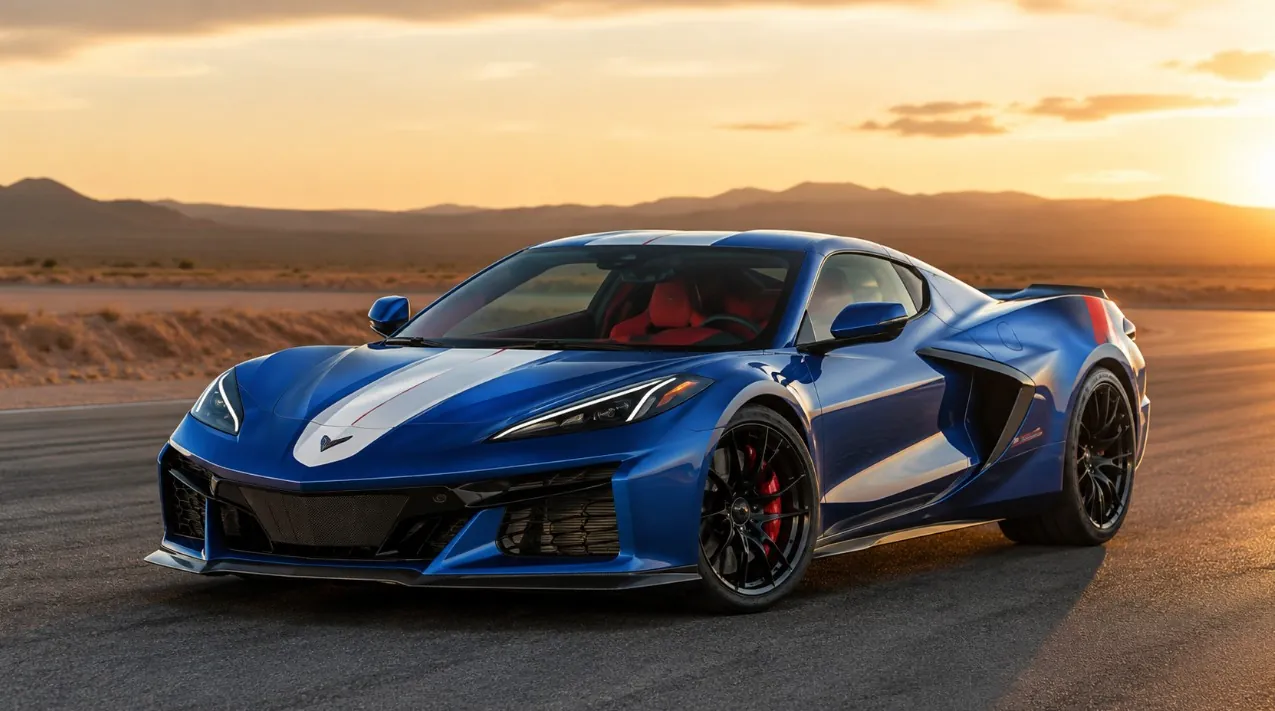
The modern Corvette range has become wonderfully excessive. A Stingray can now exceed 200 mph. The Z06 has an engine that sounds as if it escaped from an Italian pit lane. Above it sit two machines with four-digit horsepower figures and acceleration times that barely seem legal to print.
It is not the fastest Corvette, but not the most expensive as well. This car is also not technically complicated or intimidating. Chevrolet has instead taken the wide body and serious chassis hardware people want, installed a new naturally aspirated V8 and stopped before turning the car into a weekend-only science project.
I have not driven one yet, so I am not going to pretend this is a road test. My opinion is based on the confirmed engineering, pricing, equipment and early production information now available. On paper, the Grand Sport looks like the point where the C8 lineup makes the most sense.
The Stingray is cheaper while Z06 is more exotic. The Grand Sport appears to be the Corvette for someone who wants to drive regularly, take the long route home and still arrive at a track without immediately wishing for another car.
2027 Chevrolet Corvette Grand Sport Specifications
| Specification | Grand Sport | Grand Sport X |
|---|---|---|
| Engine | 6.7-liter naturally aspirated LS6 V8 | 6.7-liter LS6 V8 with front electric motor |
| Gas engine output | 535 horsepower | 535 horsepower |
| Gas engine torque | 520 pound-feet | 520 pound-feet |
| Combined output | 535 horsepower | 721 horsepower |
| Combined torque | 520 pound-feet | 665 pound-feet |
| Drivetrain | Rear-wheel drive | Electrified all-wheel drive |
| Transmission | Eight-speed dual-clutch automatic | Eight-speed dual-clutch automatic |
| Battery | None | 1.9 kWh lithium-ion battery |
| Available 0 to 60 mph | 2.75 seconds | Not yet officially published |
| Available quarter-mile | 10.95 seconds at 124 mph | Not yet officially published |
| Wheels | 20-inch front and 21-inch rear forged aluminum | 20-inch front and 21-inch rear forged aluminum |
| Brakes | Iron brakes with optional performance or carbon-ceramic systems | Carbon-ceramic brakes standard |
| Suspension | Magnetic Selective Ride Control 4.0 | Magnetic Selective Ride Control 4.0 |
| Body styles | Coupe and hardtop convertible | Coupe and hardtop convertible |
| Starting price before destination | $86,000 | About $109,700 |
| Starting price including destination | $88,495 | $112,195 |
The Grand Sport Formula Finally Fits the Mid-Engine Corvette
Grand Sport has traditionally meant more chassis than engine. Chevrolet takes the standard Corvette powertrain, places it inside a wider and more capable body, then adds brakes, tires and suspension equipment borrowed from faster versions.
The formula worked because most drivers wanted Z06 handling without necessarily wanting the price, maintenance demands or temperament of the Z06 engine.
The C8 has been waiting for that treatment since it became a mid-engine car. Chevrolet now describes the new Grand Sport engineering package as a combination of Stingray power and Z06-inspired bodywork, aerodynamics and track equipment.
Calling the LS6 merely a Stingray engine sells it short. The 6.7-liter V8 produces 535 horsepower and 520 pound-feet of torque, an increase of 45 horsepower and 50 pound-feet over the previous 6.2-liter engine.
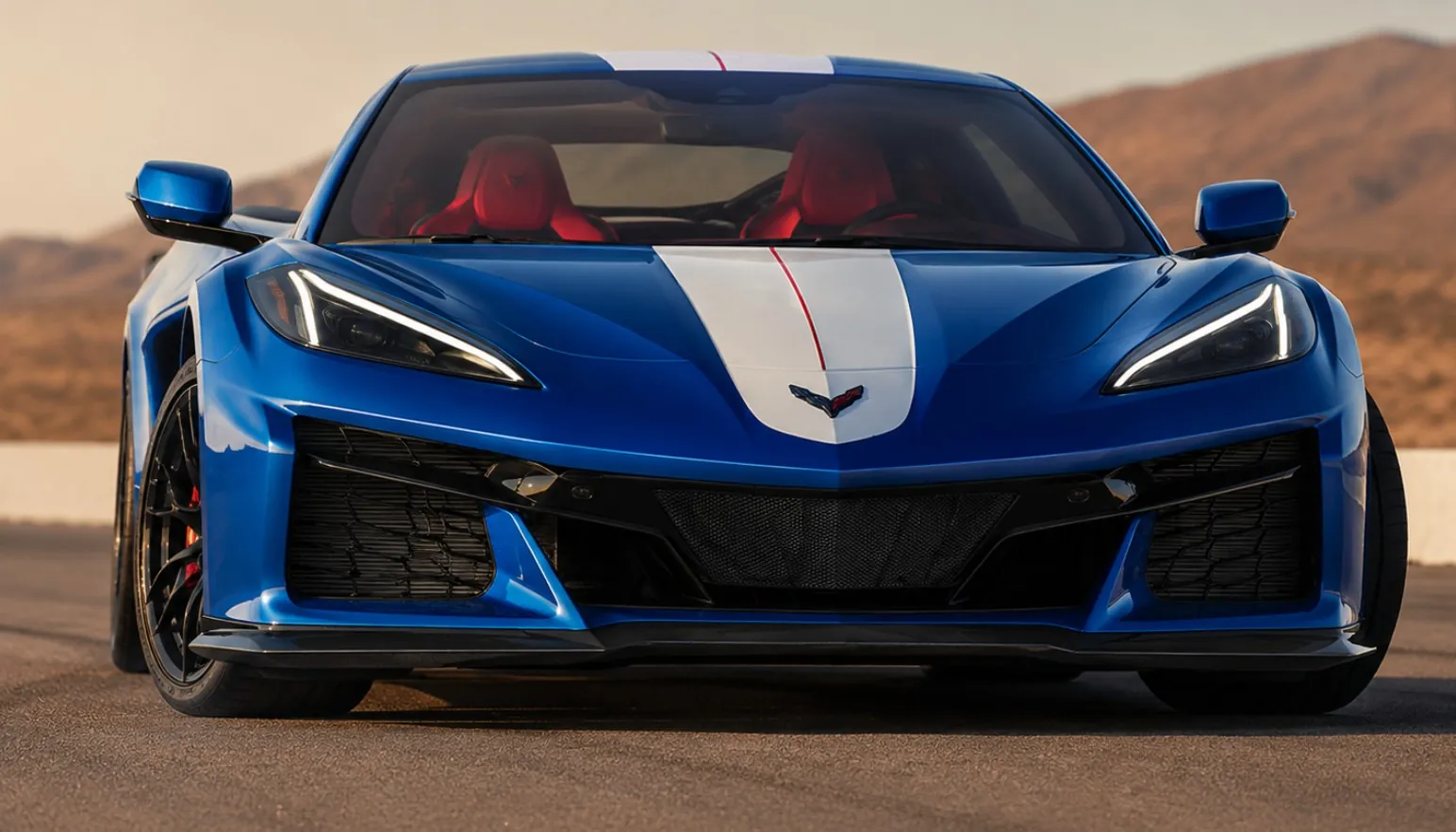
The wider body brings larger air inlets, forged wheels, a more planted stance and enough visual aggression to stop people asking why you did not buy the expensive one. More important, the chassis can be configured for regular roads, fast back roads or serious circuit use.
That range is the reason I find the Grand Sport more convincing than another headline-chasing Corvette. A usable performance car becomes more valuable every time its owner chooses it over the comfortable daily driver sitting beside it.
The New LS6 May Be the Best Part of the Car
Chevrolet could have added turbochargers, reduced the displacement or leaned more heavily on electric assistance. Engineers instead enlarged the small-block V8 from 6.2 to 6.7 liters and gave it a 100 mm stroke.
The resulting LS6 has forged pistons and connecting rods, direct and port fuel injection, a larger throttle body and a 13.0 to 1 compression ratio. No previous Corvette V8 has used a higher compression ratio.
The official Corvette engine comparison explains the intended character better than the horsepower number. The LS6 is designed to produce strong torque without requiring the driver to chase the upper end of the rev counter.
That sounds right for a Grand Sport. A Z06 demands revs and commitment. The LS6 should deliver its personality during ordinary driving, where an empty entrance ramp can be more useful than an empty racetrack.
The engine also carries a name with a complicated Corvette history. Chevrolet first used LS6 for a 454-cubic-inch big-block in 1970. The badge returned on the 2001 C5 Z06, where a 5.7-liter small-block eventually produced 405 horsepower. The new version displaces 409 cubic inches and becomes the third very different engine to wear the same famous name.
One more odd detail sits inside the software. The new engine management system carries the internal name Encantado, borrowed from Brazilian folklore about a shape-shifting river creature. Engineers use machine learning during testing and calibration, which makes the old-fashioned pushrod V8 far more modern than its basic layout suggests. A look at the new small-block design explains how much engineering hides beneath the familiar architecture.
The Grand Sport X Is Faster but Not Automatically Better
Chevrolet has created two Grand Sports for 2027. The regular model sends all 535 horsepower to the rear wheels. The Grand Sport X adds a 186-horsepower electric motor at the front axle, raising combined output to 721 horsepower.
The X also gets all-wheel drive, a compact 1.9 kWh battery, standard carbon-ceramic brakes and several methods of managing electric assistance. Chevrolet presents the Grand Sport X hybrid system as a performance tool rather than a fuel-saving feature.
I understand the appeal. Electric torque at the front wheels should make the car brutally effective when leaving a corner or launching from a stop. All-wheel drive also gives the Grand Sport X a broader range of usable conditions.
The regular Grand Sport still sounds like the purer car. Rear-wheel drive, a naturally aspirated V8 and less hardware between the driver and the result are exactly what the Grand Sport badge should represent.
The X feels more like the replacement for the outgoing E-Ray, which is essentially what it is. The standard model feels like the overdue completion of the C8 range.
| Choose the Grand Sport if | Choose the Grand Sport X if |
|---|---|
| You want rear-wheel-drive balance | You want all-wheel-drive traction |
| You prefer the lighter and simpler specification | You want 721 combined horsepower |
| You plan to use the car mostly in dry conditions | You expect to drive in changing weather |
| You want to stay below $100,000 before options | You accept a starting price above $112,000 |
| You want the traditional Grand Sport formula | You want a quicker and more technical version |
A recent equipment comparison between both models shows that the differences extend past the electric motor. Brakes, tires, performance packages and standard hardware also change between them.
The Right Package Depends on Where the Car Will Live
The base Chevrolet Corvette Grand Sport comes with Magnetic Selective Ride Control and all-season Michelin tires. That specification may sound too soft for a car wearing such a serious body, but it could be the smartest version for regular use.
Drivers who want more grip can add the Z52 Sport Performance Package. It brings Michelin Pilot Sport 4S summer tires, firmer tuning and high-performance iron brakes derived from the Z06.
The Z52 Track Performance Package goes much further. Carbon-ceramic brakes, Michelin Pilot Sport Cup 2 R tires, more focused chassis tuning, a quad center exhaust and the Carbon Fiber Aero Package turn the Grand Sport into a far more committed machine.
Chevrolet says the full package creates the most track-capable Grand Sport yet. I believe it, but I would not order it for a car spending most of its life on public roads.
Cup 2 R tires are magnificent under the correct conditions. They are also expensive, temperature-sensitive and unnecessary during a Sunday drive interrupted by traffic lights. Carbon-ceramic brakes reduce weight and handle repeated track abuse, although replacement costs can remove the joy from owning them.
My order would probably stop at the Z52 Sport package. The Pilot Sport 4S tires and stronger iron brakes offer more usable performance without turning every wet forecast or gravel-covered parking lot into a small crisis.
The Design Finally Gives the C8 Some Restraint
The C8 Corvette has never been shy. Its vents, creases and cab-forward proportions make even the base Stingray look like something sold behind velvet ropes.
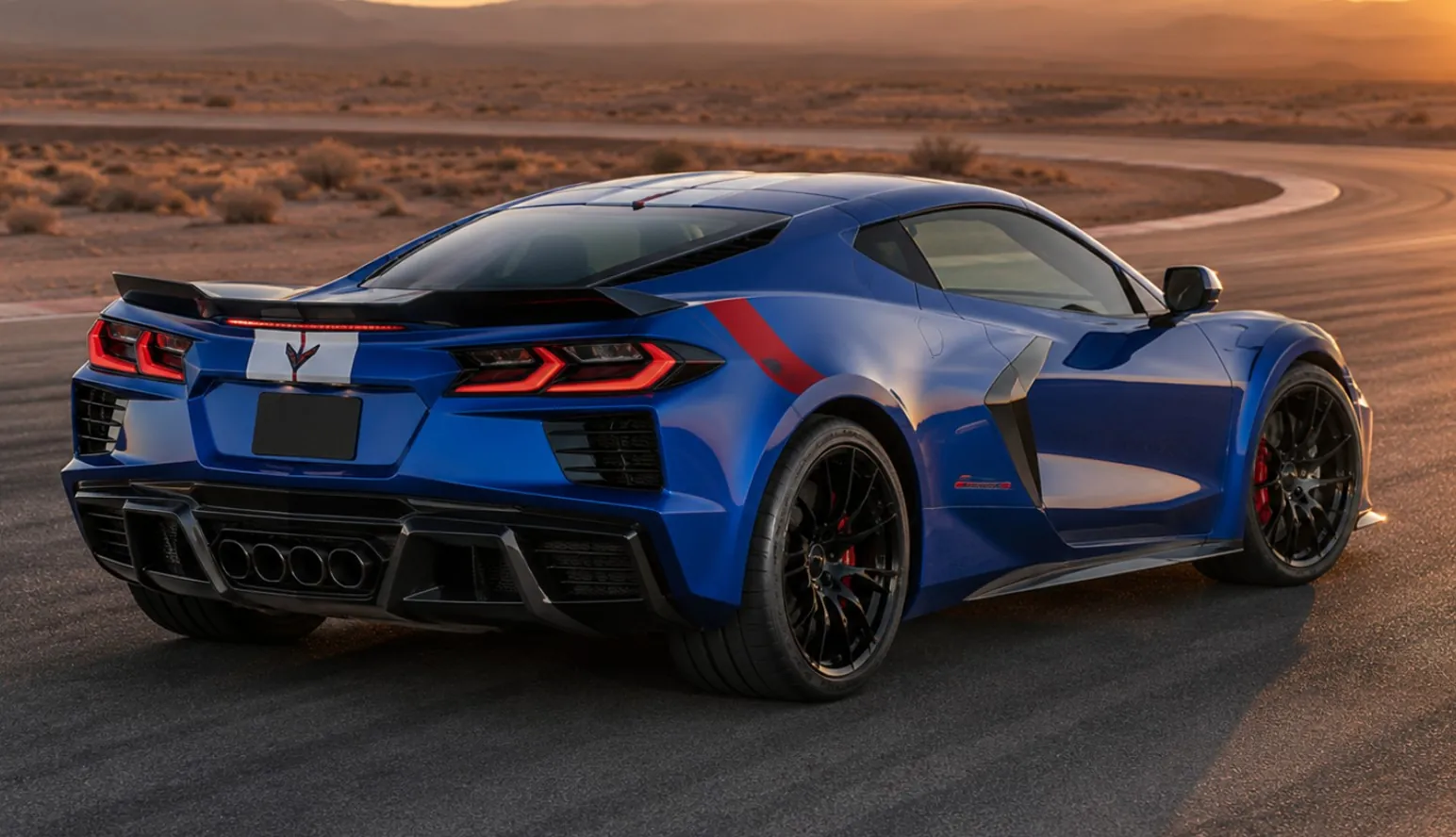
Grand Sport details improve the design because they have a reason to exist. The wide body covers larger wheels and tires. Bigger side openings help feed and cool the mechanical components. An integrated rear spoiler adds presence without dominating the view behind the car.
Traditional fender hash marks also return, although Chevrolet moved them from the front fenders to the rear. The location points toward the engine behind the cabin, a small historical joke that works because the C8 reversed the Corvette layout.
Admiral Blue Metallic connects the new model with the limited 1996 Grand Sport. Buyers can add a center stripe, contrasting hash marks, several forged wheel finishes and an available Santorini Blue interior for Launch Edition cars.
Anyone interested in where the new model sits within the performance history can compare it with the fastest Corvettes produced in earlier generations. The latest Grand Sport has more power than several cars once treated as untouchable flagships.
Only Five Original Grand Sports Were Built
The Grand Sport story began in 1963 with a secret lightweight racing program led by Corvette engineer Zora Arkus-Duntov.
Chevrolet originally planned a larger production run, but General Motors opposition to factory racing ended the project after only five cars were completed. Their rarity turned them into some of the most valuable and recognizable competition Corvettes ever made.
The name returned for the final year of the C4 in 1996, complete with Admiral Blue paint, a white stripe and red hash marks. Chevrolet used it again during the C6 and C7 generations for cars combining standard engines with wider bodies and upgraded chassis equipment.
The 2027 model follows that tradition more closely than the Grand Sport X. The X may be faster, but the rear-wheel-drive car better matches the original idea of getting the most from a balanced Corvette without installing the most extreme engine available.
The Price Is Reasonable, Until the Options Begin
Chevrolet lists the Grand Sport coupe from $86,000 before destination charges. The delivered starting figure is $88,495. That places it $15,000 above the $73,495 Stingray and $32,900 below the $121,395 Z06.
The Grand Sport X starts at $112,195 including destination, leaving a much smaller gap to the Z06.
Current Corvette pricing details show where the decision becomes difficult. A Grand Sport with the Track Performance Package reaches $109,190. Add a higher trim, special paint, premium interior and convertible roof, and the car can move uncomfortably close to Z06 money.
| 2027 Corvette Model | Starting Price Including Destination | Main Character |
|---|---|---|
| Stingray | $73,495 | Narrow-body road car with the same LS6 V8 |
| Grand Sport | $88,495 | Wide-body rear-wheel-drive all-rounder |
| Grand Sport X | $112,195 | Hybrid all-wheel-drive performance car |
| Z06 | $121,395 | High-revving track-focused model |
| ZR1 | $197,195 | Twin-turbo rear-wheel-drive flagship |
| ZR1X | $227,395 | Hybrid all-wheel-drive range topper |
The base Grand Sport is the value story. The heavily optioned one is harder to defend.
A buyer spending close to $120,000 may reasonably decide that the flat-plane-crank Z06 engine is worth the additional money. Someone ordering a Grand Sport near $90,000 receives the wide body, adaptive suspension and new V8 without crossing into that financial territory.
Early Production Shows Chevrolet May Have Judged the Market Correctly
Early reports claim the Grand Sport is already taking business away from the Stingray, although the numbers require careful wording.
Corvette production for the 2027 model year began on June 8. An unofficial assembly tracker recorded 1,689 cars before the annual summer shutdown. Grand Sport production reached 590 units, equal to 34.9 percent of the total. Stingray remained ahead with 719 units and a 42.5 percent share.
The figures are notable because the Stingray represented 62 percent of 2026 Corvette production. A current report on the early production mix argues that buyers are moving toward more expensive Corvette versions.
I would not call 590 assembled cars confirmed sales. Production is not the same as a retail delivery, and three weeks cannot establish a full model-year trend. Dealer allocations and launch planning can also distort the first batch.
The strong opening still suggests that Chevrolet expected serious demand. Another report on the Grand Sport production ramp notes how quickly Bowling Green has begun building the new model.
Grand Sport X production had not entered the regular mix during the period covered by those figures. Chevrolet says the electrified model will become available in fall 2026.
The Stingray Creates the Biggest Problem
The Grand Sport shares its 535-horsepower LS6 with the 2027 Stingray. Spending another $15,000 therefore does not buy more engine output.
The money pays for the wider body, forged wheels, adaptive suspension, cooling, grip and access to more serious performance equipment. Drivers who never attend a track day may struggle to use enough of those advantages to justify the cost.
Chevrolet also validated the narrow-body Stingray at more than 200 mph. Less frontal area gives the cheaper car a top-speed advantage that creates an unusual situation. The Grand Sport looks faster and should corner harder, but the Stingray may post the larger number at the end of a runway.
I still prefer the Grand Sport. Maximum speed has little relevance away from a closed course. Steering response, grip, braking confidence and the way a car behaves during an ordinary fast corner shape far more of the ownership experience.
Readers following other upcoming performance models can also see how the Grand Sport compares with the new cars expected to reach the market through 2028.
The Absence of a Manual Still Hurts
Every Grand Sport uses an eight-speed dual-clutch transmission. It shifts faster than any driver could manage with three pedals and helps produce the remarkable acceleration figures.
Speed does not remove the emotional argument for a manual gearbox.
The Grand Sport is supposed to be the driver-centered middle Corvette. A manual would suit its position better than it would suit the hybrid Grand Sport X or the 1,250-horsepower ZR1X.
The C8 platform was never engineered around one, so its absence is not surprising. It remains the one specification that prevents the car from feeling like a perfect modern interpretation of the old Grand Sport formula.
The Version I Would Order
I would begin with the rear-wheel-drive Grand Sport coupe in 2LT trim.
The 2LT package adds heated and ventilated seats, a head-up display, better cameras, blind-zone monitoring, a 14-speaker audio system and the Performance Data Recorder. Those features would matter far more during ownership than another decorative carbon panel.
Z52 Sport equipment would be my main mechanical option. Summer tires and upgraded iron brakes provide a meaningful step above the base car without the expense and compromises attached to the complete track package.
I would keep the removable roof rather than pay another $7,000 for the power-folding hardtop convertible. The coupe already offers open-air driving, maintains the cleaner roofline and leaves more money for tires, fuel and actual trips.
The Grand Sport X would make more sense for someone living with cold mornings, unpredictable rain or a strong need to win every stoplight launch. My imaginary order would prioritize steering feel, rear-wheel-drive balance and mechanical simplicity.
Final Thoughts
The 2027 Chevrolet Corvette Grand Sport does not need to be the quickest C8 to become the best one for many owners.
Its appeal comes from judgment rather than excess. Chevrolet combined a wide body, adaptive suspension and serious brake options with a large naturally aspirated V8 that should deliver its character at normal engine speeds.
The base price remains close enough to the Stingray to look tempting and far enough from the Z06 to make financial sense. Problems begin when expensive track equipment and luxury options erase that distance.
My choice would be a lightly optioned rear-wheel-drive Grand Sport. It has enough power to make every empty road interesting, enough chassis to survive a track day and enough everyday equipment to avoid becoming a machine reserved for perfect Sundays.
The Corvette lineup already contains faster cars. The Grand Sport may be the one owners drive most often, and that is the performance figure I would care about after writing the check.