
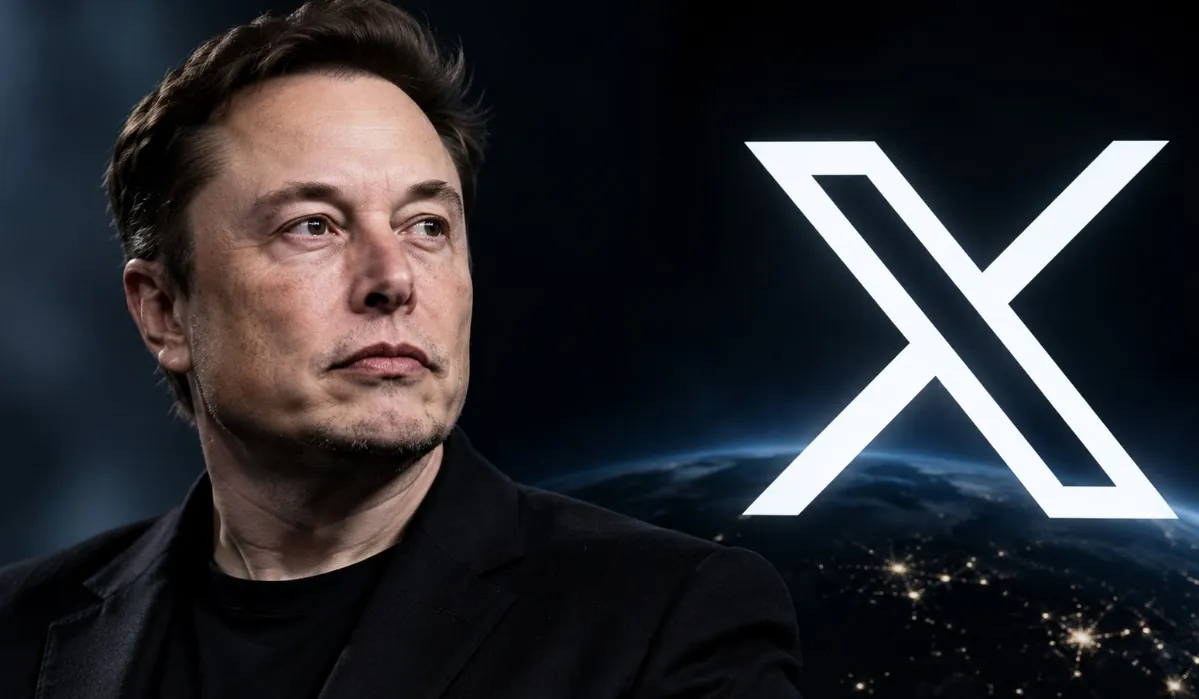
A legal fight over a €120 million fine against Elon Musk’s X has now become something much larger.
The US government has formally asked to join X and Musk in their case against the European Commission, putting Washington directly into a dispute over how far European technology regulation can reach into American companies.
The US Department of Justice filed its request on September 24, supporting attempts by X and Musk to overturn the Commission’s December 2025 decision.
The immediate fight concerns the Digital Services Act and X. The larger question concerns something far more important for companies such as Google, Meta, Apple, Amazon and Microsoft. If the European Commission can look past the company directly providing a digital service and use a much wider corporate structure when deciding liability and financial penalties, American technology groups face a different regulatory environment in Europe.
Why the US Government Has Entered the Case?
The European Commission fined X €120 million in December 2025 after finding three violations of the Digital Services Act. Regulators said X used a misleading blue checkmark system, failed to provide an adequate advertising repository and created barriers that prevented researchers from accessing public platform data.
The Commission described the decision as its first formal non-compliance ruling under the DSA.
X and Musk challenged it before the EU General Court in February. Court records show that X Internet and X Holdings are seeking to annul all or part of the decision, along with all or part of the fines.
Washington is now arguing that the Commission went too far when determining who could be held responsible.
The DOJ specifically objected to the Commission’s use of the worldwide annual turnover of what it considered a single economic unit ultimately controlled by Musk or X Holdings. According to the department, the approach exposed Musk personally and potentially brought unrelated US companies under regulatory scrutiny even though they were not providing the digital service at the center of the case.
That argument moves the dispute away from blue checkmarks and toward corporate law, jurisdiction and the limits of European regulatory power.
Europe Is Regulating More Than X
X is hardly the only major American technology company facing tougher European enforcement.
In April 2025, the Commission fined Apple €500 million and Meta €200 million under the Digital Markets Act. Apple was found to have restricted developers from directing users toward alternative offers outside its App Store. Meta was penalized over its approach to giving European users a choice concerning the use of personal data.
Google then received €890 million in Digital Markets Act fines in July 2026. The Commission accused it of favoring its own services in Google Search and restricting businesses from directing customers toward other purchasing channels through Google Play.
Amazon and Microsoft have also come under greater scrutiny. In June, the Commission reached a preliminary conclusion that Amazon Web Services and Microsoft Azure should be designated as gatekeepers under the Digital Markets Act because of their importance in the European cloud market.
The pattern explains why Washington is paying attention to the X case. A ruling that approves a wide interpretation of corporate responsibility would not automatically decide future cases against other companies, but it could strengthen the legal position behind similar enforcement.
Washington Is Already Treating EU Tech Enforcement as a Trade Problem
The disagreement has also moved outside the courtroom.
US Trade Representative Jamieson Greer sharply criticized European enforcement in July after the Google fines. He accused the EU of taking an increasingly aggressive approach toward American technology companies and warned that the actions were creating uncertainty in the transatlantic trade relationship.
His official statement specifically connected technology regulation with broader economic relations between the United States and Europe.
That matters because the dispute is no longer confined to arguments about individual platform rules. Washington is increasingly questioning the structure of European enforcement itself.
Brussels has a different position. The Commission presents the Digital Services Act and Digital Markets Act as market rules applied to companies because of the services they provide and their position in Europe, rather than because of their nationality.
The current list of Digital Markets Act gatekeepers supports part of that argument. Along with US companies including Alphabet, Amazon, Apple, Meta and Microsoft, the list includes China’s ByteDance and European company Booking.
Still, American companies dominate many of the world’s largest digital markets, so a large share of major EU enforcement inevitably lands on US groups.
The X Case Has an Important Complication
X has already agreed to make some of the changes demanded by European regulators.
In July 2026, the Commission accepted an action plan covering X’s advertising database and researcher access. X committed to improving search tools in its advertising repository, publishing more information about ads, providing API access and reducing delays for approved researchers.
The agreement gives X six months to implement the measures and requires an independent audit.
That creates a more complicated picture than a simple clash between a company refusing regulation and a government imposing it.
X is making compliance changes in Europe and challenging the legal basis and scope of the Commission’s decision at the same time.
The disagreement also arrives as Musk’s companies become increasingly connected. X is tied closely to xAI and its Grok assistant, a product that has already attracted regulatory attention in Europe. We previously explored how Grok operates inside Musk’s wider technology business, where the lines between social media, artificial intelligence and data are becoming less clear.
Those connections make the argument over corporate boundaries increasingly important.
Could the Court Decision Really Affect Other US Tech Companies?
The EU General Court has not ruled on the cases, and the US request to intervene does not mean Washington’s interpretation will succeed.
European regulators also have a legitimate enforcement problem. The largest digital platforms operate through complicated multinational corporate structures, and rules aimed only at a narrowly defined local subsidiary could become difficult to enforce against global companies with enormous revenues and interconnected operations.
Washington sees the opposite risk. If regulators can move too freely through a corporate group, companies that have little direct connection to the regulated service could face exposure because they share an owner or parent company.
Both concerns now sit at the center of the X litigation.
The dispute also comes as governments are paying much closer attention to the power of social platforms, algorithms and artificial intelligence. Southwest Journal recently reported on new warnings from AI researchers and technology executives, another area where governments are under pressure to decide how aggressively emerging technology should be regulated.
A judgment in favor of X would not dismantle Europe’s Digital Services Act. A judgment supporting the Commission would not give Brussels unlimited authority over American companies.
The real importance lies in where the court draws the line.
If European regulators receive broad authority to connect a platform’s conduct with its parent company, owner and wider corporate group, US technology companies will have to account for that risk when operating in Europe. If the court limits that approach, Brussels may have to rely more heavily on the specific European entity providing each regulated service.
For Washington and Brussels, the €120 million X fine has therefore become a test case. The original violations remain important, but the larger dispute now concerns who Europe can regulate, how far that authority reaches and how much legal separation American technology companies retain once they enter the European market.