The 2026 World Cup gave the United States an estimated $20 billion economic boost, according to Bank of America. It is an impressive number, but it needs some explanation before anyone concludes that the federal government, FIFA or the 11 American host cities simply collected a $20 billion check.
The figure represents economic activity: hotel stays, restaurant bills, drinks at bars, local transportation, retail purchases and the many other transactions produced as millions of people followed the tournament. It does not represent net profit, and it certainly was not divided evenly among the cities that staged matches.
Still, there is no question that the tournament moved a large amount of money through the American economy. Hotels in several host states recorded dramatic revenue increases, out-of-town customers spent heavily, public transit carried record crowds and restaurants near the busiest fan zones served the kind of traffic they may not see again for years.
The fuller story is more complicated. Some businesses enjoyed their best weeks in memory, while others watched regular customers avoid crowded downtown districts.
FIFA collected ticket, sponsorship and broadcasting revenue, while taxpayers and local organizing committees covered substantial security and operating expenses.
The World Cup was a financial event as much as a sporting one, but not everyone played on the same side of the ledger.
The Short Answer Is $20 Billion, but That Is Not Profit
Bank of America CEO Brian Moynihan placed the tournament’s total global economic activity at about $40 billion during a July 19 appearance on CBS News’ Face the Nation. He said roughly half of that activity, about $20 billion, occurred in the United States.
That share should not surprise you because the United States hosted 78 of the tournament’s 104 matches. Canada and Mexico staged 13 games each. All matches from the quarterfinals onward were played in the United States, culminating with the final at MetLife Stadium in New Jersey on July 19.
The event was already expected to be enormous. It introduced a 48-team format, stretched across 16 North American host markets and ran from June 11 through July 19.
For readers interested in how the tournament arrived in three countries at once, our guide to past and present World Cup host nations provides the broader history.
Economic activity, however, is not the same as earnings. If a visiting fan pays $300 for a hotel room, that payment counts toward economic activity. The hotel must still pay employees, utilities, taxes, suppliers and other expenses. The same applies to a restaurant that doubles its sales but also brings in more food, schedules additional workers and pays higher event-period operating costs.
The $20 billion estimate therefore answers how much business the tournament helped generate, not how much money the United States kept after every expense was paid.
| Figure | What It Measures |
|---|---|
| $20 billion | Bank of America’s estimate of World Cup-related economic activity in the United States |
| $40 billion | Estimated economic activity generated globally by the tournament |
| $17.2 billion | Pre-tournament estimate of the World Cup’s contribution to U.S. GDP |
| $30.5 billion | Pre-tournament estimate of gross U.S. economic output |
| 185,000 | Full-time-equivalent U.S. jobs supported in a pre-tournament economic study |
Those figures should not be added together. Gross output, GDP contribution and consumer spending describe different parts of the economy, use different methods and cover different periods.
Fans Spent Money Well Beyond the Stadium Gates
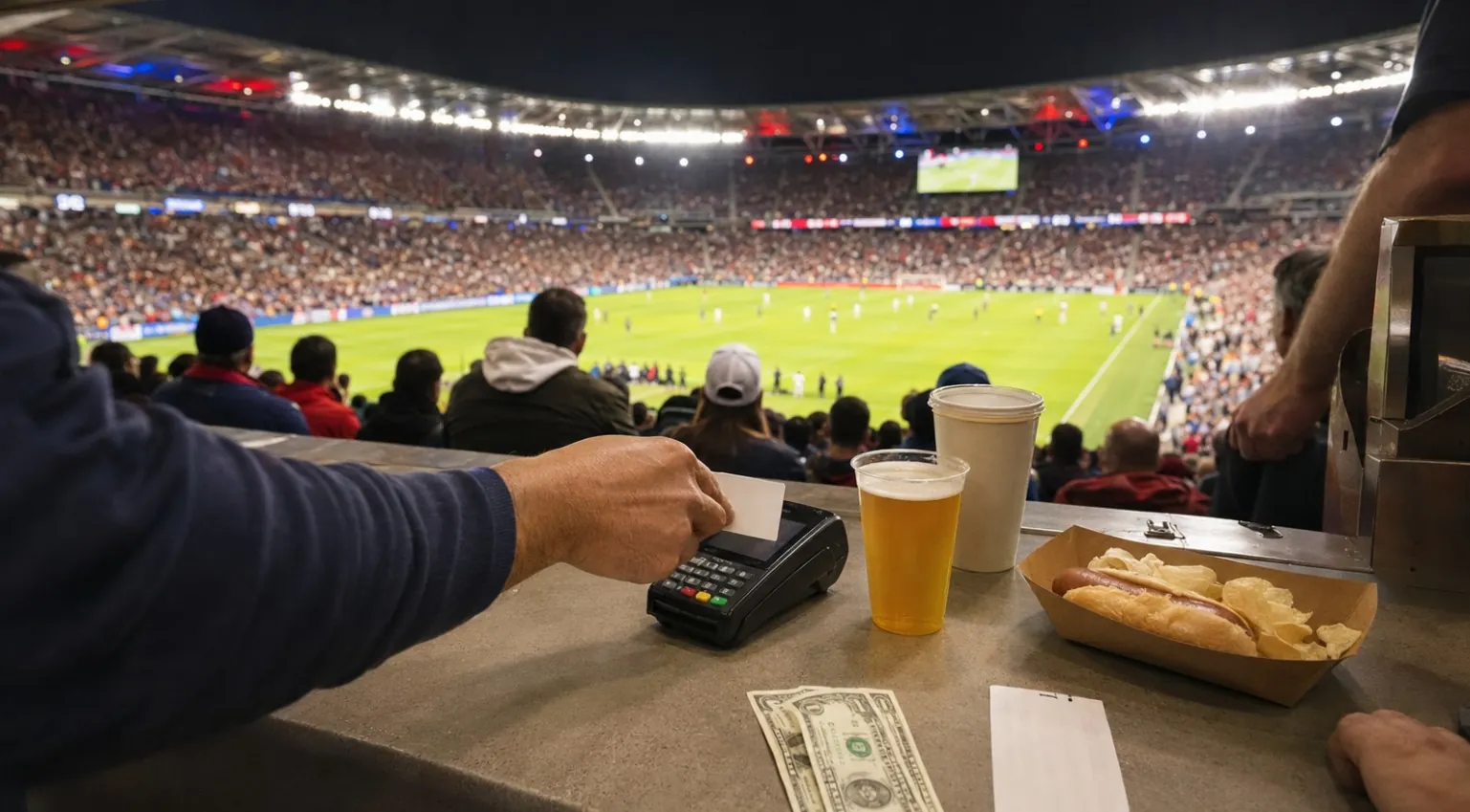
The tournament’s financial footprint was visible in places that never sold a match ticket. Bank of America examined anonymized credit and debit card activity during the group stage and found that in-person spending in host cities increased 6.3% from the same period a year earlier.
The most revealing number concerned visitors. Spending by customers outside their home metropolitan areas rose 16.7%, while their number of transactions increased 10.7%. In other words, the rise was not simply local residents paying higher prices. Traveling supporters were arriving, staying, eating and shopping.
A World Cup visitor rarely buys only a seat inside a stadium. There is an airport ride, several nights in a hotel, breakfast, lunch, drinks before the game, a team shirt, another ride to a fan festival and perhaps several days of sightseeing before the next match. Those purchases explain how an event held inside 11 U.S. stadiums could affect thousands of businesses that had no formal relationship with FIFA.
Philadelphia was well positioned to benefit because its stadium sits within a city already built around tourism, food and walkable historic districts. Visitors who came for soccer also had access to the city’s museums, markets and landmarks, many of which are included in Southwest Journal’s guide to places worth visiting in Philadelphia.
Kansas City and Philadelphia Had Some Exceptional Hotel Nights
Kansas City emerged as one of the clearest winners in Bank of America’s spending data. The city does not normally attract international crowds on the scale of New York, Los Angeles or Miami, so six World Cup matches produced a particularly noticeable change in local activity.
Hotel revenue in Kansas City climbed close to 90% during one of the tournament’s strongest periods, according to figures reported by the New York Post.
San Francisco recorded an increase of about 55%, while Philadelphia hotels also benefited heavily during the knockout rounds.
Philadelphia’s gains were especially strong around its final run of games. A local analysis found that Center City hotel revenue rose by more than 50% during the city’s six-match schedule. Rates mattered as much as occupancy: even when every available room was not filled, hotels could generate far more revenue by charging higher prices on the most attractive match nights.
Atlanta provides another useful example. Visitors booked 442,000 hotel room nights between June 13 and July 16, according to the Atlanta Convention and Visitors Bureau figures cited by Axios.
Hotel occupancy was actually 4% lower than during the comparable 2025 period, yet revenue per available room rose 11%.
The city also recorded 4.66 million MARTA rail trips during the tournament, 1.6 times the total from the same period a year earlier. More than 500,000 people attended Atlanta’s fan festival, while 544,516 spectators went through the gates at Mercedes-Benz Stadium.
That is the kind of scale cities had in mind when they agreed to host. Modern arenas are designed to generate activity far beyond the field itself, as seen in Southwest Journal’s look at some of the world’s most notable stadiums. During the World Cup, however, the surrounding transportation, hotel and entertainment networks mattered just as much as seating capacity.
Not Every Business Received a World Cup Windfall
National totals can make a tournament look universally profitable. Street-level results tell a less orderly story.
In Atlanta, 30 vendors participating in a city-backed small-business program said the promised crowds and sales did not materialize for them. One vendor told local media that he invested close to $130,000 but made less than $1,000. Those losses existed alongside packed trains, busy hotels and crowded soccer bars.
Seattle produced a similarly mixed picture. Pubs showing matches and businesses along major fan routes reported heavy demand, but some shops and restaurants near the stadium said sales declined because regular customers stayed away from traffic and security restrictions. The city’s tourism forecast had already been reduced from $929 million to $845.6 million before the tournament.
As Seattle business owners told The Guardian, large match-day crowds did not necessarily enter every nearby store. Some visitors traveled directly between hotels, fan zones and the stadium. Other customers avoided downtown entirely because they expected congestion and inflated prices.
This is one of the weaknesses in any nationwide economic-impact figure. A dollar spent at a stadium-area bar may be new visitor money, but it may also be money a local resident would otherwise have spent at a neighborhood restaurant. Economists call that substitution: activity moves from one place to another without creating the full amount of genuinely new spending claimed in the headline total.
The Public Paid Part of the Bill
The United States also spent heavily to stage the tournament. Congress provided $625 million to support public safety and operational costs across the 11 U.S. host markets.
Boston alone received $46.6 million in federal assistance for security, its fan festival and operations connected to seven matches at Gillette Stadium, according to federal funding figures reported in March.
Host cities and organizing committees also paid for policing, emergency services, temporary transport plans, road management, fan zones, sanitation and the extensive list of requirements attached to a FIFA tournament. Some expenses were supported by sponsors and private fundraising; others ultimately fell to governments and taxpayers.
That does not erase the economic benefit, but it means the final calculation cannot stop at gross spending. The proper question is how much new money entered each region after public costs, private expenses, displaced business and ordinary summer tourism were taken into account.
Answers will differ from city to city, and audited local studies will take months to complete.
FIFA’s Revenue Is a Completely Different Number
FIFA was the tournament’s central commercial beneficiary, collecting income from broadcasting rights, sponsorships, hospitality packages, licensing and ticket sales. President Gianni Infantino said the organization expected revenue to exceed $15 billion for the entire 2023–2026 cycle.
That is not the amount earned by the United States, nor is it included as a simple piece of the country’s $20 billion economic boost. FIFA revenue belongs to the governing organization and covers a four-year cycle that includes far more than purchases made in American host cities.
Before the tournament, a FIFA and World Trade Organization-backed study projected that the World Cup could generate $30.5 billion in U.S. gross output and add $17.2 billion to U.S. GDP.
The study also projected support for 185,000 full-time-equivalent jobs in the country.
Bank of America’s $20 billion estimate and the earlier $17.2 billion GDP projection are therefore not competing answers. They measure different things. One describes current economic activity associated with the tournament; the other modeled the value added to the economy after accounting for the goods and services used to produce that activity.
So, How Much Did the United States Really Make?
The United States did not earn $20 billion as profit. Final net gains will be smaller once operating expenses, public spending and business displaced by the tournament are counted.
Even with those qualifications, the tournament clearly delivered an extraordinary month for parts of the American hospitality and tourism industries.
Kansas City received a level of international attention that few events could provide. Philadelphia, Atlanta and several other cities filled hotels and public spaces. Bars served crowds from around the world, transit systems handled unfamiliar demand and stadiums became global television stages.
The final financial verdict will depend on what happens after the supporters go home. If visitors return, conventions follow and cities use the exposure to attract future events, the value will extend beyond the original $20 billion estimate. If the gains disappear with the last hotel checkout, the World Cup will still have produced a remarkable surge in spending-but a much shorter economic legacy than the headline suggests.
Read Next: 23.3 Million People Want Argentina Banned From Future World Cups