
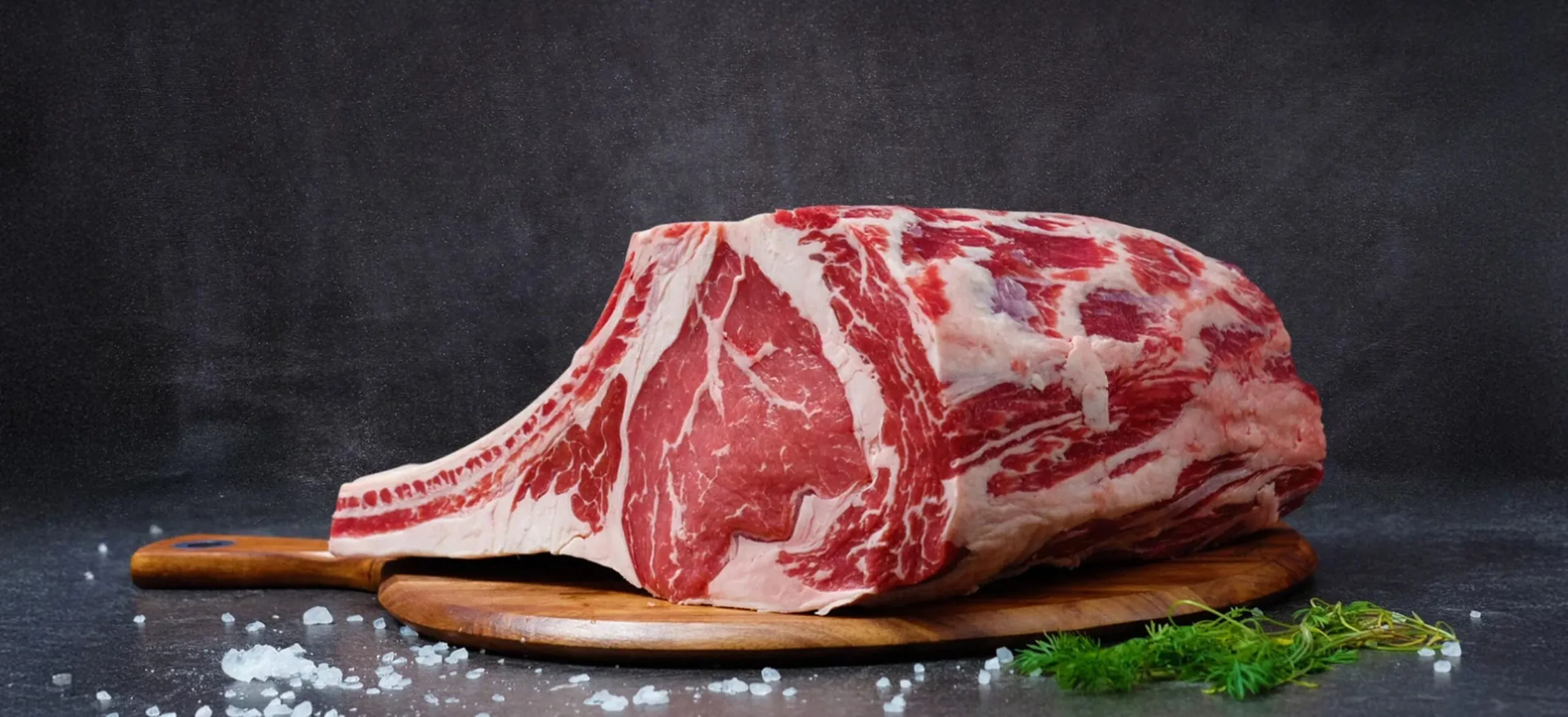
On August 7, 2026, a beef importer in Aventura, Florida, pulled 29,628 pounds of Argentine beef back off the market across Florida and Texas. The USDA classified it Class I – the label the agency reserves for products that could cause serious illness or death.
Nobody has gotten sick. Nobody tested the meat and found anything in it. In fact, nobody tested the meat at all, and that is precisely the problem.
The Food Safety and Inspection Service recall notice for Corte Argentino USA LLC says the beef came into the country “without the benefit of import reinspection.” Six words that most coverage has repeated without unpacking. They are the whole story, and they mean something narrower – and in one specific way, more worrying – than the headlines suggest.
What was recalled, and how to check your freezer
Everything in the recall is boneless beef from a single Argentine packing plant, Frigorífico Gorina SAIC in La Plata, shipped in cardboard boxes of varying weight. Two markings settle it: the establishment number EST. N° OF. 2025 and the shipping mark 26644-AA. If a box has both, it is in scope.
The cuts are labeled in Spanish, which is going to trip up anyone scanning a freezer without knowing what they are looking for. Here is the translation:
| Label on the box (Spanish) | English cut name | What it actually is |
|---|---|---|
| Cuadril Sin Tapa | Top Sirloin Butt | Rump primal, cap removed — the classic Argentine grill cut |
| Peceto | Eye Round | Lean cylinder from the hind leg, used for roasts and matambre |
| Nalga AD S/Tapa | Topside Cap Off | Inside round, cap removed — thin-sliced for milanesas |
| Carnaza Cuadrada | Flat | Shoulder clod cut, braising and stewing meat |
| Bola de Lomo | Knuckle | Sirloin tip from the leg, often cubed or ground |
Source: product descriptions in the FSIS recall notice of August 7, 2026. All five were produced between May 15 and May 20, 2026 and carry use-or-freeze-by dates of September 15 to September 20, 2026.
Notice what is not on that list: no steaks, no trimmings, no ground beef. These are whole-muscle primals sold in bulk boxes. Corte Argentino’s own site describes the company as a supplier to restaurants, hotels and catering companies as well as retail. A meaningful share of this beef probably went into commercial walk-ins, not household freezers — which matters, because a restaurant buying a 60-pound box in June may still be working through it.
“Without the benefit of import reinspection” — what that sentence actually means
Imported meat clears three gates before it can be sold in the United States. Customs and Border Protection handles the entry paperwork. APHIS handles animal-disease risk. Then FSIS does its own port-of-entry reinspection: it checks the foreign inspection certificate, verifies the labeling and shipping marks, looks at the physical condition of the load, and — on a random or for-cause basis — pulls samples for pathogens and drug residues.
Product that passes gets stamped with the USDA mark and moves into commerce exactly as if it had been slaughtered in Nebraska. Product that fails is stamped “U.S. Refused Entry” and, under FSIS Directive 9900.8, has 45 days to be destroyed, re-exported, or converted to animal food.
This shipment skipped gate three. It was never presented. And because federal law makes reinspection mandatory rather than optional, unpresented product is legally adulterated the moment it enters commerce — regardless of what is actually in the box.
Why Class I here doesn’t mean the beef was contaminated
My read is that the Class I designation is doing work the underlying facts don’t support, and a lot of coverage has run with the scary half of it.
Class I means there is a reasonable probability of serious health consequences. That is a real standard, but it is applied to a category, not to a test result. When FSIS cannot verify a shipment, it cannot rule anything out, so it defaults to the highest tier. The classification describes the agency’s ignorance, not the meat’s condition.
Two facts cut against the panic reading. First, I pulled FSIS’s own list of Argentine plants certified to export to the United States — the November 2021 edition, the most recent I could retrieve. Establishment 2025 is Frigorífico Gorina SAIC, date listed January 1, 2002, no delisting recorded. This is not a rogue plant. It has been cleared to ship to America for nearly a quarter of a century, and it holds HACCP and BRC certification besides. Second, the shipment cleared Customs and APHIS. It failed at the last desk, not the first.
So the honest framing is: this beef is probably fine, and there is no lawful way to prove it. Both halves of that sentence are true, and the second half is why the recall is correct even though the first half is likely.
The 79 days is the actual story
Here is the number nobody is leading with. The last of this beef was packed on May 20. The recall was announced on August 7. That is 79 days during which unverified product sat in Florida and Texas distribution channels, and FSIS says it found the lapse during routine activities — not through an alert, not through a flag at the port, not through a traceback from a sick person.
Seventy-nine days is long enough for a box of eye round to be portioned, sold, cooked and eaten several times over. The boxes carry September use-or-freeze-by dates, so some of it is genuinely still out there, but the recall arrived well after most of a normal foodservice inventory cycle would have turned.
How much of it comes back? Historically, not much. The most systematic federal look at this that I could find is a 2004 GAO review of ten USDA-monitored recalls, which found roughly 38 percent of recalled food was eventually recovered, and that district staff took an average of 38 days just to verify that customers had been notified — longer than the shelf life of the fresh meat they were chasing. I went looking for a newer government figure and could not find one. That gap is itself worth noting: two decades on, the public still cannot easily answer “how much of a recall actually works?”
And as of August 11, four days after the announcement, FSIS had not published a retail distribution list. Anyone in Miami or Houston wondering whether their butcher or their favorite parrilla received a box has no way to check.
This recall is not the first of its kind, and the pattern is instructive:
| Date | Importer | Product | Amount | Origin |
|---|---|---|---|---|
| Aug 7, 2026 | Corte Argentino USA LLC | Raw boneless beef | 29,628 lb | Argentina |
| Jul 23, 2026 | BCI Foods, Inc. | Chicken noodle soup | 4,300 lb | Canada |
| Oct 30, 2023 | Olymel | Ready-to-eat ham | 11,016 lb | Canada |
| Sep 7, 2023 | Empacadora Frape USA LLC | Pork chicharrón and carnitas | 20,455 lb | Mexico |
Sources: FSIS recall notices for Olymel and Empacadora Frape, and the FSIS recalls index, all checked August 11, 2026. The point of the table is the recurrence, not the volumes: four countries of origin, four product categories, the same failure at the same desk.
No, this isn’t the Trump–Milei beef deal, whatever the headlines imply
Several outlets have placed this recall next to the Argentine import expansion in the same breath, and the juxtaposition is doing an enormous amount of insinuating. I would argue it is wrong on the facts, and the tariff schedule settles it.
The proclamation signed on February 6, 2026 added 80,000 metric tons to the tariff-rate quota for lean beef trimmings – specifically the HTSUS lines 0201.30.5085 and 0202.30.5085 – released to Argentina in four quarterly tranches of 20,000 tons. Trimmings are the raw material for hamburger. They get blended with fattier domestic trim to hit a grind spec.
Cuadril, peceto and bola de lomo are not trimmings. They are premium whole-muscle cuts destined for steakhouse kitchens, and they move under Argentina’s pre-existing 20,000-ton quota, which was never restricted to lean trim. That channel has existed for years. It would exist if the February proclamation had never been signed.
Scale helps too. 29,628 pounds is about 13.4 metric tons – roughly one hundredth of one percent of the 100,000 tons Argentina could ship in 2026 under all its quotas combined. At the 2024 US import rate of 4.64 billion pounds of beef a year, this recall represents under four minutes of national import volume. Whatever you think of the Milei deal, this is not evidence for or against it.
Where the ranchers have a point, and where USDA pushes back
None of the above means the critics are being unreasonable. US Cattlemen’s Association president Justin Tupper argued when the quota expanded that “a safe, secure and resilient beef supply starts with a strong domestic industry” — and the structural case behind that is strong. The US cattle herd hit 86.2 million head in January 2026, a record low, with beef cow inventory down 8.6 percent since 2020. Ground beef averaged $6.83 a pound in June 2026, and the broader beef-and-veal index was up 12.9 percent year over year as of May. Tight domestic supply plus rising import volume plus a port-of-entry step that can apparently be skipped for eleven weeks is a fair thing to be nervous about.
There is also a staffing argument in circulation. Between January and March 2025, FSIS lost about 8 percent of its workforce; 555 staffers took the deferred resignation offer, with an average of 16 years of service, and 63 of the departures came from the Investigations group. It is tempting to draw a straight line from that to a missed reinspection.
USDA has consistently rejected that line. Responding to similar claims, the agency’s public affairs office stated flatly that “there is no connection between recent recalls and FSIS vacancy rates” — and on the narrow point, they are right that agency-wide vacancy figures tell you almost nothing about whether one specific lot got presented at one specific import house. Correlation at that distance is not evidence.
So I will say where I land and what would move me. I do not think the staffing cuts caused this. I do think the 79-day detection gap is a systems failure worth an inspector general’s attention, independent of headcount. What would change my mind in the other direction: if FSIS publishes a retail list and it turns out the product was contained at one or two distributors, this shrinks to a clerical footnote. What would change my mind toward alarm: another no-reinspection recall in the next quarter. That would stop being a lapse and start being a hole.
If you have these boxes right now
Check for both markings — EST. N° OF. 2025 and shipping mark 26644-AA — and if they are there, do not eat it. FSIS advises throwing it away or returning it to the place of purchase, and retailers handling a Class I recall generally refund without a receipt, though that is store policy rather than federal requirement.
Cooking will not fix the legal problem and may not fix the practical one. Thorough cooking does kill the pathogens people usually worry about in raw beef, but reinspection also screens for drug and chemical residues and for transport damage, and heat does nothing about either. That is the honest reason not to just throw it on the grill.
Which puts you in a genuinely annoying position: you may be holding forty dollars of premium Argentine rump that is, on the balance of probabilities, completely fine, from a plant that has been US-certified since 2002. I would still throw it out, because “probably fine” is not a standard I want to apply to something I am feeding other people. But I understand entirely why that feels like theater, and anyone who returns it for a refund instead is making the smarter economic call.
Restaurant and catering buyers have the harder job here. With no retail list published, the only reliable move is to check purchase records back to June for Frigorífico Gorina product and call the importer directly. Corte Argentino’s general manager, Eial Kaplun, is listed on the FSIS notice at 786-350-5805. Consumers with food safety questions can reach the USDA Meat and Poultry Hotline at 888-674-6854.
How this article was put together
I set out to answer two questions for readers in Florida and Texas: is this beef dangerous, and does the recall mean anything larger. Everything factual here comes from primary sources checked on August 11, 2026 – the FSIS recall notice and recalls index, FSIS Directive 9900.8 and the agency’s import reinspection guidance, the FSIS list of certified Argentine establishments, the White House fact sheet on the February 2026 proclamation, BLS price data via FRED, and a 2004 GAO review of recall effectiveness.
Where a figure is old I have said so; the 38 percent recovery rate is the most recent systematic federal number I could locate, and it is two decades out of date. FSIS had not published a retail distribution list at the time of writing, so nobody – including this article – can tell you which specific stores or restaurants received the product. If that list appears, this piece will need updating.