
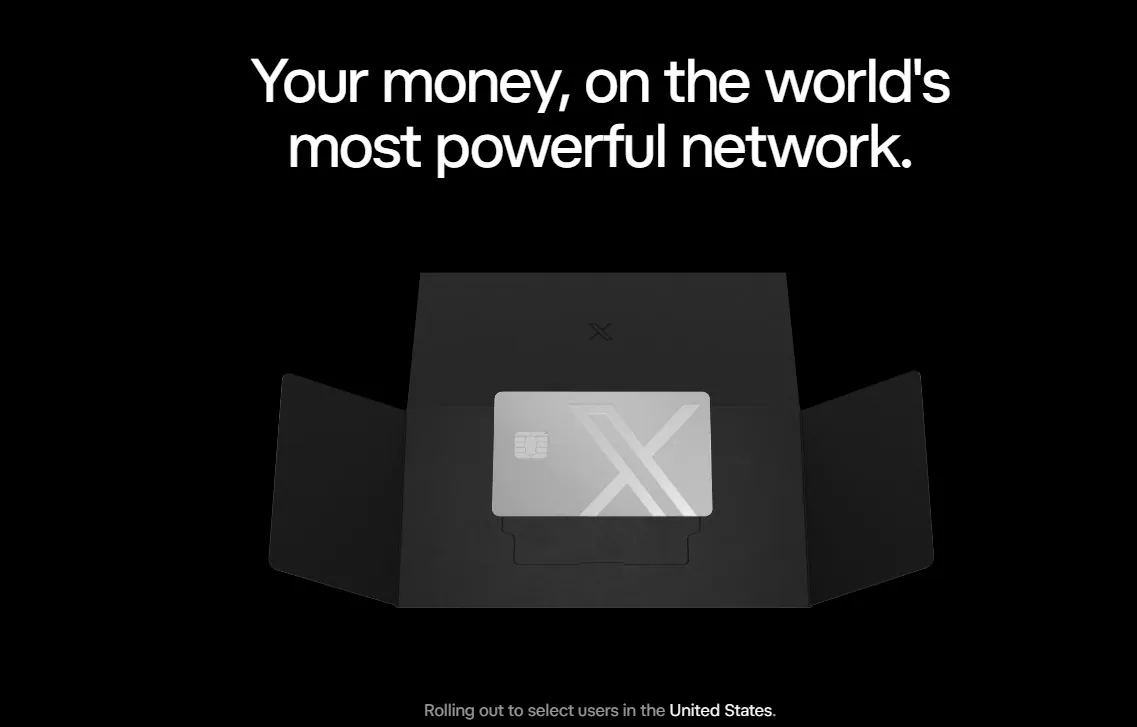
X can now receive your paycheck, hold your money, pay bills, send cash to another user and provide a Visa debit card. That is the basic purpose of X Money, the financial service that Elon Musk has spent years promising as part of his plan to turn X into an app people use for far more than social media.
The service began rolling out in the United States on July 27. Access is currently limited to selected adults who subscribe to X Premium or Premium Plus, so many users may not see it in their accounts immediately.
The most important point is that X Money is not a new bank. X Payments provides the app and customer experience, while Cross River Bank provides the regulated banking infrastructure.
Customer deposits may also be distributed among other insured banks through a cash sweep program.
Here is what has launched, what the headline benefits actually require and what users should check before sending a paycheck or savings balance into a social media app.
X Money features
| Feature | What X Money currently offers |
|---|---|
| Availability | Selected US users aged 18 or older |
| Required account | X Premium or Premium Plus subscription |
| Interest rate | Up to 6% APY, depending on subscription and direct deposit eligibility |
| Debit rewards | 3% cashback on eligible purchases |
| Person to person payments | Instant transfers to other X users with no advertised fee |
| Debit card | Virtual and physical Visa debit card |
| Mobile wallet | Apple Wallet support |
| ATM withdrawals | ATM fees reimbursed within three calendar days |
| Foreign transaction fee | None advertised |
| Direct deposit | Paychecks may arrive up to two days early |
| Other services | Bill payments, wire transfers and mailed checks |
| Deposit protection | Up to $10 million in potential FDIC coverage through participating banks |
What X Money lets users do?
The first part of X Money works like Venmo, Cash App or another person to person payment service. A user can select another account on X and send money without leaving the platform.
X advertises those transfers as free and without limits. The company may still apply security reviews, identity checks or account restrictions when activity appears unusual or violates its terms.
The service also acts more like a checking account than a simple payment wallet. Users can set up direct deposit, receive a paycheck early, pay bills, send a wire or request that a paper check be mailed.
A virtual Visa debit card becomes available inside the account and can be added to Apple Wallet. Users may also request a physical card that can be used anywhere Visa debit cards are accepted.
The official X Money page says ATM charges are reimbursed within three calendar days and the card has no foreign transaction fee. Those two features could make it useful for frequent travelers, although exchange rates and charges imposed by individual ATM operators should still be checked.
Who can open an X Money account?
X Money is currently available only in the United States. Applicants must be at least 18 years old and pass the identity and eligibility checks required for a financial account.
The July rollout covers X Premium and Premium Plus subscribers, but access remains gradual. X describes the service as available to selected users rather than every paying subscriber at once.
X Premium was priced at $8 per month or $84 per year at launch. Premium Plus was priced at $40 per month or $395 per year. Prices may differ by device, billing method or later changes introduced by X.
People who already pay for X may view the financial features as an additional benefit. Someone joining only to earn interest should include the subscription cost when comparing X Money with a savings account that has no monthly membership charge.
How the 6% APY offer works?
The 6% annual percentage yield is one of the strongest reasons people will consider X Money. It was more than ten times the national savings account average cited by X when the service launched.
Not every subscriber automatically receives that rate.
- Premium Plus users are eligible for the advertised 6% APY.
- Premium users may qualify for 6% after meeting the required direct deposit conditions.
- The rate is variable and can be changed after launch.
- Fees and subscription costs reduce the value of the interest earned.
A Premium Plus subscription costs $480 over 12 months when paid monthly. A balance of about $8,000 earning 6% for a full year would produce approximately $480 before taxes, assuming the rate remained unchanged.
Someone paying $395 for the annual Premium Plus plan would need a balance of about $6,584 at 6% to earn the equivalent of that subscription price. The calculation changes for users who already value the other Premium Plus features and would pay for the plan without X Money.
Interest is taxable income, and the actual return may be lower if the balance changes during the year or X reduces the rate.
How the 3% cashback works?
X Money also advertises 3% cashback when customers use the X Visa card. The reward applies only to eligible purchases rather than every transaction made with the card.
Cash withdrawals, money transfers, account funding and similar financial transactions would not normally be treated as qualifying retail purchases. Users should read the cashback reward conditions before assuming that every card payment will return 3%.
The rate is attractive for a debit card because many debit accounts pay no purchase rewards. Its real value will depend on which purchases qualify, whether monthly limits are introduced and how long X keeps the offer at its launch level.
Is money in X Money protected by the FDIC?
X advertises up to $10 million in Federal Deposit Insurance Corporation coverage, but the explanation needs more detail.
X Payments is a financial technology company and is not an FDIC insured bank. Banking services are provided by Cross River Bank, which is a member of the FDIC.
A deposit held directly at one insured bank is generally covered up to $250,000 per depositor, per bank and per ownership category. X Money automatically places deposits across a network of participating banks through a cash sweep service. Spreading the balance can raise total potential coverage to as much as $10 million.
Several conditions must be met for that pass through protection to apply. Customers should also check whether they already hold money at one of the participating banks because deposits held under the same ownership category can be combined when insurance limits are calculated.
FDIC insurance protects eligible deposits when an insured bank fails. It does not reimburse users for every financial loss. It does not automatically cover scams, payments willingly sent to the wrong person, stolen login details, merchant disputes or problems caused by an X account suspension.
The main benefits of X Money
The strongest advantage is convenience. A person who already uses X can receive income, send money and use a debit card from the same account used for messages, news and online communities.
The 6% APY is also difficult to ignore. Customers who qualify and maintain a meaningful balance could earn more than they would at many traditional banks.
Other useful features include the following:
- instant payments between X users
- no advertised person to person transfer fee
- early access to qualifying direct deposits
- 3% cashback on eligible card purchases
- worldwide ATM fee reimbursement
- no foreign transaction fee
- bill payments, wires and mailed checks in one app
The launch also gives creators and small businesses another possible way to receive payments from followers or customers. X has not yet announced a complete system for creator stores, subscriptions and commercial checkout through X Money, but direct payments create the foundation for those services.
Readers following the wider development of the platform may also find our guide explaining how Grok works inside X useful. X Money and Grok show how the platform is expanding far outside the original Twitter model.
The main downsides and risks
Placing social media and personal finances in one account also creates a larger target.
A stolen X login previously gave an attacker access to posts and private messages. An X Money account could add a cash balance, debit card, direct deposit information and payment history to the damage.
X says accounts support passkeys, custom transaction limits and privacy controls. Users should enable every available security feature before adding money. A unique password, a passkey and transaction alerts should be treated as basic requirements rather than optional extras.
Payment scams are another obvious risk because X already contains fake giveaways, impersonators, hacked accounts and direct messages from strangers. An instant payment feature gives scammers a faster way to request money.
The Federal Trade Commission warns that payment app transfers can be difficult to recover. A request that appears to come from a friend, employer or company should be confirmed through a phone number or other contact method already known to be genuine.
Users should never send money based only on an X direct message, even when the message comes from a familiar account. The account may have been copied or taken over.
Privacy will also matter. X Money combines financial activity with a platform built around public posts, advertising, recommendations and user profiling. X says financial activity is private, but customers should read the privacy notices carefully before deciding how much money and personal financial information to place inside the service.
Our previous review of the benefits and privacy risks of social networks explains why adding financial services increases the amount of information connected to a single profile.
Is X Money worth using?
X Money has a strong launch offer. A 6% APY, 3% cashback and reimbursed ATM charges make it more ambitious than a basic payment app.
The account will be most attractive to existing X subscribers who qualify for the highest interest rate and already spend time on the platform. Premium users with direct deposit may receive much of the value without paying the higher Premium Plus price.
People who do not currently subscribe should compare the annual membership cost with free high yield savings accounts, debit reward accounts and payment apps they already use.
A cautious user does not need to move an entire paycheck or emergency fund on the first day. Starting with a small balance provides time to test transfers, card reliability, customer support and the process for resolving a disputed transaction.
X Money has moved from a Musk promise to a working US financial product. The benefits are real, but so are the conditions behind them. The 6% rate is not automatic for everyone, the 3% cashback has eligibility rules, and the $10 million insurance claim depends on money being correctly distributed among partner banks.
The service may become a serious competitor to established payment apps if X can keep the rates attractive, control fraud and provide dependable support. For users, the sensible approach is simple. Read the terms, secure the account and test the service before trusting a social media platform with a large part of your financial life.