Cosmetic procedures in the United States are still led by injectables on the non-surgical side and liposuction among operations. The newest national figures available in 2026 come from the American Society of Plastic Surgeons report covering procedures performed during 2025, released in September 2026.
The numbers also show a shift inside the market. Liposuction remains number one among cosmetic surgeries, breast procedures grew again, eyelid surgery recorded a sizable increase, and treatments connected with facial rejuvenation and changes after major weight loss gained ground.
The Latest Numbers Put Liposuction and Injectables at the Top
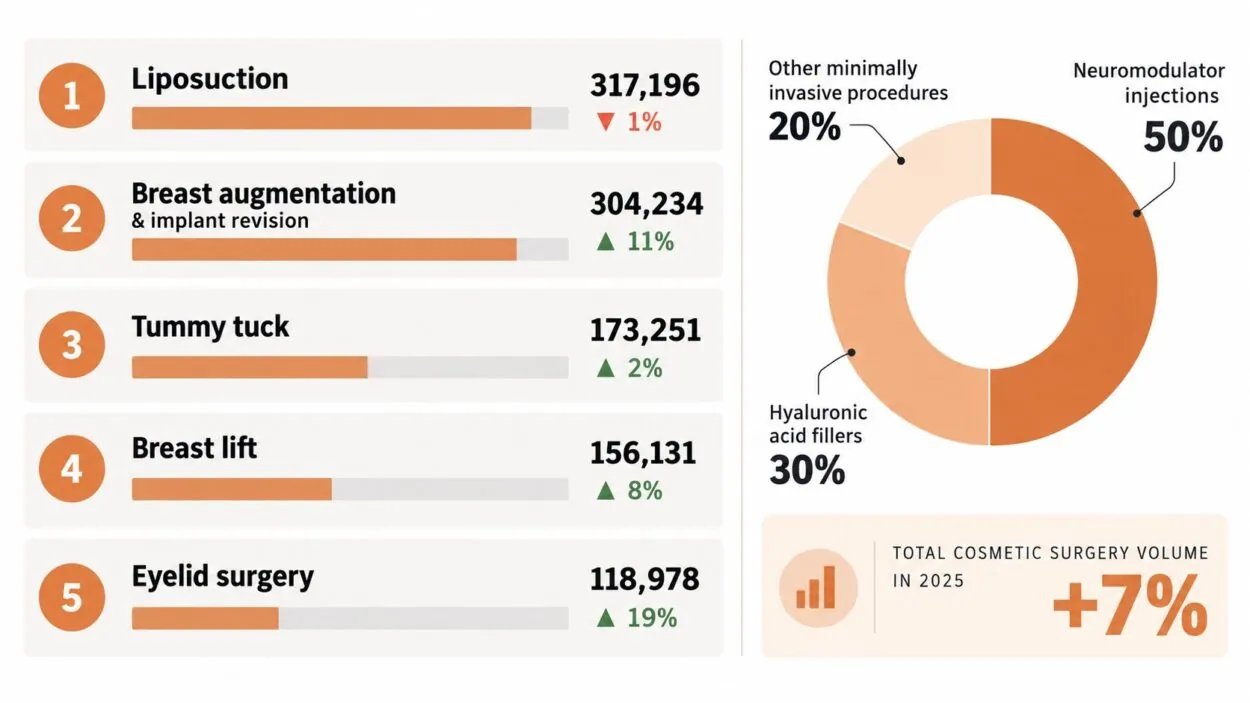
The latest ASPS national statistics place liposuction first among cosmetic surgeries in 2025, with 317,196 procedures. Breast augmentation and implant revision followed with 304,234, then tummy tuck with 173,251, breast lift with 156,131 and eyelid surgery with 118,978.
| Procedure | Volume or Share | Change From Previous Year |
| Liposuction | 317,196 | Down 1% |
| Breast augmentation and implant revision | 304,234 | Up 11% |
| Tummy tuck | 173,251 | Up 2% |
| Breast lift | 156,131 | Up 8% |
| Eyelid surgery | 118,978 | Up 19% |
| Neuromodulator injections | About 50% of minimally invasive procedures | Leading non-surgical category |
| Hyaluronic acid fillers | About 30% of minimally invasive procedures | Second-largest non-surgical category |
Total cosmetic surgery volume increased 7 percent during 2025. Growth was not concentrated in a single category. Breast surgery, facial rejuvenation and several body-lift procedures all contributed.
Neuromodulators and Fillers Still Dominate Non-Surgical Care
Botulinum toxin products such as Botox remain the largest minimally invasive category. ASPS reports that neuromodulator injections represented about half of all minimally invasive treatments performed in 2025.
Hyaluronic acid fillers accounted for another 30 percent. Together, the two categories represented roughly four out of every five minimally invasive procedures recorded by ASPS.
The treatments serve different purposes. Neuromodulators temporarily reduce targeted muscle activity and are commonly used for expression lines. Hyaluronic acid fillers add volume and are used in areas such as the lips, cheeks and chin, depending on the product and its FDA-approved indication.
Popularity does not make every injectable appropriate for every face or every goal. Treatment area, facial anatomy, product selection and the amount used all affect the result. People considering injectables can look for providers offering personalized aesthetic care built around an individual consultation rather than starting with a specific product or amount.
Liposuction Remains the Most Common Cosmetic Surgery
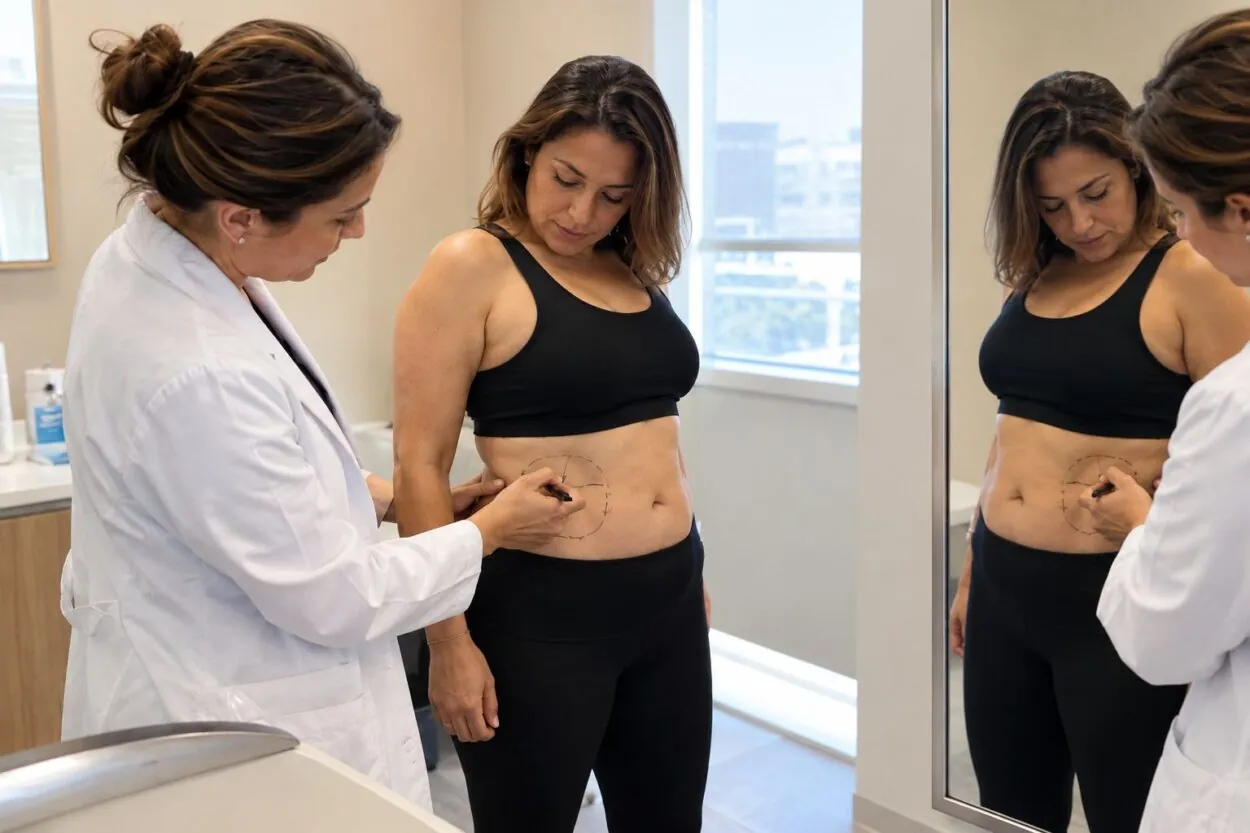
Liposuction held the number one position with 317,196 procedures in 2025. Volume was almost unchanged from the previous year, falling by 1 percent, yet it remained ahead of every other cosmetic operation reported by ASPS.
The procedure removes localized fat through suction and is used to change body contour in selected areas. It is not the same treatment as non-surgical fat reduction, and it is not a substitute for general weight loss.
Liposuction also appears alongside other operations. A surgeon may perform it with a tummy tuck or body-lift procedure when the treatment plan calls for both fat removal and removal or repositioning of excess skin.
Breast Augmentation Grew Again
Breast augmentation and implant revision reached 304,234 procedures in the latest ASPS report, an 11 percent increase from the previous year. That put the category close behind liposuction in total volume.
The national data also points to changing preferences inside breast surgery. ASPS reported that member surgeons saw interest in smaller and more proportionate implants among women rather than a simple push toward greater volume.
Breast lifts also remained high on the list, with 156,131 procedures and an 8 percent annual increase. A lift changes breast position and shape by removing excess skin and reshaping supporting tissue. It does not serve the same purpose as an implant, although surgeons can combine the procedures in selected patients.

Tummy Tucks Remain Near the Top
Abdominoplasty ranked third among cosmetic surgeries with 173,251 procedures in 2025, up 2 percent. The operation removes excess abdominal skin and can repair or tighten separated or weakened abdominal muscles when clinically appropriate.
The category has gained added attention as more patients lose substantial amounts of weight. Skin does not always contract to match a major reduction in body size, leaving some patients with loose tissue around the abdomen and other areas.
A tummy tuck is a major operation with an incision, anesthesia and recovery period. Comparing it with a quick office treatment simply because both can change the appearance of the midsection misses the medical difference between them.
Eyelid Surgery Had One of the Largest Increases
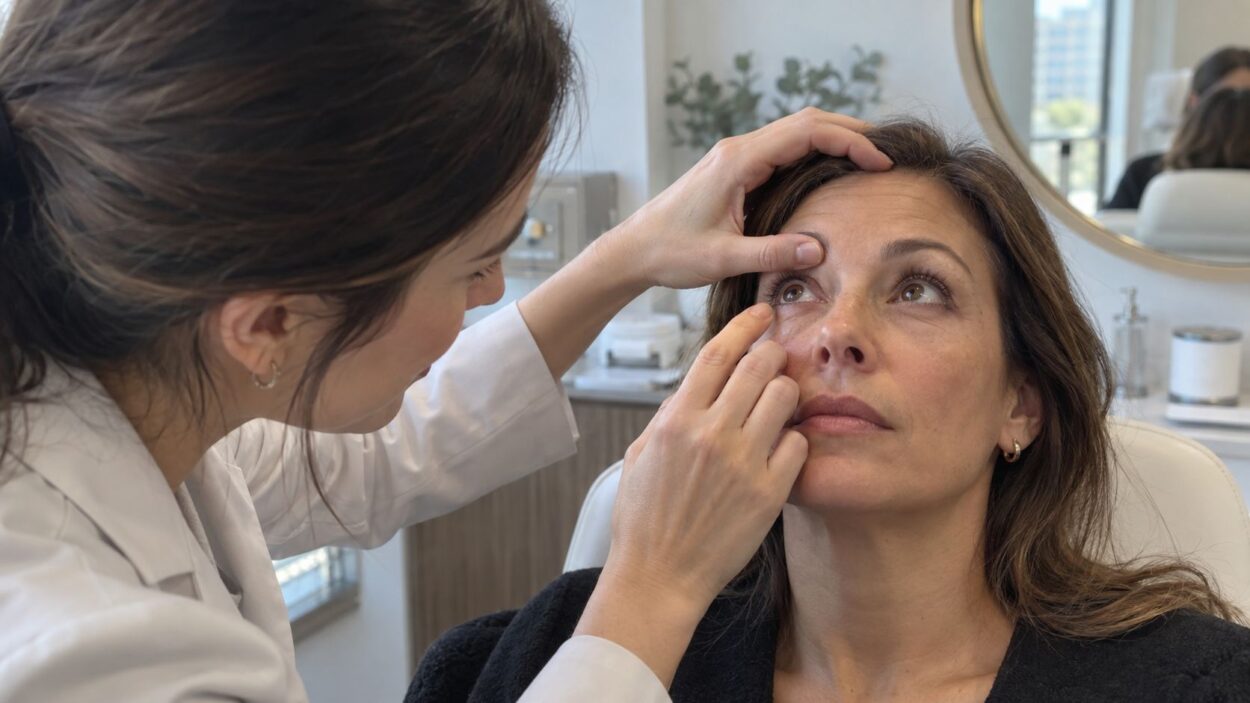
Blepharoplasty reached 118,978 procedures in 2025 and increased by 19 percent, according to ASPS. The operation finished fifth by total surgical volume but grew considerably faster than several procedures above it.
Eyelid surgery removes or repositions selected skin and fat around the upper or lower eyelids. Cosmetic goals can include reducing excess upper-lid skin or lower-lid puffiness, although eyelid operations can also be performed for functional reasons in patients whose upper-lid tissue interferes with vision.
For less invasive approaches to the eye area, some people also explore under-eye oils and topical care before considering cosmetic procedures.
Facial rejuvenation increased in other areas as well. The 2025 report recorded growth in facelifts, neck lifts, forehead lifts and facial fat grafting, with facial fat grafting posting one of the sharpest percentage increases.
Major Weight Loss Is Affecting Procedure Demand
One of the clearest changes in the 2025 data involves patients who have lost significant weight, including people using GLP-1 medications. ASPS reported that 82 percent of its member surgeons received consultation requests connected with GLP-1 use.
Weight loss can change the face, abdomen, arms, thighs and breasts at the same time. A lower body weight does not automatically remove loose skin, which helps explain rising interest in arm lifts, thigh lifts, body lifts and facial procedures.
The trend also helps explain why procedure counts alone do not tell the entire story. A person asking about a facelift after major weight loss may have a very different concern from someone seeking facial surgery because of age-related changes, even though both appear under the same procedure category.
Laser and Light Treatments Remain Major Non-Surgical Categories
Injectables take most of the non-surgical volume, but device-based treatments remain a substantial part of cosmetic care. ASPS lists laser skin treatments among the leading minimally invasive categories, followed by a group that includes hair removal, intense pulsed light treatments and tattoo removal.
Different devices target different problems. Some treatments address pigmentation or sun damage, others target unwanted hair, and resurfacing procedures can be used for selected texture concerns and scars.
The name of a technology alone does not explain the likely result or recovery. Device type, wavelength, treatment depth, skin type and the condition being treated all matter, which is why two procedures marketed loosely as “laser treatments” can involve very different treatment plans.
Popular Procedures Still Carry Medical Risk
High procedure counts should not be read as proof that a treatment is minor or risk-free. Surgery carries risks related to anesthesia, bleeding, infection, healing and procedure-specific complications. Injectables also require medical judgment and knowledge of facial anatomy.
The FDA warns about dermal filler complications that range from swelling and bruising to rare but serious events caused by accidental injection into a blood vessel. Reported outcomes can include tissue death, vision problems, blindness and stroke.
Botulinum toxin products are prescription drugs as well. FDA-approved products carry a boxed warning concerning the potential spread of toxin effects away from the injection site.
Provider qualifications, the exact product being used, the proposed treatment area and a clear discussion of risks deserve more attention than social media popularity. A consultation should also cover alternatives and what happens if the expected result is not achieved.
The Bottom Line
The latest national data does not point to one cosmetic trend replacing everything that came before it. Long-established procedures still dominate the numbers. Liposuction leads surgery, breast augmentation remains close behind, and Botox-type injections and hyaluronic acid fillers account for most minimally invasive treatments.
The more notable change is happening around those leaders. Eyelid surgery and other facial procedures are growing, breast surgery has picked up again, and major weight loss is sending more patients to consultations for lifts and contouring procedures.
Popularity can show where demand is concentrated, but it cannot decide which treatment suits one person. Medical history, anatomy, expected recovery, risk tolerance and the result someone actually wants matter far more than a national ranking.