
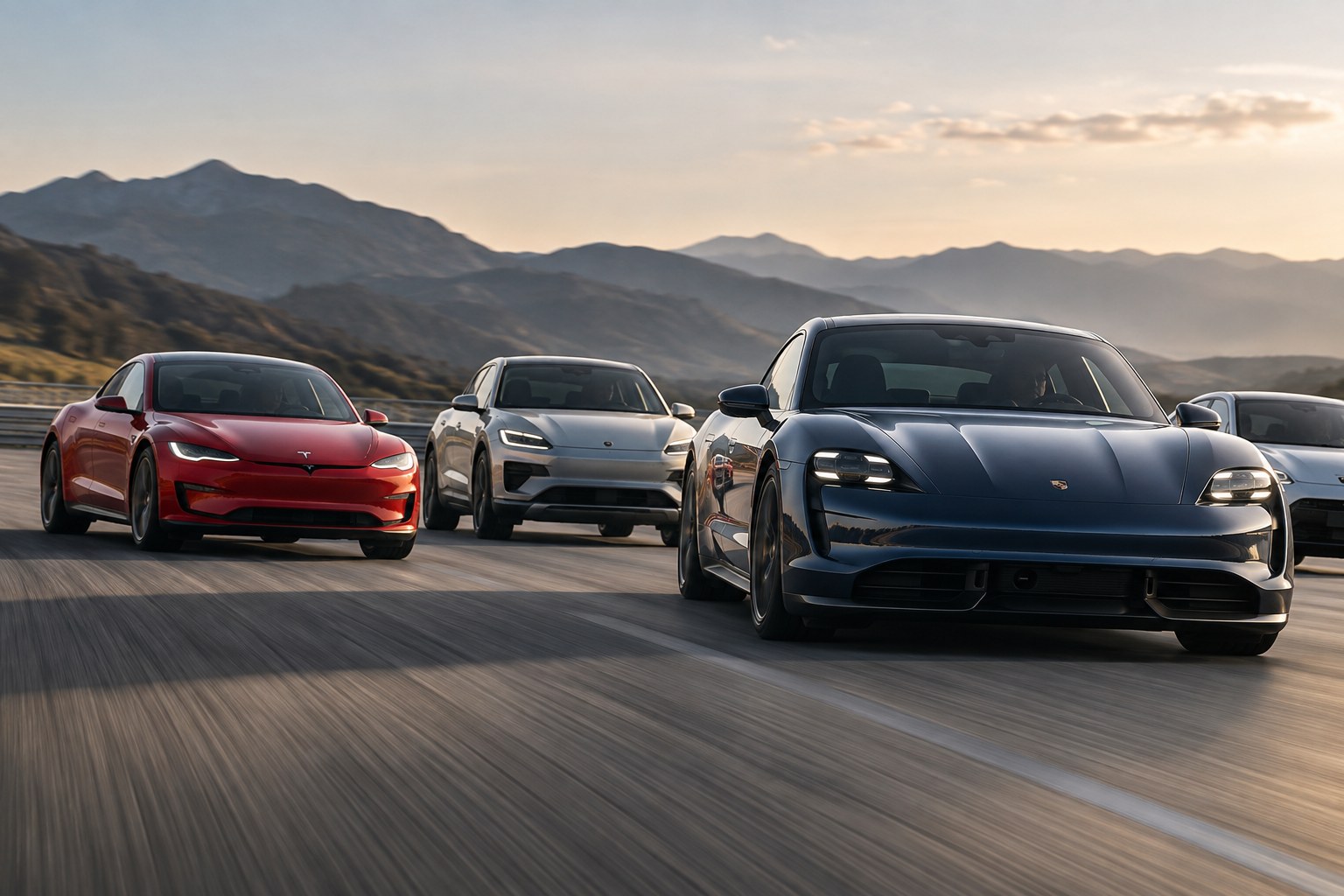
There is something almost ridiculous about looking at a family-sized EV and realizing it can reach 60 mph quicker than cars that once covered bedroom walls on posters.
That is where electric performance is in 2026. Serious acceleration is no longer reserved for low-slung exotics, and the gap between an everyday EV and a proper performance car has become much harder to define.
I went through the quickest production EVs currently on sale and pulled out 18 that can hit 60 mph in less than four seconds. The countdown starts at 3.4 seconds and gets progressively more absurd from there.
Here is the List of Fastest Electric Cars in 2026
| Rank | Electric car | 0-60 mph | Power | EPA range | Starting price |
|---|---|---|---|---|---|
| 18 | Genesis GV60 Magma | 3.4 sec | 641 hp with Boost Mode | 222 miles | $69,950 |
| 17 | Volvo EX30 Twin Motor Performance | 3.4 sec | 422 hp | 253 miles | $46,345 |
| 16 | Chevrolet Blazer EV SS | 3.4 sec | 615 hp | 302 miles | $60,700 |
| 15 | Dodge Charger Daytona Scat Pack | 3.3 sec | 670 hp | 265 miles | $59,995 |
| 14 | Ford Mustang Mach-E GT with Performance Upgrade | 3.3 sec | 480 hp | 280 miles | $55,185 |
| 13 | Cadillac Lyriq-V | 3.3 sec | 615 hp | 285 miles | $78,595 |
| 12 | Hyundai Ioniq 5 N | 3.25 sec | 641 hp with N Grin Boost | 221 miles | $59,900 |
| 11 | Mercedes-AMG EQE Sedan | 3.2 sec | 617 hp, 677 hp with boost | 220 miles | $96,600 |
| 10 | Porsche Macan Turbo Electric | 3.1 sec | 630 hp | 293 miles | $112,700 |
| 9 | Lucid Air Grand Touring | 3.0 sec | 819 hp | 512 miles | $114,900 |
| 8 | Tesla Model 3 Performance | 2.9 sec | 500+ hp | 309 miles | $56,630 |
| 7 | Rivian R1T Quad | 2.5 sec | 1,025 hp | 374 miles | $115,990 |
| 6 | Tesla Model X Plaid | 2.5 sec | 1,020 hp | 335 miles | $129,990 |
| 5 | Porsche Cayenne Turbo Electric | 2.4 sec | 1,139 hp | 298 miles | $163,000 |
| 4 | Audi RS e-tron GT Performance | 2.4 sec | 912 hp | 278 miles | $170,500 |
| 3 | Porsche Taycan Turbo GT | 2.2 sec | 1,019 hp | 276 miles | $243,700 |
| 2 | Tesla Model S Plaid | 1.99 sec | 1,020 hp | 368 miles | $124,990 |
| 1 | Lucid Air Sapphire | 1.89 sec | 1,234 hp | 427 miles | $249,000 |
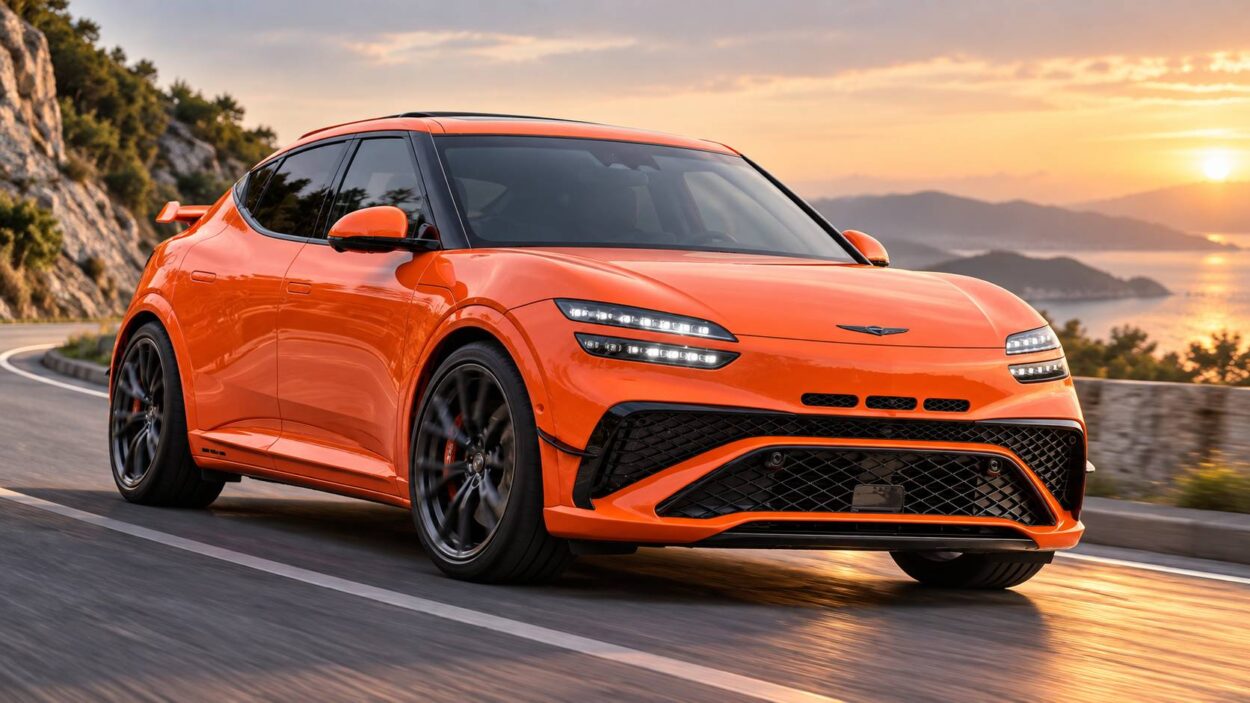
18. Genesis GV60 Magma – Genesis Gives Its Small EV 641 HP
| Battery | 84 kWh |
| Drivetrain | Dual-motor AWD |
| DC fast charging | 10-80% in as little as 18 minutes |
| Performance modes | GT, Sprint and MY Mode |
| Wheels | 21-inch forged wheels |
| Charging port | Built-in NACS |
The GV60 Magma is the first car here, and it already gives some perspective on how fast this list is going to get. Genesis has taken a relatively compact luxury EV, given it two high-output motors and pushed power to 641 hp when Boost Mode is active.
There is more behind the Magma name than extra power. Genesis lowered the car, added 21-inch forged wheels, fitted larger brakes and gave it three dedicated performance settings. Sprint Mode is built around maximum acceleration, while GT Mode changes the chassis and power delivery for sustained faster driving. MY Mode lets the driver combine preferred settings rather than accepting one preset.
Genesis also joined the growing group of EV makers adding simulated mechanical behavior. Its Virtual Gear Shift system imitates an eight-speed dual-clutch transmission, including changes in sound and acceleration as the virtual gears move up and down. I would rather try it before dismissing it. Hyundai proved with the Ioniq 5 N that fake shifts can add some involvement when the software is convincing.
Range is where the Magma pays for some of its performance. The EPA estimate is 222 miles, which is not especially generous at this price. The 800-volt charging architecture helps compensate for that on a road trip, and Genesis says a suitable 350-kW charger can take the battery from 10 to 80 percent in 18 minutes.
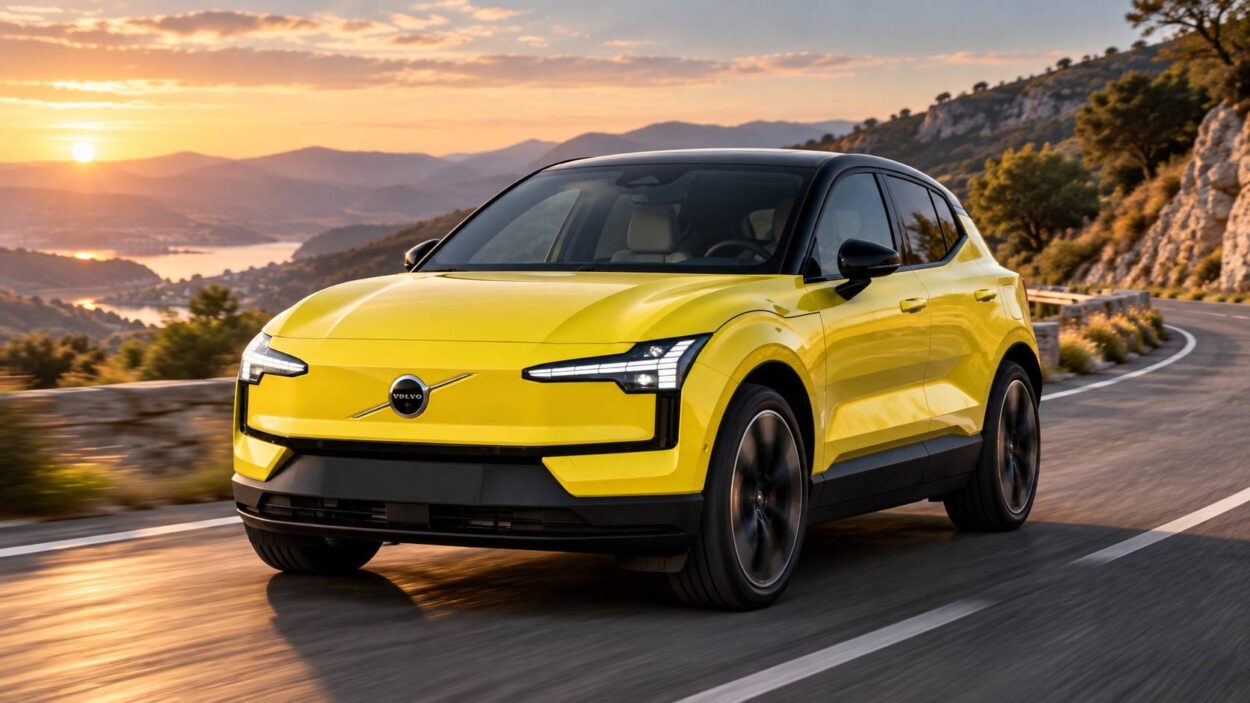
17. Volvo EX30 Twin Motor Performance – 422 HP in Volvo’s Smallest SUV
| Top speed | 112 mph |
| Torque | 400 lb-ft |
| Battery | 69 kWh |
| Drivetrain | Dual-motor AWD |
| Curb weight | 4,151 lb |
| DC fast charging | 10-80% in about 28 minutes |
The EX30 is probably the easiest car on this list to underestimate. It is Volvo’s smallest SUV, its styling is restrained, and nothing about it looks designed to intimidate the car sitting in the next lane.
Then there is the Twin Motor Performance version. One motor drives each axle, total output reaches 422 hp and torque rises to 400 lb-ft. Volvo lists a 3.4-second run to 60 mph, which is an absurd number for something this small and relatively inexpensive.
I would still stop short of describing the EX30 as a sports car. Its 112 mph top speed is deliberately restrained, and Volvo has not turned the chassis into a hard-edged track setup simply because the motors are powerful. The performance is concentrated where most owners will actually notice it, in immediate acceleration at normal road speeds.
The $46,345 starting price also changes the conversation. Several cars further up this ranking cost well into six figures. The EX30 gets through the four-second barrier for less than half the price of some of them. Its 69-kWh battery and 253-mile EPA range are less spectacular, but neither figure looks unreasonable for a compact EV with this level of power.
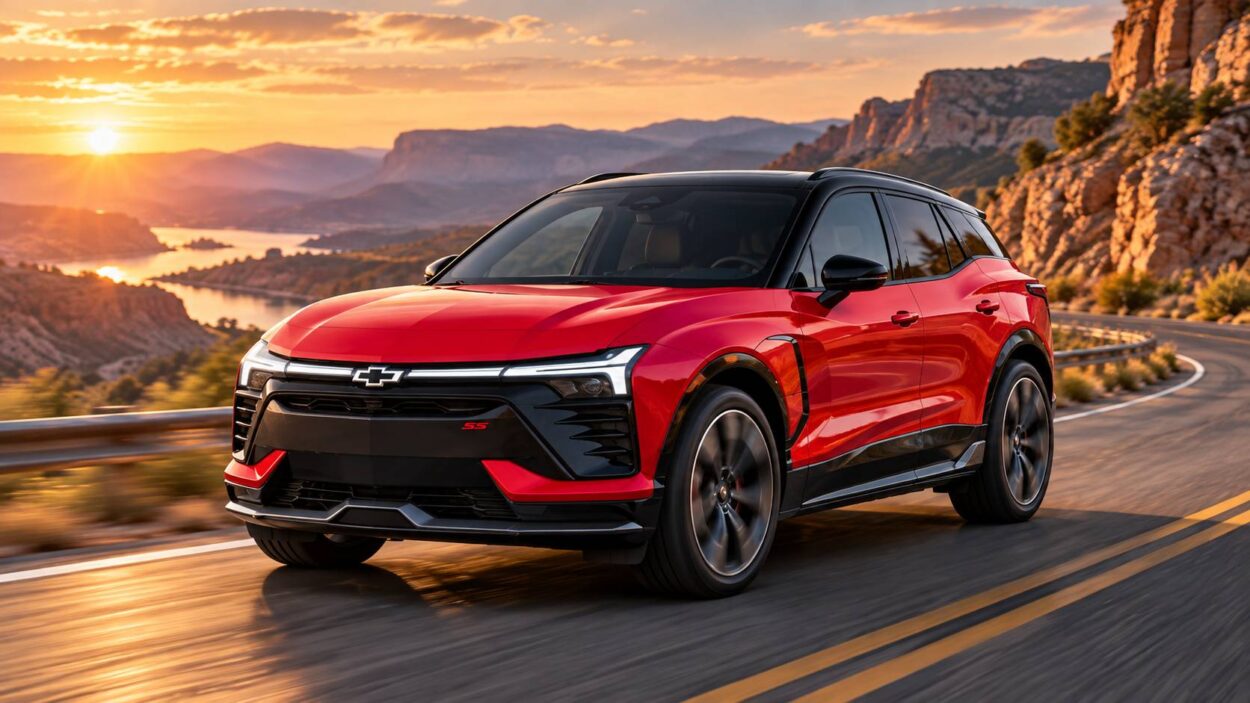
16. Chevrolet Blazer EV SS – The Quickest SS Chevrolet Has Built
| Torque | 650 lb-ft |
| Drivetrain | Dual-motor AWD |
| Performance mode | Wide Open Watts |
| Wheels | 22-inch |
| Maximum cargo space | 59.1 cu. ft. |
| Driver assistance | Super Cruise standard |
Putting an SS badge on an electric Blazer was always going to annoy part of Chevrolet’s traditional fan base. The numbers at least give Chevrolet a strong argument for doing it.
The Blazer EV SS produces 615 hp and 650 lb-ft, sent through both axles. Its 3.4-second run requires Wide Open Watts mode, which unlocks the full performance of the drivetrain. Chevrolet calls it the quickest SS model it has ever produced.
The unusual part is how little the rest of the Blazer changes its character to accommodate that speed. There is still seating for five and up to 59.1 cubic feet of cargo space. Super Cruise is standard on the SS, so the same vehicle that launches hard enough to embarrass older performance cars can handle long stretches of compatible highway with hands-free driving assistance.
Its 302-mile EPA range also puts it in a better position than several performance EVs that struggle to clear the mid-200s. That makes the Blazer SS easier to justify as an everyday vehicle. The 22-inch wheels and extra performance hardware are there when wanted, yet the basic package still works as a large crossover rather than a weekend toy.
15. Dodge Charger Daytona Scat Pack – Electric Muscle With an 11.5-Second Quarter Mile
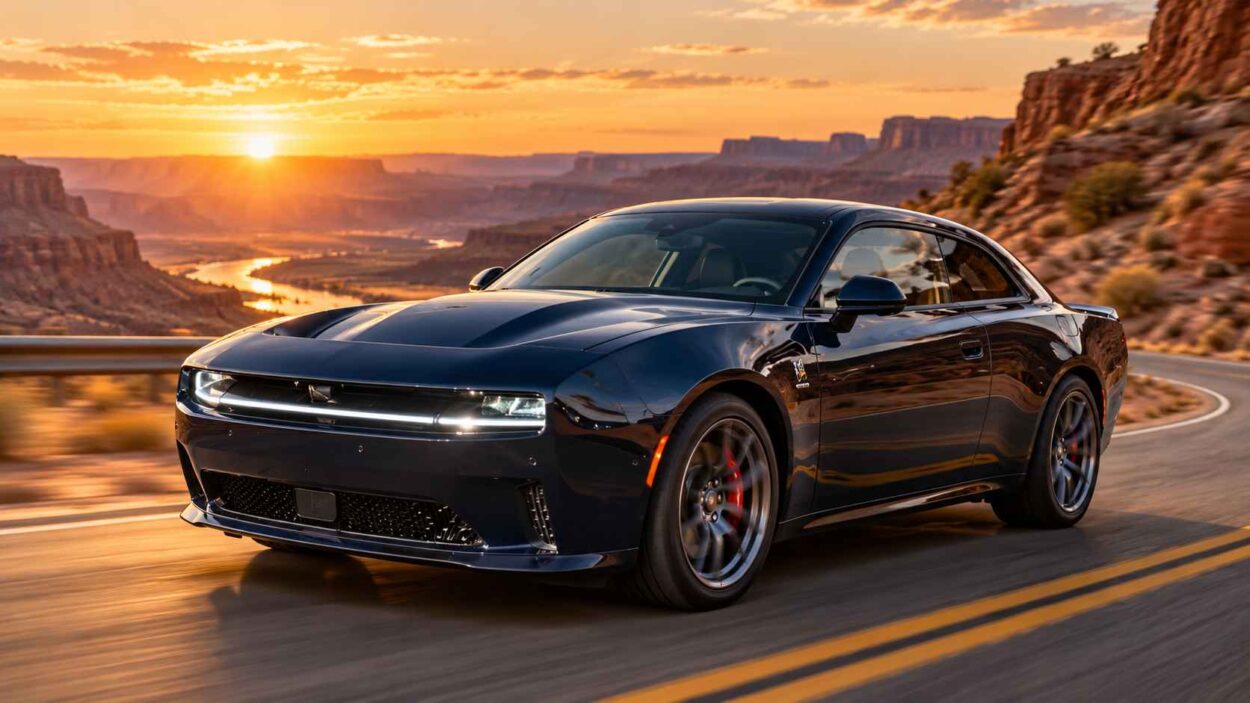
| Torque | 627 lb-ft |
| Quarter mile | 11.5 seconds |
| Electrical architecture | 400 volts |
| Drivetrain | AWD |
| Battery weight | About 1,350 lb |
| Body styles | Two-door and four-door |
Dodge had a harder job than most manufacturers on this list. Making a fast EV is one thing. Convincing Charger buyers that an electric car still belongs in the muscle-car conversation is another.
The Daytona Scat Pack makes its case with numbers first. It produces 670 hp and 627 lb-ft, drives all four wheels and runs the quarter mile in 11.5 seconds. Dodge says it is the fastest Charger it has built, beating the old Hellcat Redeye from 0 to 60 mph.
Dodge has also gone much further than simply replacing the engine with motors. The Fratzonic Chambered Exhaust produces an external soundtrack, and the car includes driving modes built for activities such as drifting and smoky tire displays. Some people will hate the artificial noise immediately. I find the idea more interesting than making every performance EV nearly silent and pretending decades of muscle-car theater never existed.
The huge battery is a reminder of the cost of all that performance. Dodge says the pack alone weighs around 1,350 pounds. That helps explain why the Daytona is a heavy car despite the speed. A range of more than 265 miles keeps it usable, although efficiency clearly was not the first item on the engineering brief.
14. Ford Mustang Mach-E GT Performance Upgrade – 700 LB-FT Changes the Character
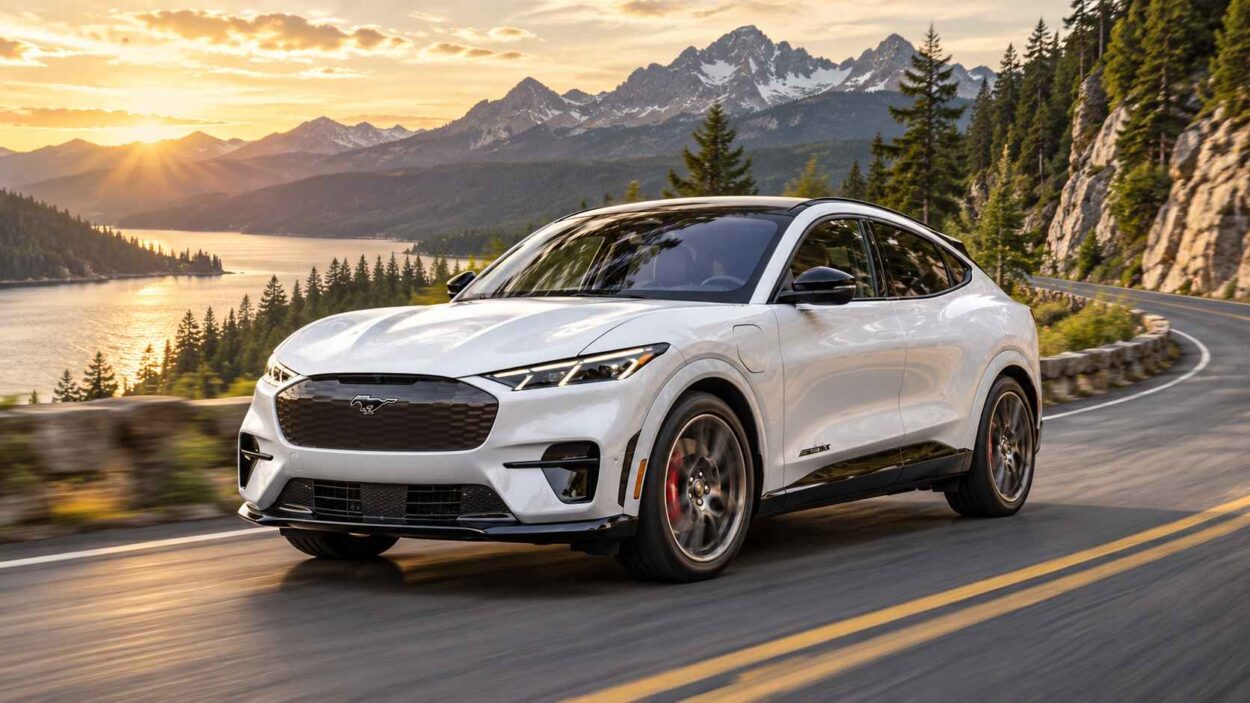
| Torque | 700 lb-ft |
| Drivetrain | Dual-motor eAWD |
| Usable battery capacity | 91 kWh |
| Performance gain | 100 lb-ft more than the standard GT |
| 0-60 improvement | 0.5 second quicker than the standard GT |
| Seating | 5 |
The useful detail with the Mustang Mach-E is that the regular GT does not make this ranking at 3.8 seconds. The car here has Ford’s Performance Upgrade, and that option makes a surprisingly large difference.
Horsepower stays at 480 hp, but torque jumps from 600 to 700 lb-ft. Ford says that extra shove cuts half a second from the acceleration time, taking the Mach-E GT Performance Upgrade to 60 mph in 3.3 seconds.
That tells you quite a lot about how electric performance works. An extra 100 lb-ft available immediately has a huge effect on the launch without requiring Ford to chase a dramatically higher horsepower figure. The Mach-E feels more violent at low speed, which is where most drivers experience its performance anyway.
It also remains one of the easier cars here to use every day. There is a 91-kWh usable battery, five real seats and an EPA estimate of 280 miles. Ford has spent several years refining the Mach-E rather than treating the GT as a one-off performance experiment. The result is less exotic than some cars further up the countdown, but it is also much easier to picture living with every day.
13. Cadillac Lyriq-V – The First Electric V-Series Cadillac
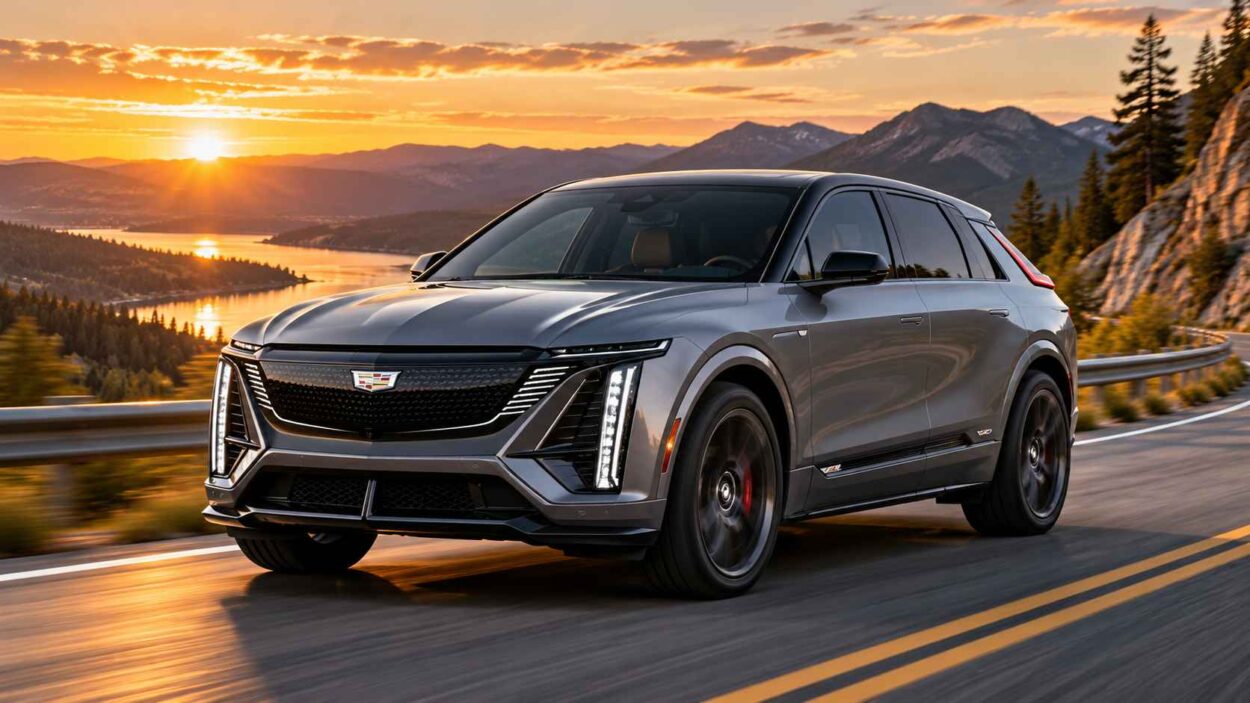
| Torque | 650 lb-ft |
| Battery | 102 kWh usable |
| Drivetrain | Dual-motor AWD |
| DC charging | Up to 75 miles added in about 10 minutes |
| Low-to-80% charging | About 41 minutes |
| Front brakes | Six-piston Brembo calipers |
The Lyriq-V is significant for Cadillac because the V badge has spent more than two decades attached to loud gasoline performance cars. The 2026 Lyriq-V is the first EV to join that family.
Cadillac did not stop at giving the standard Lyriq more software power. The V gets 615 hp and 650 lb-ft in Velocity Max mode, along with Launch Control, revised steering, Continuous Damping Control and large six-piston Brembo front brakes. Cadillac calls it the quickest production model in its history.
I like that the Lyriq-V still looks recognizably like a Cadillac rather than trying to copy a low sports car. It is large, quiet and built around comfort, then hides a 3.3-second launch underneath. That contrast is more interesting than simply making another stiff performance crossover.
The 102-kWh usable battery is also substantial. DC charging is less impressive than the very fastest 800-volt cars here, with Cadillac quoting about 41 minutes from a low state of charge to 80 percent. On the other hand, it can add roughly 75 miles in about 10 minutes under suitable conditions, which is enough for a useful highway stop rather than a long charging session every time.
12. Hyundai Ioniq 5 N – Hyundai Built an EV Around Track Driving
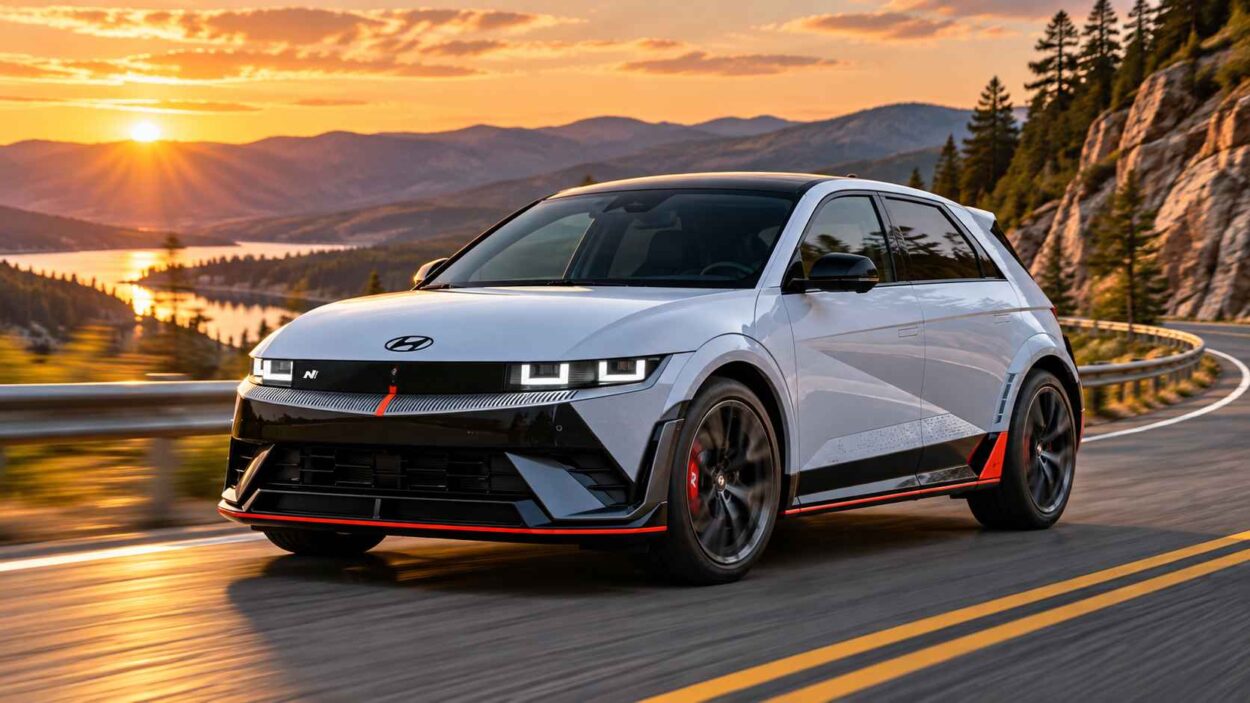
| Torque | 568 lb-ft with N Grin Boost |
| Battery | 84 kWh |
| Electrical system | Up to 800 volts |
| DC fast charging | 10-80% in about 18 minutes on a 350-kW charger |
| Performance hardware | Electronic limited-slip differential and adaptive suspension |
| Special modes | N e-Shift, N Drift Optimizer Pro, N Grin Boost |
The Ioniq 5 N is one of the few cars here where the acceleration figure is almost secondary. Hyundai started with the regular Ioniq 5, then changed enough underneath it to turn the N version into something developed for repeated hard driving rather than a single impressive launch.
Normal output is already 601 hp and 545 lb-ft. Press N Grin Boost and the Ioniq 5 N jumps to 641 hp and 568 lb-ft for 10 seconds. N Launch Control joins in for the 3.25-second run to 60 mph.
Hyundai also fitted an electronic limited-slip differential, electronically controlled suspension and adjustable torque distribution between the axles. N Drift Optimizer Pro goes even further by letting the driver alter how the car behaves once the rear starts moving around. Those features tell me Hyundai was thinking about what happens after the first straight section of road.
Then there are the fake gears. N e-Shift simulates an eight-speed dual-clutch transmission, complete with interruptions in power delivery and changes in sound. It should be silly. In practice, the idea gives the driver something to do with a powertrain that would otherwise deliver the same uninterrupted acceleration every time.
11. Mercedes-AMG EQE Sedan – AMG Torque Reaches 738 LB-FT With Boost
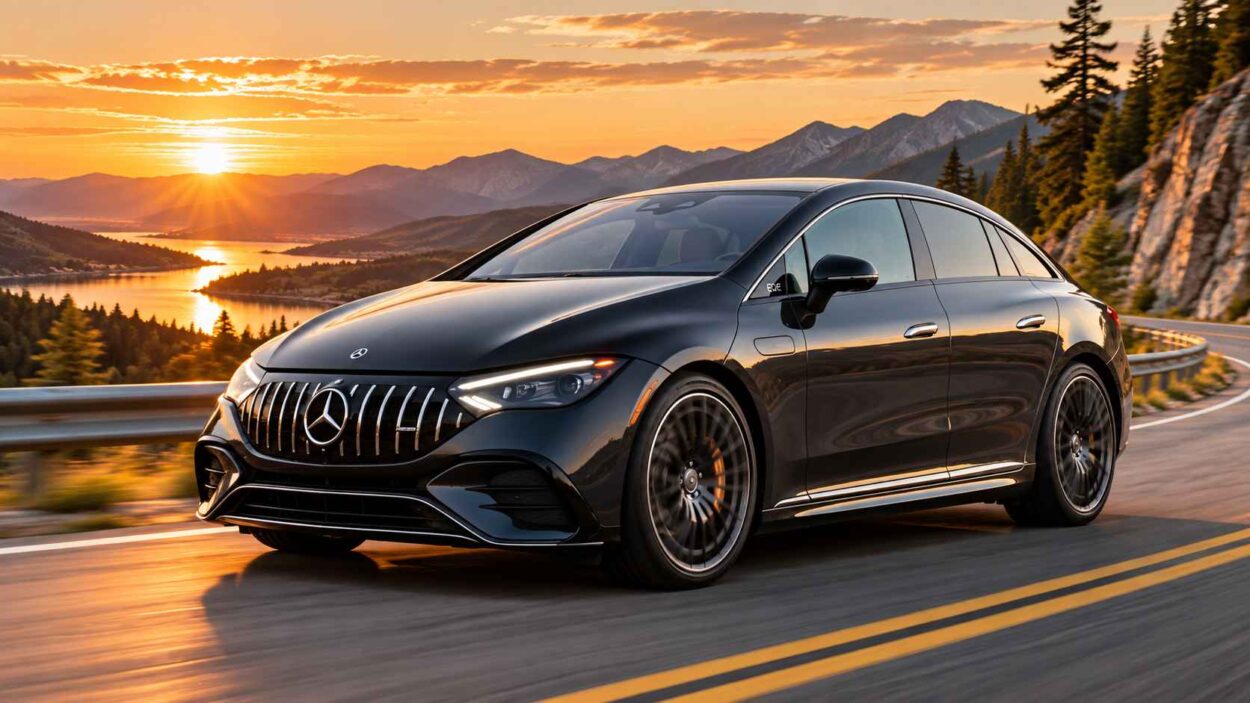
| Torque | 701 lb-ft, up to 738 lb-ft with boost |
| Battery | 90.6 kWh |
| DC charging | Up to 170 kW |
| 10-80% DC charge | About 32 minutes |
| Curb weight | 5,577 lb |
| Rear-wheel steering | 3.6 degrees |
The AMG EQE is heavy even by modern EV standards. Mercedes lists a curb weight of 5,577 pounds, yet the car still gets to 60 mph in 3.2 seconds. The explanation is a pair of AMG-specific motors producing 617 hp and 701 lb-ft in normal operation.
With the boost function active, output rises to 677 hp and 738 lb-ft. Fully variable AMG Performance 4MATIC+ sends that power between all four wheels.
The chassis has not been ignored either. AMG Ride Control+ air suspension is standard, and rear-wheel steering turns the back wheels by as much as 3.6 degrees. On a car nearly 197 inches long, that rear steering helps both at low speeds and when the car is changing direction quickly.
The less impressive number is charging. A 170-kW DC peak and roughly 32 minutes from 10 to 80 percent are ordinary beside newer 800-volt rivals. Mercedes has built a seriously quick luxury sedan, but its electrical architecture now shows how quickly the fastest-charging EVs have moved ahead.
10. Porsche Macan Turbo Electric – 833 LB-FT in a Compact Porsche SUV
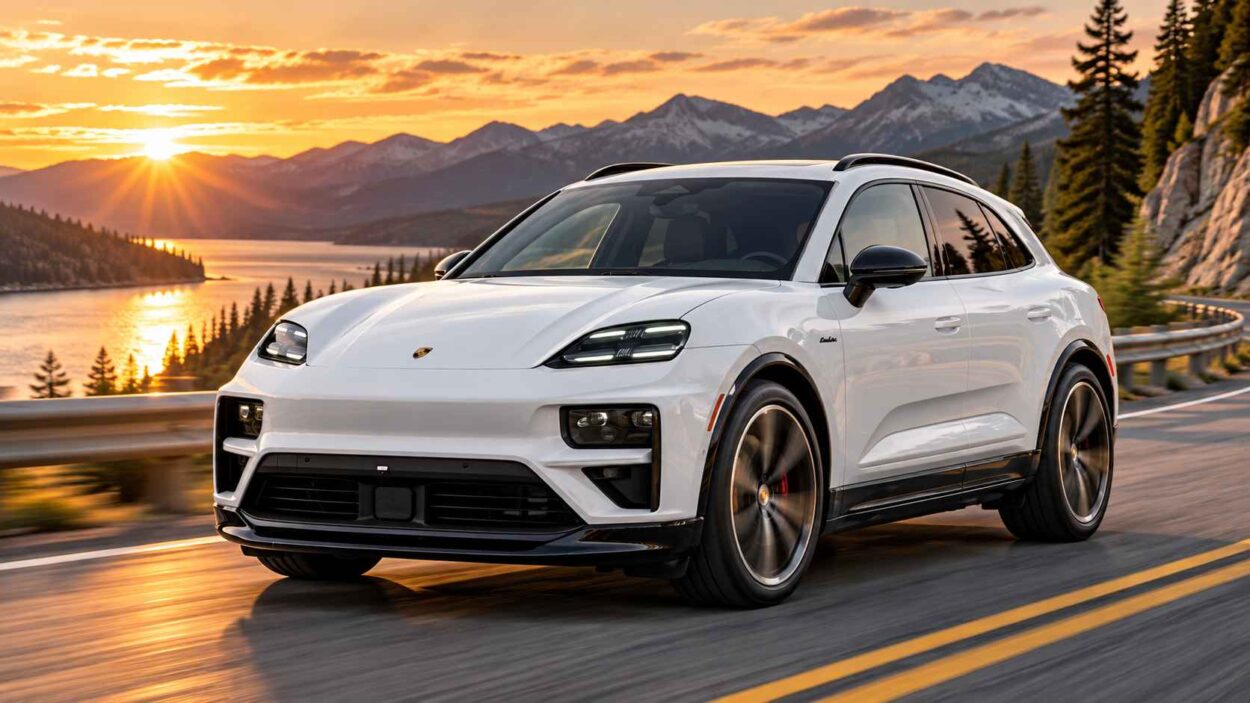
| Torque | 833 lb-ft |
| Battery | 100 kWh gross |
| DC charging | Up to 270 kW |
| 10-80% DC charge | 21 minutes |
| Electrical architecture | 800 volts |
| Suspension | Adaptive air suspension with PASM |
Porsche could have made the Macan Turbo Electric quick simply by installing stronger motors. Instead, the company treated the chassis as seriously as the powertrain, which is why the Macan is one of the more convincing performance SUVs in the group.
Launch Control unlocks 630 hp and a huge 833 lb-ft of torque. The all-wheel-drive system has a rear bias, so the Macan does not feel as if the electronics are simply dragging it forward from both ends.
Adaptive air suspension and Porsche Active Suspension Management are standard. Porsche also uses two-valve dampers that can adjust compression and rebound separately, giving the suspension more control over the body without making the ride unnecessarily harsh.
The charging hardware is just as important for daily use. Its 100-kWh battery runs on an 800-volt architecture and accepts up to 270 kW. Porsche quotes 21 minutes from 10 to 80 percent under ideal conditions, which is much closer to what I would expect from an expensive performance EV in 2026.
9. Lucid Air Grand Touring – 512 Miles Without Giving Up Supercar Acceleration
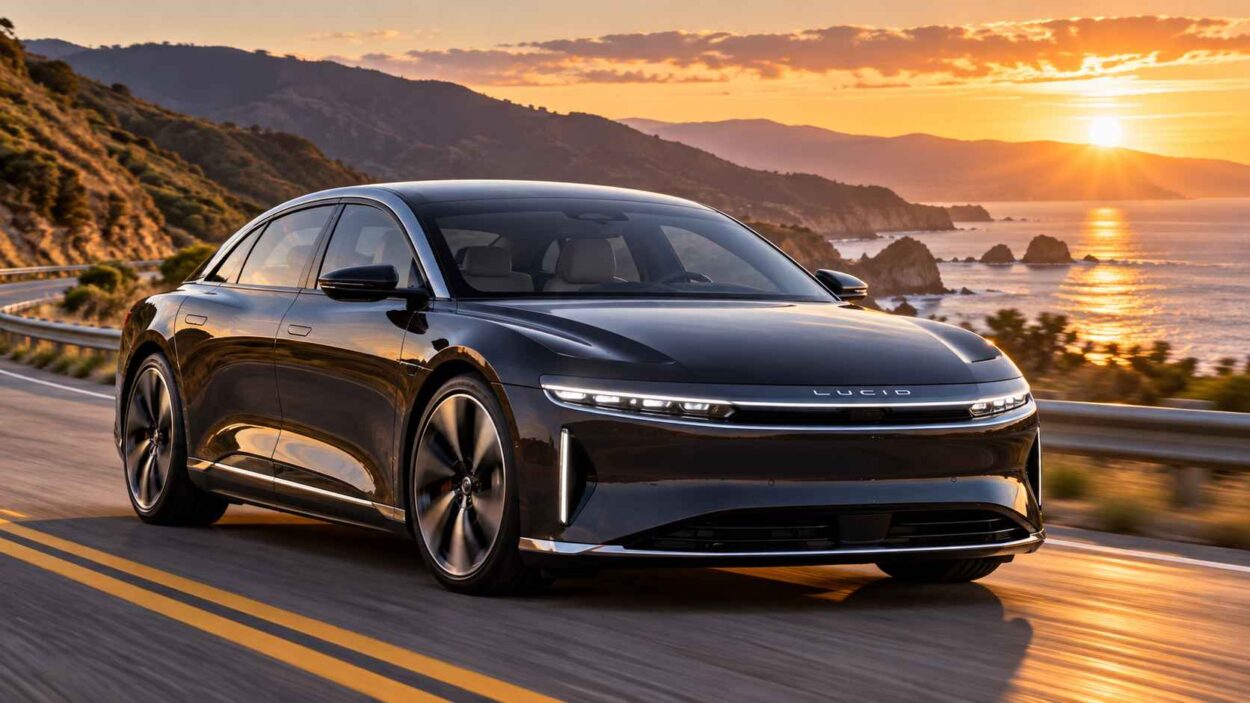
| Top speed | 168 mph |
| Charge added in 12 minutes | Up to 200 miles |
| Drag coefficient | 0.197 Cd |
| Drivetrain | Dual-motor AWD |
| Wheel sizes | 19 to 21 inches |
| Seating | Up to 5 |
The Air Grand Touring is where the usual argument about performance EVs starts falling apart. It does not force buyers to choose between huge acceleration and serious highway range. Lucid gives it both.
The headline figure is the 512-mile EPA estimate, but Lucid also gives the Grand Touring 819 hp and a 168 mph top speed. That combination is far more unusual than another EV with a violent launch.
Much of the range comes from efficiency rather than simply carrying an enormous battery. The Air has a drag coefficient of 0.197, one of those numbers that sounds boring until you realize how much aerodynamic resistance affects an EV at freeway speed.
Charging is equally impressive. Lucid says the Grand Touring can add as much as 200 miles in 12 minutes under suitable conditions. For someone actually covering long distances, that figure is more useful than shaving another tenth from an already ridiculous 0-to-60 time.
8. Tesla Model 3 Performance – 163 MPH Without Moving Into Six-Figure Pricing
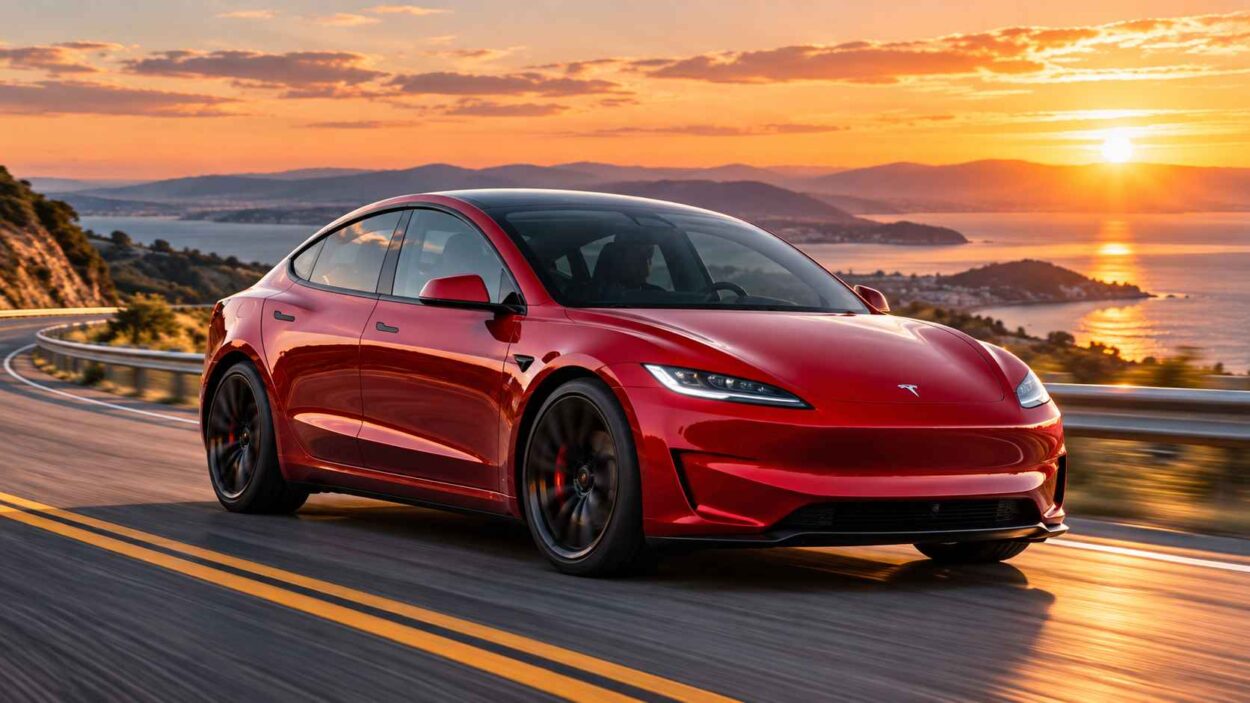
| Top speed | 163 mph |
| Peak power | 510 hp |
| Drivetrain | Dual-motor AWD |
| Suspension | Adaptive damping |
| Track software | Track Mode |
| Wheels | Staggered forged Performance wheels |
The Model 3 Performance is the point in the ranking where the numbers start looking especially awkward for traditional sports cars. Tesla lists 510 hp, a 163 mph top speed and a 2.9-second run to 60 mph, yet the car still sits much closer to normal premium-sedan pricing than to the exotic machinery further up the list.
Tesla also did more than increase motor output. Adaptive dampers and Track Mode let the driver change the handling balance, stability control and regenerative braking. The staggered forged wheels and revised aero also separate the Performance from the ordinary Model 3 more clearly than previous versions did.
I still think the brutal launch is the easiest part of the car to understand. The more interesting question is what happens on a winding road after that launch is over. Adaptive suspension gives the current Performance a better answer than the early Model 3 Performance, which always had huge straight-line pace but never felt quite as developed as the power figure suggested.
The cabin remains pure Tesla, including the sparse dashboard and heavy dependence on the center screen. Buyers either already accept that approach or probably crossed the car off their list before reaching the performance specifications.
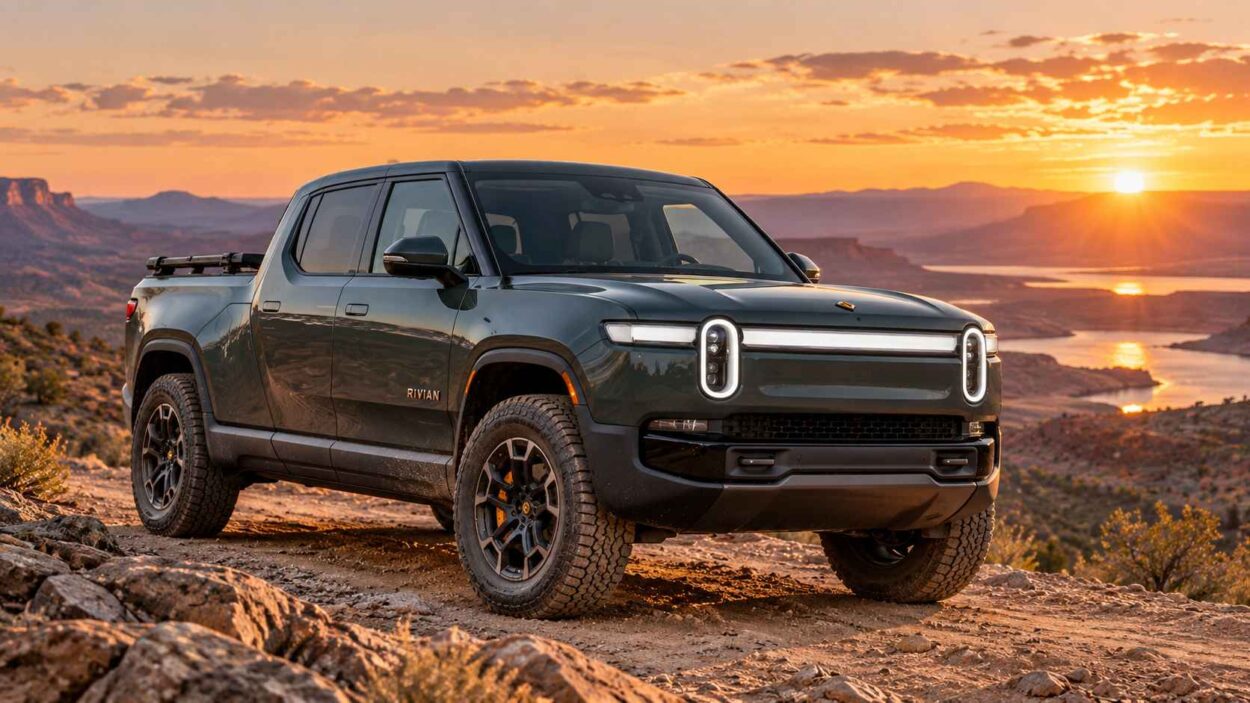
7. Rivian R1T Quad – Four Motors, 1,198 LB-FT and an 11,000-LB Tow Rating
| Torque | 1,198 lb-ft |
| Motors | 4, one for each wheel |
| Quarter mile | 10.5 seconds |
| Top speed | 130 mph |
| Maximum towing | 11,000 lb |
| Maximum payload | 1,669 lb |
A pickup truck should not really be sitting this high on a list of the quickest EVs, which is exactly why the R1T Quad is interesting.
Rivian installs four independently controlled motors, one at each wheel, producing 1,025 hp and 1,198 lb-ft. Launch Mode sends the R1T through the quarter mile in 10.5 seconds, and Rivian has recorded a 130 mph top speed.
Four motors also give Rivian much finer control over individual wheels than a conventional dual-motor system. Torque can be adjusted at each corner for road handling, snow, loose surfaces and rock crawling. Rivian even includes separate Rally, Drift, Soft Sand and Rock Crawl modes.
The bizarre part is that none of this removes the basic truck capability. The R1T Quad can tow up to 11,000 pounds and carry a payload of 1,669 pounds. That means the same pickup capable of running a 10.5-second quarter mile can leave the pavement and pull a substantial trailer afterward.
I would not expect that 374-mile EPA figure to survive unchanged with a heavy trailer attached, of course. Towing punishes EV range just as it raises fuel consumption in a gasoline truck. Still, putting this level of acceleration, towing capacity and genuine off-road hardware into one vehicle is something no traditional performance car can copy.
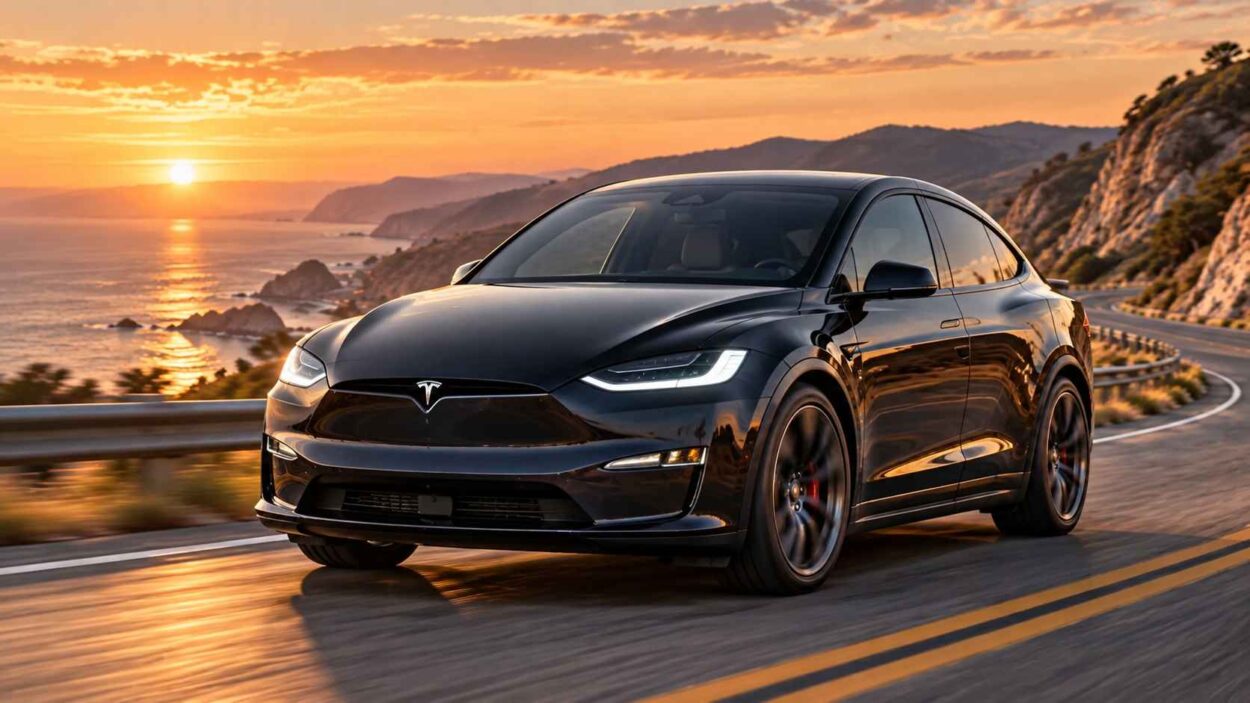
6. Tesla Model X Plaid – A 9.9-Second Quarter Mile With Room for Six
| Top speed | 163 mph |
| Quarter mile | 9.9 seconds |
| Drivetrain | Tri-motor AWD |
| Curb weight | 5,434 lb |
| Maximum towing | 5,000 lb |
| Cargo space | 94.5 cu. ft. |
The Model X Plaid makes very little sense if you judge it by the standards used for normal SUVs. It weighs more than 5,400 pounds, offers seating for up to six and has enough cargo room for a family trip. Then it runs the quarter mile in 9.9 seconds.
Tesla uses three motors rather than the usual two, with torque vectoring helping control how power reaches the rear wheels. Tesla says the Model X Plaid maintains more than 1,000 hp all the way to 163 mph, so the acceleration does not disappear once the initial launch is over.
I find the practical numbers almost as strange as the performance figures. There is 94.5 cubic feet of maximum cargo room and a 5,000-pound tow rating. It is possible to load six people into the same vehicle that will run a quarter mile in territory once occupied by heavily modified drag cars.
Its size does come with consequences. The Model X is heavy, physically large and far removed from the low seating position of a traditional performance car. Straight-line speed is the headline attraction here. Anyone expecting a 5,434-pound SUV to behave like a small sports coupe through every corner is asking physics for too much.
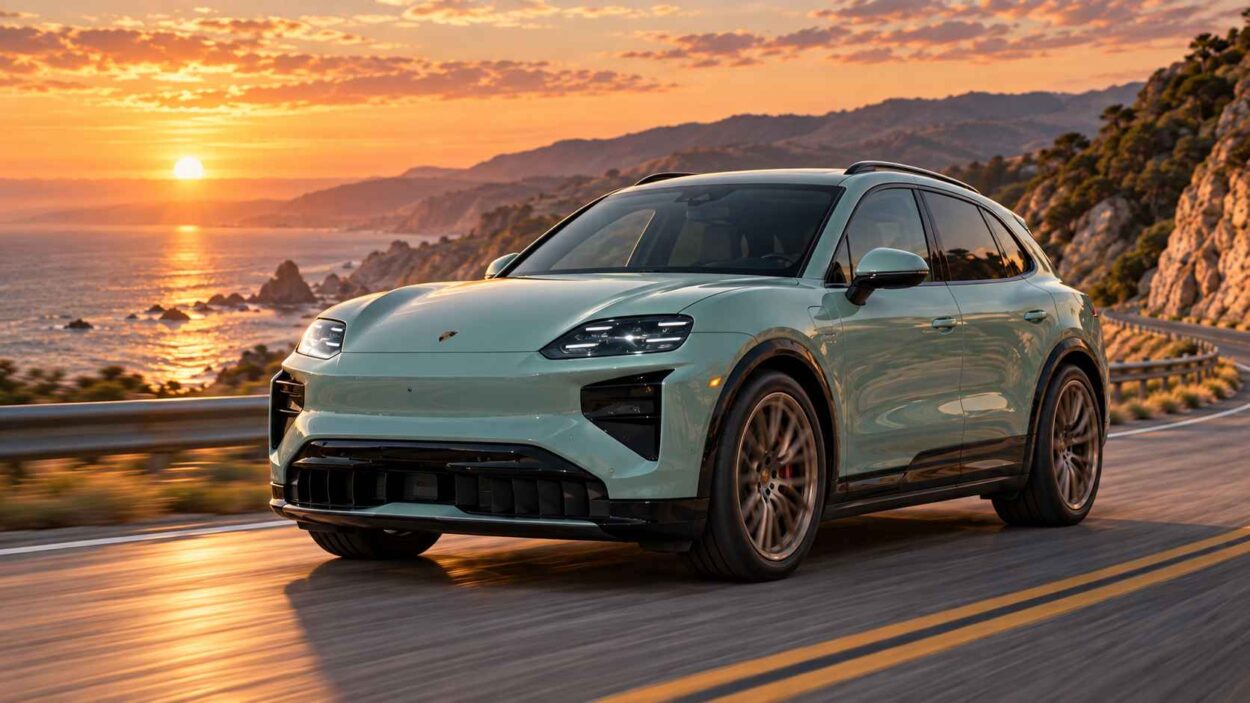
5. Porsche Cayenne Turbo Electric – 400-kW Charging Meets a 7,716-LB Tow Rating
| Top speed | 162 mph |
| Torque with Launch Control | 1,106 lb-ft |
| Battery | 113 kWh |
| Maximum DC charging | Up to 400 kW under specific conditions |
| 10-80% DC charge | 16 minutes |
| Maximum towing | 7,716 lb |
The electric Cayenne reaches number five, and its acceleration is only part of why the engineering is impressive. Porsche has built a large luxury SUV with more than 1,100 lb-ft of torque that can also tow up to 7,716 pounds.
With Launch Control active, the Turbo sends 1,139 hp through all four wheels. Porsche says it keeps pulling to 162 mph, while 0 to 124 mph takes only 7.4 seconds. Those are serious performance-car numbers coming from something designed to carry passengers, luggage and a trailer.
The charging system is arguably just as important. Its 800-volt architecture supports up to 400 kW under specific conditions, and Porsche quotes 16 minutes for a 10 to 80 percent charge. A 113-kWh battery is large, so getting that much energy back into it quickly is essential.
Porsche also says around 97 percent of everyday braking events can be handled by the electric motors through regeneration. Peak recuperation reaches 600 kW. The result is an SUV that is doing several difficult things at once rather than existing purely to produce an outrageous launch number.
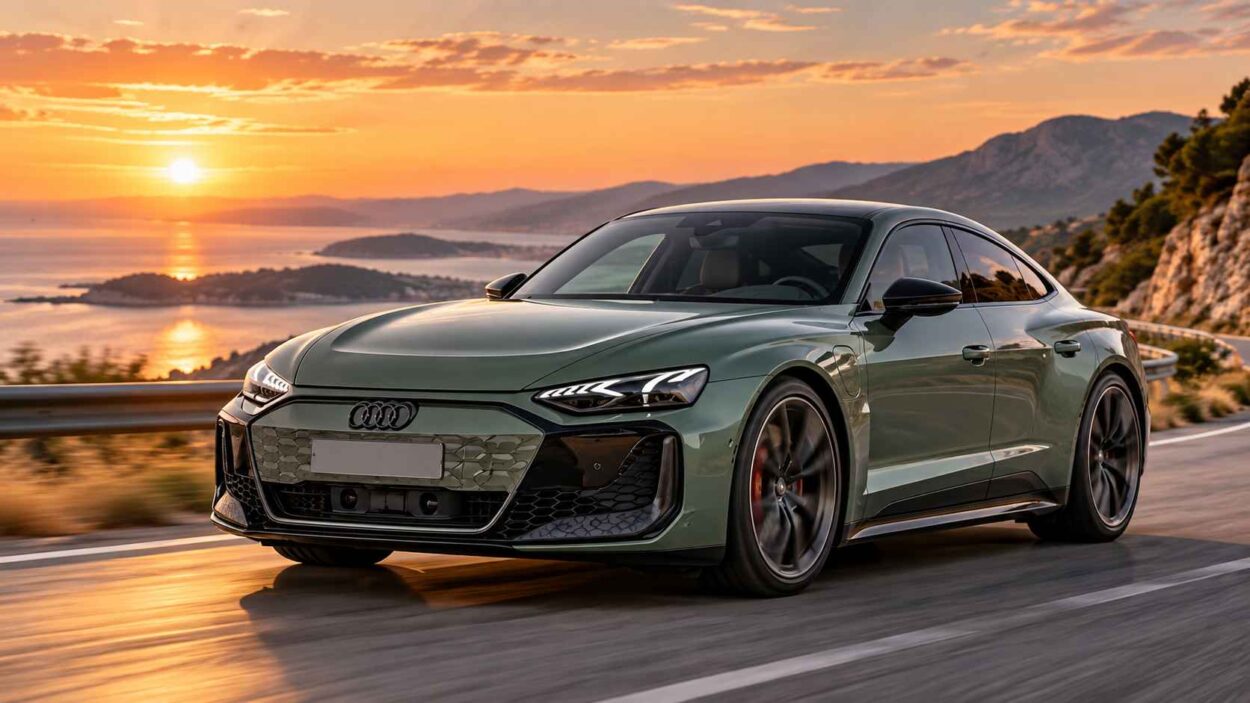
4. Audi RS e-tron GT Performance – The Most Powerful Production Audi Yet
| Battery | 105 kWh gross, 97 kWh usable |
| Electrical architecture | 800 volts |
| Maximum DC charging | 320 kW |
| 10-80% DC charge | About 18 minutes |
| Push-to-Pass | Extra power available for up to 10 seconds |
| Available front brakes | 420-mm ceramic discs with 10-piston calipers |
Audi has built plenty of fast RS cars, which makes the RS e-tron GT Performance’s position inside the company especially interesting. Audi calls it the most powerful and quickest-accelerating production model it has ever made.
Launch Control brings output to 912 hp, but Audi has not built the car around launches alone. Push-to-Pass provides an extra burst for up to 10 seconds, and the available Dynamic Plus package adds active suspension, performance tires and ceramic brakes with huge 420-mm front discs.
The active suspension is one of the cleverer parts. Electrohydraulic actuators can control individual wheels and counter body movement much more aggressively than conventional dampers. That helps the car stay composed without requiring an unbearably stiff ride every time the road becomes rough.
Charging is strong too. The 105-kWh battery accepts up to 320 kW, with Audi quoting roughly 18 minutes from 10 to 80 percent. For a car costing well over $170,000, that sort of charging performance belongs on the expectations list alongside horsepower and acceleration.
3. Porsche Taycan Turbo GT – A 9.5-Second Quarter Mile Without the Weissach Package
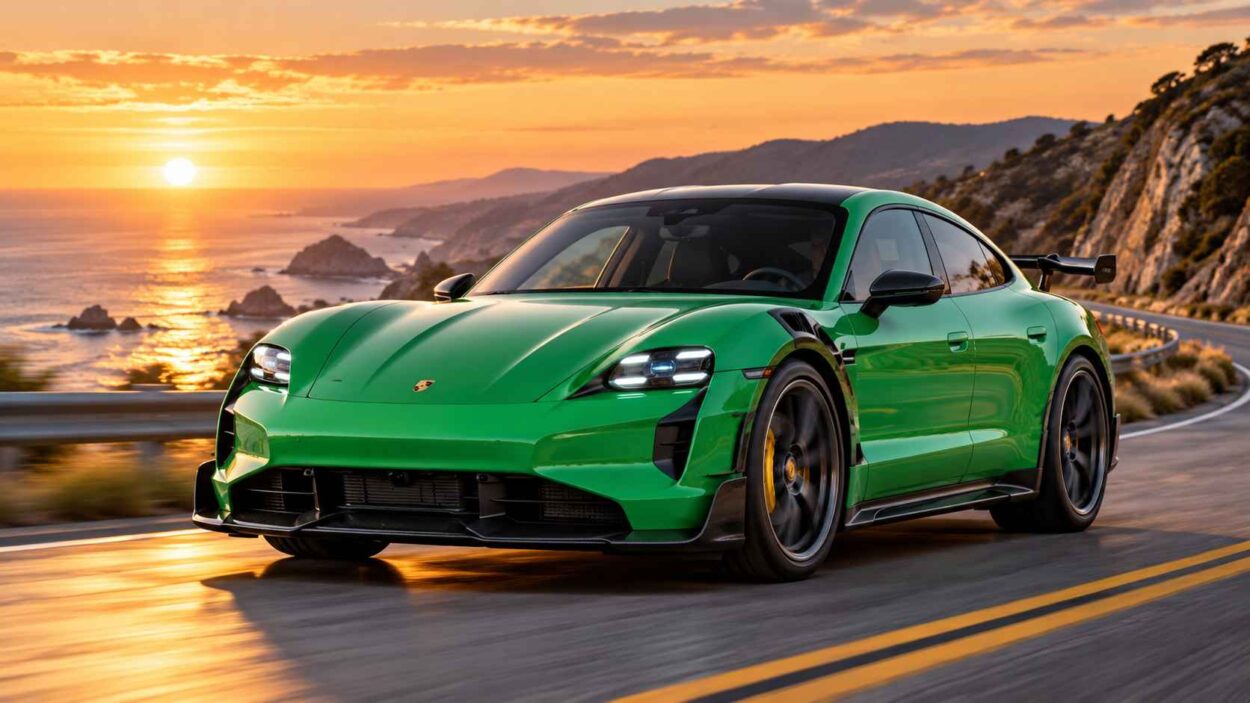
| Top speed | 180 mph |
| Quarter mile | 9.5 seconds |
| Torque with Launch Control | 914 lb-ft |
| Battery | 105 kWh gross, 97 kWh usable |
| Maximum DC charging | 320 kW |
| 10-80% DC charge | 18 minutes |
The Taycan Turbo GT does not need the more extreme Weissach Package to become absurdly quick. The standard car runs the quarter mile in 9.5 seconds and reaches 180 mph, yet it still has rear seats and enough civility to work as a road car.
Launch Control releases 1,019 hp and 914 lb-ft. Porsche quotes 2.2 seconds to 60 mph, putting the Taycan into a different category from the already very quick Macan Turbo Electric further down this ranking.
The Weissach car is even more extreme, removing the rear seats, reducing weight and raising top speed to 190 mph. I prefer keeping the normal Turbo GT here because it better demonstrates what Porsche has achieved without stripping away one of the reasons to buy a four-door Taycan in the first place.
Its 320-kW charging system also prevents the performance from turning the Taycan into a car that spends forever attached to a charger. Porsche quotes 18 minutes from 10 to 80 percent under ideal conditions. For a car capable of a 9.5-second quarter mile, the everyday usability is almost as impressive as the acceleration.
2. Tesla Model S Plaid – 200 MPH and a 9.23-Second Quarter Mile
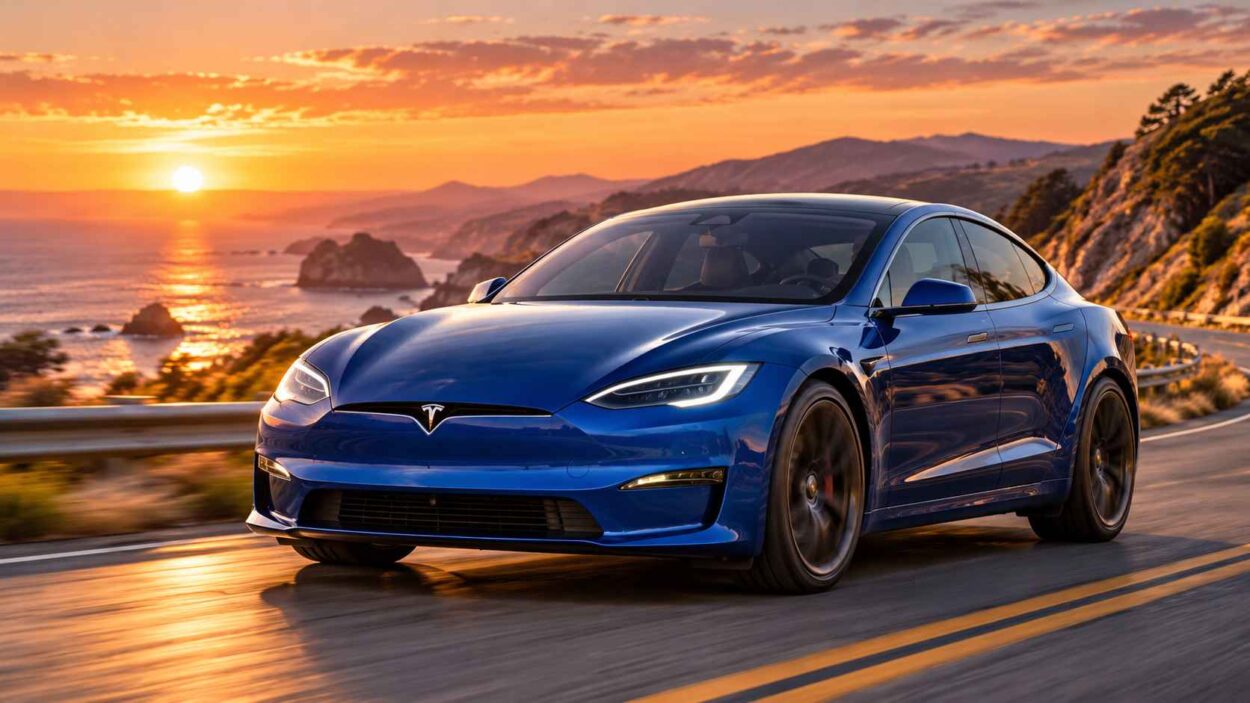
| Top speed | 200 mph with the required hardware upgrade |
| Quarter mile | 9.23 seconds at 155 mph |
| Drivetrain | Tri-motor AWD |
| Curb weight | 4,802 lb |
| Maximum Supercharging | 250 kW |
| Drag coefficient | 0.23 Cd |
The Model S Plaid has been around long enough that its numbers no longer produce the shock they did at launch. Read them again, though. A large four-door sedan weighing 4,802 pounds runs the quarter mile in 9.23 seconds at 155 mph.
The three-motor powertrain produces 1,020 hp, and Tesla lists a 200 mph maximum with the required hardware upgrade. Without that upgrade, top speed is limited to 163 mph. Tesla also specifies that its 1.99-second 0-to-60 figure is measured with rollout subtracted, an important detail when comparing it with numbers from other manufacturers.
What has always made the Plaid unusual is how ordinary the basic format remains. There are five seats, 28 cubic feet of cargo room and an EPA-estimated 368 miles of range. You do not have to climb over a wide sill or squeeze luggage around an engine to get the performance.
Charging is one area where newer competitors have caught up and passed it. The Plaid peaks at 250 kW, below the 320-kW Porsche and Audi systems and far behind the Cayenne’s maximum charging figure. Raw acceleration is still spectacular, but the rest of the EV market has not stood still.
1. Lucid Air Sapphire – An 8.95-Second Quarter Mile and a 205-MPH Top Speed
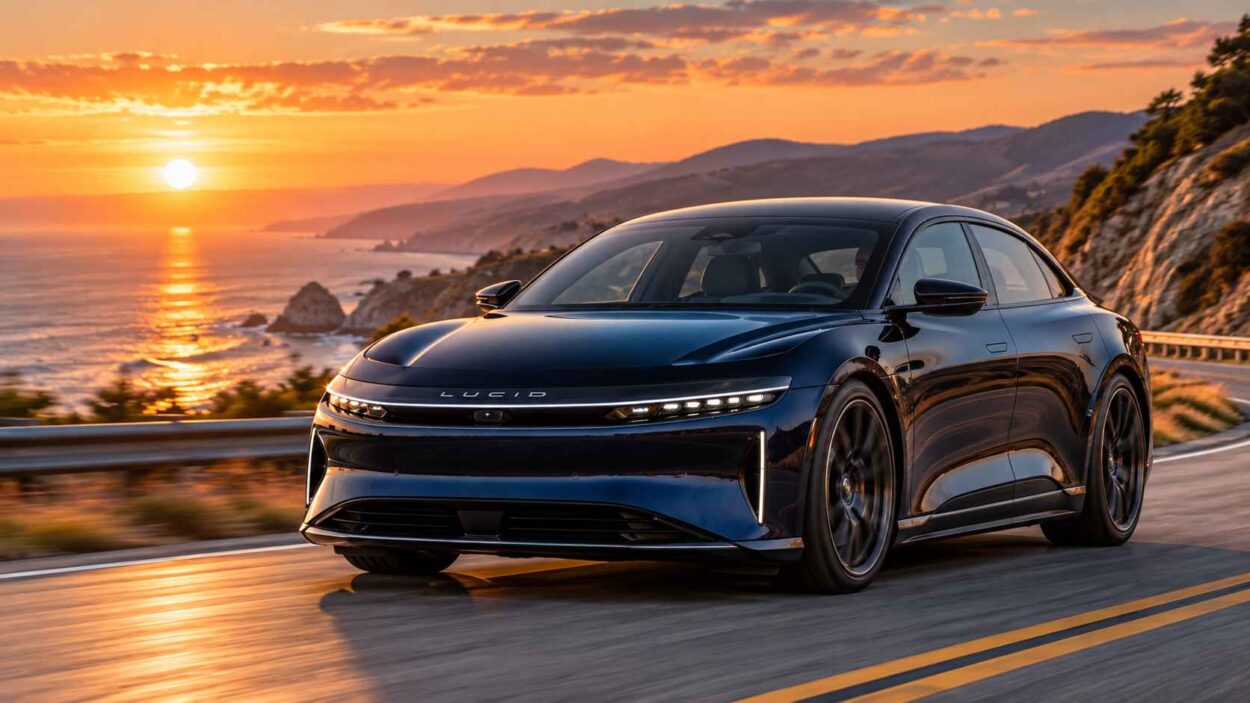
| Top speed | 205 mph |
| Torque | 1,430 lb-ft |
| 0-100 mph | 3.84 seconds |
| Quarter mile | 8.95 seconds at 158 mph |
| Battery | 118 kWh |
| Maximum DC charging | 300 kW |
The Air Sapphire finishes the countdown because even among very fast EVs, its numbers are difficult to process. It reaches 100 mph in 3.84 seconds. That is roughly the time several genuinely quick cars need just to reach 60.
Lucid gets there with three motors, one at the front and two at the rear. Total output reaches 1,234 hp and an enormous 1,430 lb-ft. The twin rear motors can control torque independently, giving the Sapphire true rear-axle torque vectoring instead of relying entirely on braking intervention to help rotate the car.
The result is an 8.95-second quarter mile at 158 mph and a 205 mph top speed. Carbon-ceramic brakes, track-focused suspension tuning and dedicated Sapphire and Track modes give the rest of the car hardware capable of dealing with those numbers.
The figure I keep coming back to, though, is 427 miles. Lucid manages that EPA-estimated range in a car with more than 1,200 hp and a quarter-mile time beginning with an eight. There are quicker purpose-built machines in the world, but combining this level of acceleration with five seats, long-distance range and a conventional luxury-sedan body is what makes the Sapphire such a strange achievement.
At $249,000, none of this comes cheaply. Then again, by the time a sedan is accelerating to 100 mph in under four seconds and passing the quarter-mile marker before nine seconds have elapsed, ordinary comparisons have already stopped being very useful.
Bottom Line
By 2026, getting an EV to 60 mph in less than four seconds is no longer the difficult part. Making one that still feels interesting once the road starts turning is much harder.
The cars near the top prove how far electric performance can go. The cars near the bottom are arguably more revealing because they show how accessible that performance has become. When a relatively small Volvo can run with machines that once required supercar money, the old definition of a fast car starts looking outdated.
I would still choose between these 18 based on far more than the stopwatch. The Lucid Air Sapphire wins the acceleration race here, but range, charging, chassis behavior, practicality and price tell the rest of the story.