
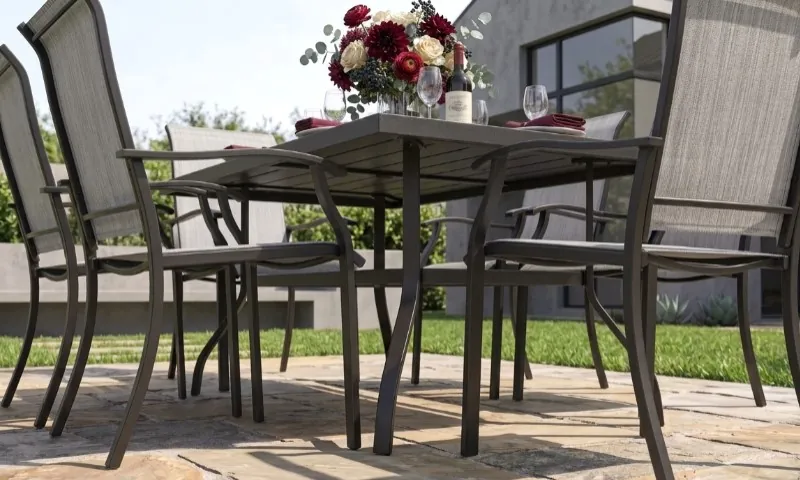
A backyard can look finished and still sit empty. The furniture may be attractive, the grill may be new, and the cushions may match perfectly. Yet nobody stays long because the sun hits every chair, the dining table blocks the door, or drinks must travel across half the yard.
Successful patio and deck ideas begin with daily use. Choose a ground-level patio for flexible seating, garden access, and a close connection with the landscape.
A raised deck works well when the house sits above grade, the yard slopes, or the view deserves attention. From there, plan separate areas for resting, eating, and gathering, with comfortable routes between them.
Plan From the Furniture Outward
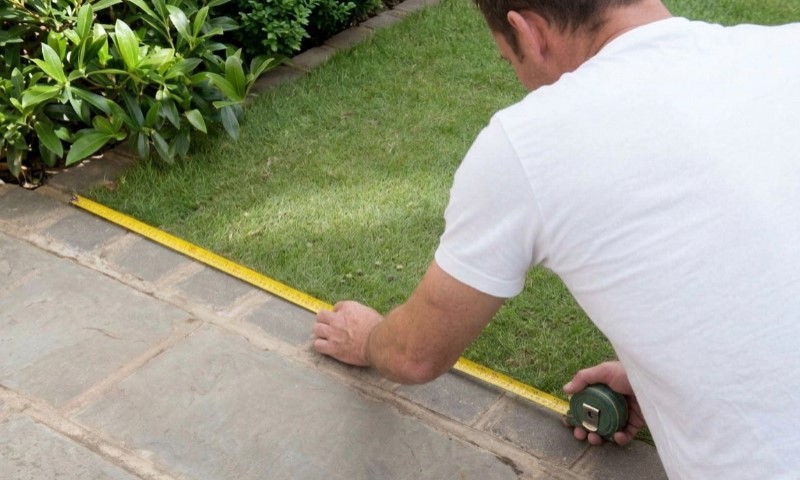
Measure the yard before buying furniture. Include doors, windows, property lines, utilities, trees, drainage paths, and existing structures. Mississippi State University Extension recommends creating a rough property sketch before developing a landscape plan.
Next, place full-size furniture outlines on the drawing.
A custom patio and deck company can then translate that early layout into a detailed proposal and 3D rendering before construction begins.
A dining chair needs room to slide back, while a lounge chair occupies far more floor space than its footprint suggests. Aim for roughly 36 inches of clearance behind dining chairs and preserve an unobstructed route from the house to the yard.
Masking tape, cardboard, or a garden hose can mark the proposed layout outdoors. Walk through it carrying a tray. Open the back door. Pull out every chair. A ten-minute rehearsal often exposes problems that remain invisible on a screen.
| Feature | Patio | Deck |
| Best setting | Level or gently graded ground | Sloped yards or raised doors |
| Common surfaces | Concrete, brick, stone, pavers, gravel | Wood, composite, PVC |
| Connection to yard | Direct and informal | Elevated and defined |
| Main planning issue | Drainage and base preparation | Structure, footings, railings |
| Typical upkeep | Joint cleaning and occasional repairs | Washing plus material-specific care |
Give Each Activity a Clear Place
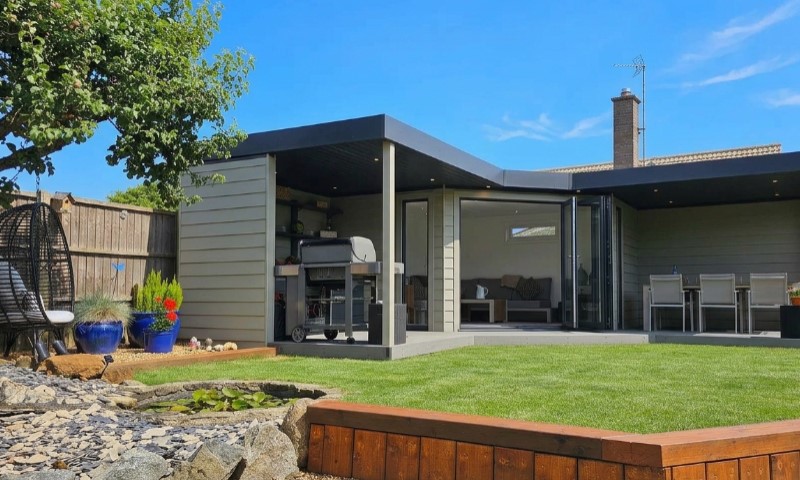
One large rectangle can feel awkward when every activity competes for the center. Smaller zones create a more natural outdoor room.
Oklahoma State University’s outdoor-room planning guidance suggests that squares and rectangles with a 2-to-3 proportion work particularly well for entertainment spaces. Furniture, rugs, planters, and changes in surface material can define zones without permanent walls.
Create a Quiet Corner for Relaxing
Place the main lounge seat where it receives useful shade and faces something worth seeing. The view could be a mature tree, a planted border, a fire feature, or the busiest part of the yard where children play.
A pair of deep chairs with a small table often gets greater daily use than a sprawling sectional. Swivel chairs suit spaces with several focal points. A built-in bench can follow the edge of a small deck, leaving the center open.
Comfort also depends on details that are easy to overlook: somewhere to place a cup, a dry box for cushions, and a nearby light for reading after sunset.
Keep Outdoor Dining Close to the Kitchen
A dining table works best near the door used for carrying food. Long routes and steps become tiresome once plates, serving bowls, and forgotten utensils enter the picture.
Round tables encourage conversation and fit comfortably into square patios. Rectangular tables suit narrow decks and larger groups. For tight spaces, pair a slim table with a bench that slides underneath when dinner ends.
An outdoor buffet or compact prep counter can hold drinks and serving dishes. Leave the grill operator enough working room without placing the grill directly in the flow of guests.
Arrange Entertaining Areas Around Conversation
People gather more comfortably when seats face one another. Place chairs close enough for ordinary conversation and give guests several seat types. Upright dining chairs help older visitors, while lounge chairs and benches accommodate more casual evenings.
Movable stools and lightweight side tables earn their storage space. They can support a plate during a party, hold a plant on quieter days, or become extra seating when another guest arrives.
Choose a Surface That Suits the Site

Concrete offers a stable, economical patio base and can be scored or finished for visual interest. Brick and stone develop a softer, established appearance. Gravel drains readily and feels informal, although rolling carts and chair legs move less easily across it.
Permeable pavers deserve consideration where runoff causes trouble. According to the Environmental Protection Agency, permeable pavement allows rain and snowmelt to pass through the surface into layers of soil and gravel below. Proper base preparation remains essential.
Wood decking feels warm underfoot and can be repaired board by board. It generally requires periodic cleaning and refinishing. Composite and PVC boards reduce staining work, though they can become hot in strong sun and may cost considerably more at installation.
Older decks deserve special attention. Chromated copper arsenate, commonly called CCA, appeared in residential decks before manufacturers ended homeowner applications in 2003. EPA guidance on CCA-treated residential wood recommends regular penetrating coatings for older structures and warns against burning treated lumber.
Design Around Sun, Wind, and Privacy
View this post on Instagram
Observe the proposed area in the morning, afternoon, and early evening. A pleasant breakfast spot can become brutally hot by dinner. Western exposure often needs the strongest protection.
Umbrellas provide adjustable shade at modest cost. Pergolas create a permanent framework for fabric panels or climbing plants. Deciduous trees offer a slower solution with broad seasonal benefits.
Department of Energy guidance explains how summer shade from deciduous trees can still allow winter sunlight through bare branches.
Privacy screens work best when they interrupt specific sightlines. A slatted panel beside the dining table may solve the problem with less material than a tall fence around the entire yard. Tall ornamental grasses, shrubs, and large containers can soften the screen and reduce the boxed-in feeling.
Make Evenings Comfortable and Safe
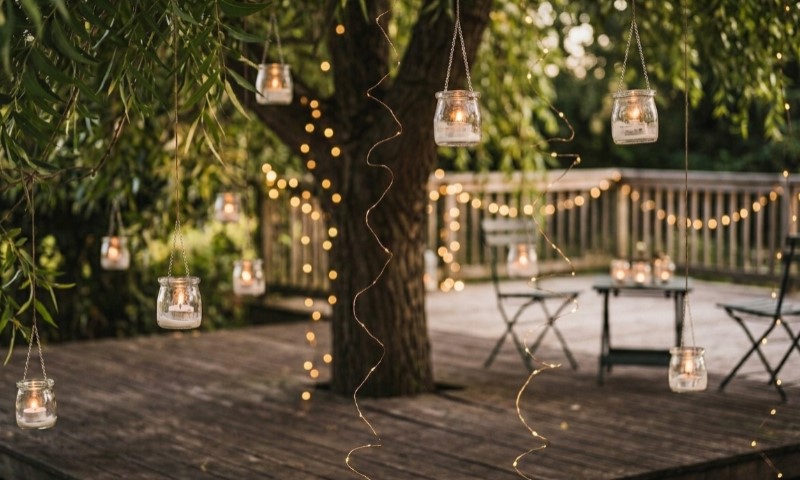
Outdoor lighting should reveal steps, food, and faces without flooding the yard. Combine low path lights, shielded wall fixtures, and a gentle source above or beside the dining table.
DarkSky International’s principles for responsible outdoor lighting recommend directing light downward, using the lowest useful brightness, and limiting operating time. Warm, dimmable fixtures usually create a calmer atmosphere and cause less glare for neighbors.
Have a qualified electrician install weather-rated outlets where cooking appliances, lights, or entertainment equipment will operate. Extension cords crossing walkways invite trips and rarely improve the scenery.
Grills need deliberate placement. The U.S. Fire Administration advises keeping grills well away from siding, deck railings, eaves, and branches, while maintaining a three-foot safe zone around the cooking area. Its outdoor fire guidance also calls for constant supervision whenever a grill is lit.
Check the Structure Before Decorating
Permit and railing requirements vary by location, deck height, attachment method, and project size. One city may exempt a low freestanding platform while another requires drawings and inspections. Duluth, Minnesota, for example, publishes local deck rules covering permits, frost-depth footings, guards, and handrails.
Consult the local building department before changing a deck, adding a roof, installing a hot tub, or building a substantial fire feature. Hot tubs carry exceptional weight, and an existing deck may require structural reinforcement.
Inspect older decks for soft wood, corroded fasteners, loose railings, damaged stairs, and movement where the structure connects to the house. A qualified contractor or structural professional should evaluate visible deterioration or unexplained movement before the next crowded dinner.
Build for the Ordinary Evening
A successful outdoor space should work on a quiet Tuesday, long before the first large party. Start with the chair you will use after work, the table where breakfast feels easy, and the shade that makes August bearable. Entertaining becomes simpler once everyday comfort has already shaped the plan.