
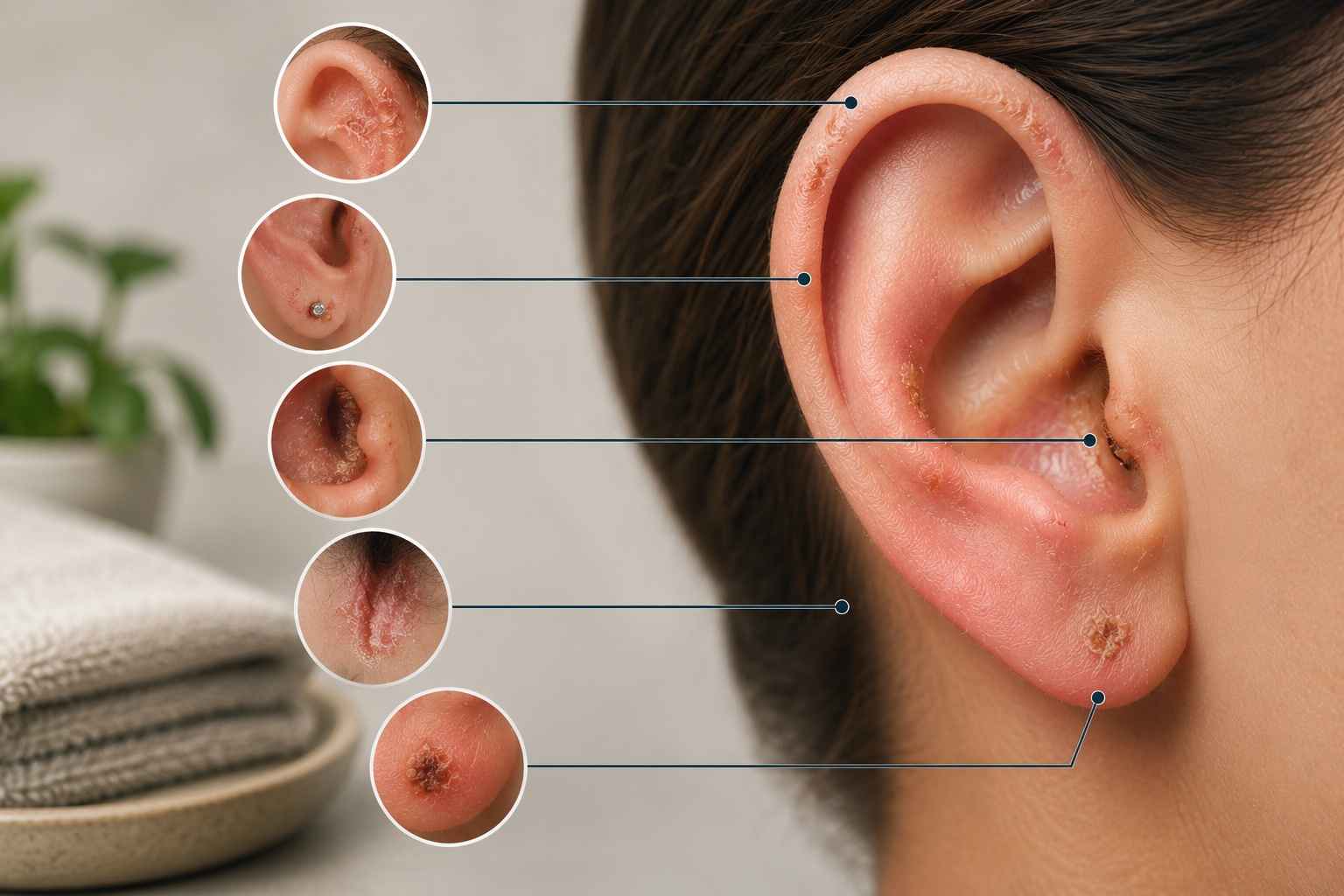
A scab in or around the ear usually forms after the skin has been scratched, irritated or infected. The crust is part of the healing process. It protects damaged skin while new tissue develops underneath.
The problem deserves closer attention when the scab keeps returning, becomes painful, leaks fluid or does not heal. Skin conditions, an outer ear infection, piercing complications and repeated cleaning with cotton swabs can all keep the area inflamed.
The correct treatment depends on the cause and the exact location. A moisturizer may help dry skin on the outer ear. It will not treat a bacterial infection inside the ear canal. Creams and home remedies should never be pushed deep into the ear without medical advice.
Key Takeaways
- A scab forms when irritated or broken skin dries and begins to heal.
- Common causes include eczema, psoriasis, infection, scratching, piercings and metal allergies.
- Pain, swelling, discharge or reduced hearing can point to an ear canal infection.
- Do not pick the scab or insert cotton swabs, fingernails or tools into the ear.
- A sore that keeps bleeding or does not heal within several weeks should be examined.
What Are Ear Scabs?
An ear scab is dried blood, serum or other fluid that collects over damaged skin. It may look yellow, brown, red or nearly black. The area underneath can feel dry, itchy, tender or sore.
- On the earlobe
- Around a piercing
- Along the outer rim of the ear
- Behind the ear
- At the entrance to the ear canal
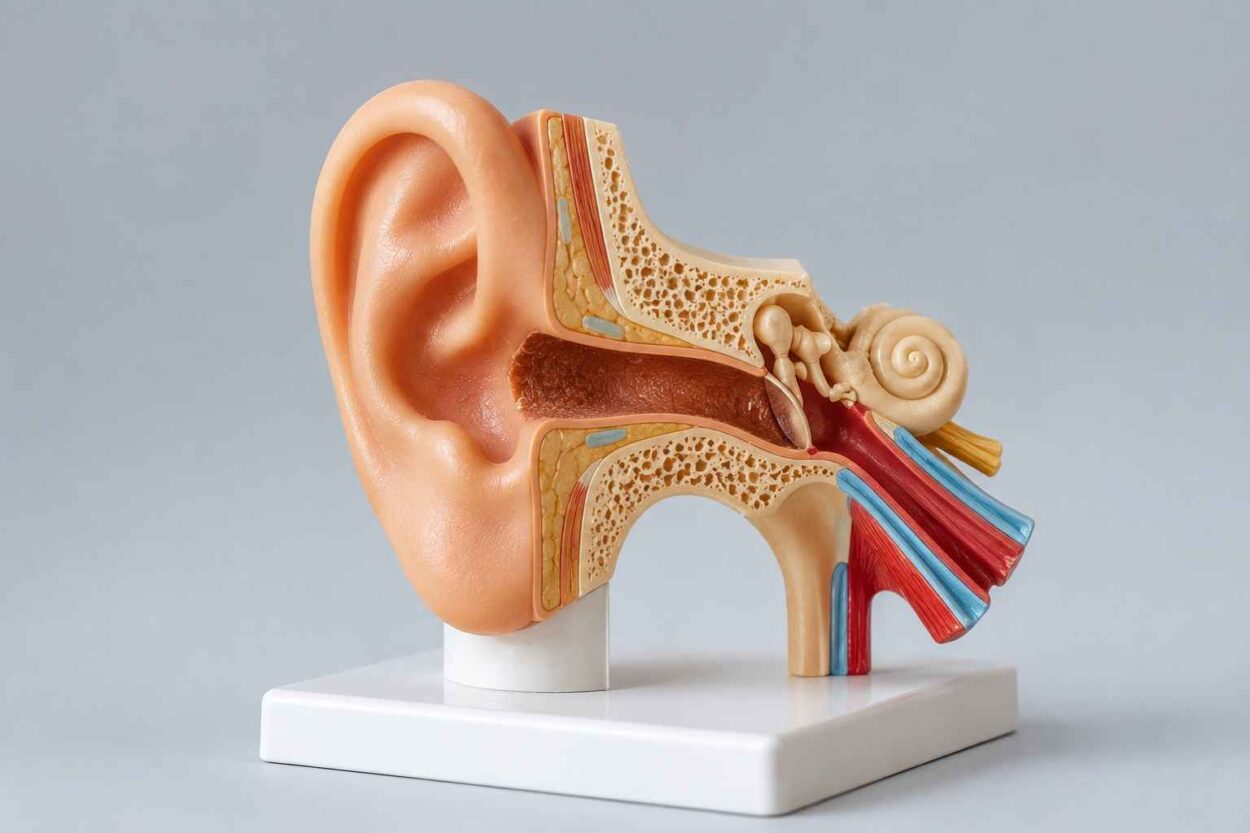
- Deeper inside the canal
Skin on the visible part of the ear can often be examined and treated like skin elsewhere on the body. Problems inside the canal may require an otoscope examination and prescription ear drops.
People dealing mainly with flaking in the fold behind the ear may also find our guide to crusty skin behind the ears useful.
Common Symptoms That Can Appear With Ear Scabs
A small scab after a scratch may cause no other problems. An underlying skin condition or infection usually produces additional symptoms.
- Dry, flaky or peeling skin
- Persistent itching
- Redness or skin discoloration
- Swelling and warmth
- Pain when touching or pulling the ear
- Clear, yellow, bloody or foul-smelling discharge
- A blocked feeling in the ear
- Temporary hearing loss
- Repeated cracking or bleeding
Severe pain, drainage and hearing changes are not typical signs of simple dry skin. Those symptoms need a medical assessment.
Common Causes and Their Typical Signs
| Possible cause | Common clues | Usual next step |
|---|---|---|
| Minor scratch or irritation | Small scab, mild tenderness, no discharge | Leave it alone and protect the skin |
| Eczema | Dryness, strong itching, cracking and repeated flares | Moisturizer and appropriate anti-inflammatory treatment |
| Psoriasis | Thicker scale, plaques and similar patches elsewhere | Dermatology treatment |
| Outer ear infection | Pain, swelling, discharge and pain when the ear is moved | Medical examination and ear drops |
| Fungal infection | Intense itching, unusual debris and blocked feeling | Ear cleaning and antifungal treatment |
| Piercing infection | Heat, swelling, pus and worsening pain | Piercing care or medical treatment |
| Metal allergy | Itchy rash where jewelry touches the skin | Remove the trigger and use safer jewelry |
| Suspicious skin lesion | Bleeding, growth or a sore that will not heal | Dermatology examination |
Why an Ear Scab May Keep Coming Back?
A scab will not heal properly when the skin remains irritated. Repeated picking is one common reason. Ongoing exposure to an allergen, untreated eczema or an infection can have the same effect.
Moisture may also prevent recovery. Swimming, sweating, wet hair, earbuds and hearing aids can keep the canal damp. Dry skin creates a different problem by causing cracks that reopen whenever the ear is touched.
A recurring scab may therefore need more than a topical product. The trigger must also be identified and removed.
When to Seek Medical Attention?
Arrange an examination when a scab remains for several weeks, repeatedly returns or is getting worse.
- Moderate or severe ear pain
- Swelling that narrows or closes the canal
- Pus, blood or foul-smelling fluid
- New hearing loss or a blocked ear
- Dizziness, balance problems or vomiting
- Fever or redness spreading across the face
- A painful cartilage piercing
- A growing lump or sore that keeps bleeding
- Symptoms after an injury to the ear or head
People with diabetes, poor circulation or a weakened immune system should seek advice sooner. Ear infections can become more serious in these groups.
What Causes Ear Scabs and How Are They Treated?
Ear scabs can develop for several reasons, and the right treatment depends on what damaged or irritated the skin.
1. Scratching and Cleaning the Ear
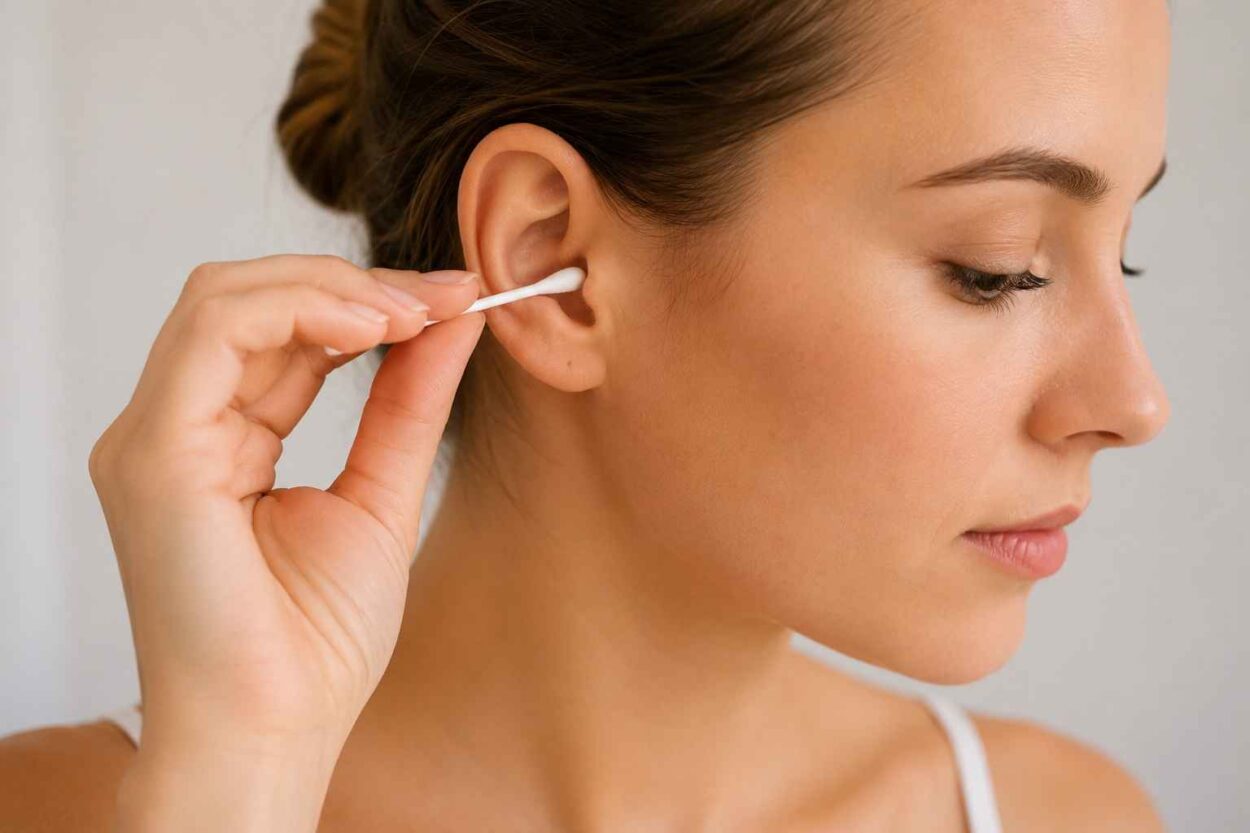
Itchy skin often leads to scratching. Scratching then creates a small wound, which forms another scab and starts the cycle again.
Cotton swabs, hairpins and other objects can scrape the ear canal. They can also push wax and debris farther inside. Cleveland Clinic warns that objects placed in the ear can injure the canal or eardrum.
Earbuds, hearing aids and earplugs may also rub the skin. A device that is dirty, too large or worn for long periods can trap moisture and cause irritation.
Treatment
Leave a small, clean scab alone. Wash the outer ear gently with lukewarm water and pat it dry. A thin layer of plain petroleum jelly can protect a minor wound on the visible outer ear.
Do not place petroleum jelly, moisturizer or ointment deep inside the ear canal. Products can block the canal or make an infection harder to treat.
2. Ear Eczema
Eczema can affect the skin on the outer ear, behind the ear and inside the canal. The skin may become very dry, itchy, cracked and inflamed. Scratching can create raw areas that ooze and later form crusts.
Several forms of dermatitis can affect the ears. Atopic eczema is often linked to a personal or family history of allergies. Seborrheic dermatitis can cause greasy or flaky skin around the scalp and ears. Contact dermatitis develops after the skin reacts to an irritant or allergen.
The symptoms of ear eczema can resemble infection, so a clinician may need to examine a persistent rash before recommending treatment.
Treatment
Fragrance-free moisturizer may help dry skin on the earlobe or behind the ear. A doctor may recommend a mild steroid cream for the visible outer ear. Eczema inside the canal may require prescription ear drops.
Contact dermatitis usually improves after the trigger is removed. Changing earrings, hair products, headphones or hearing-aid molds may be necessary.
3. Psoriasis
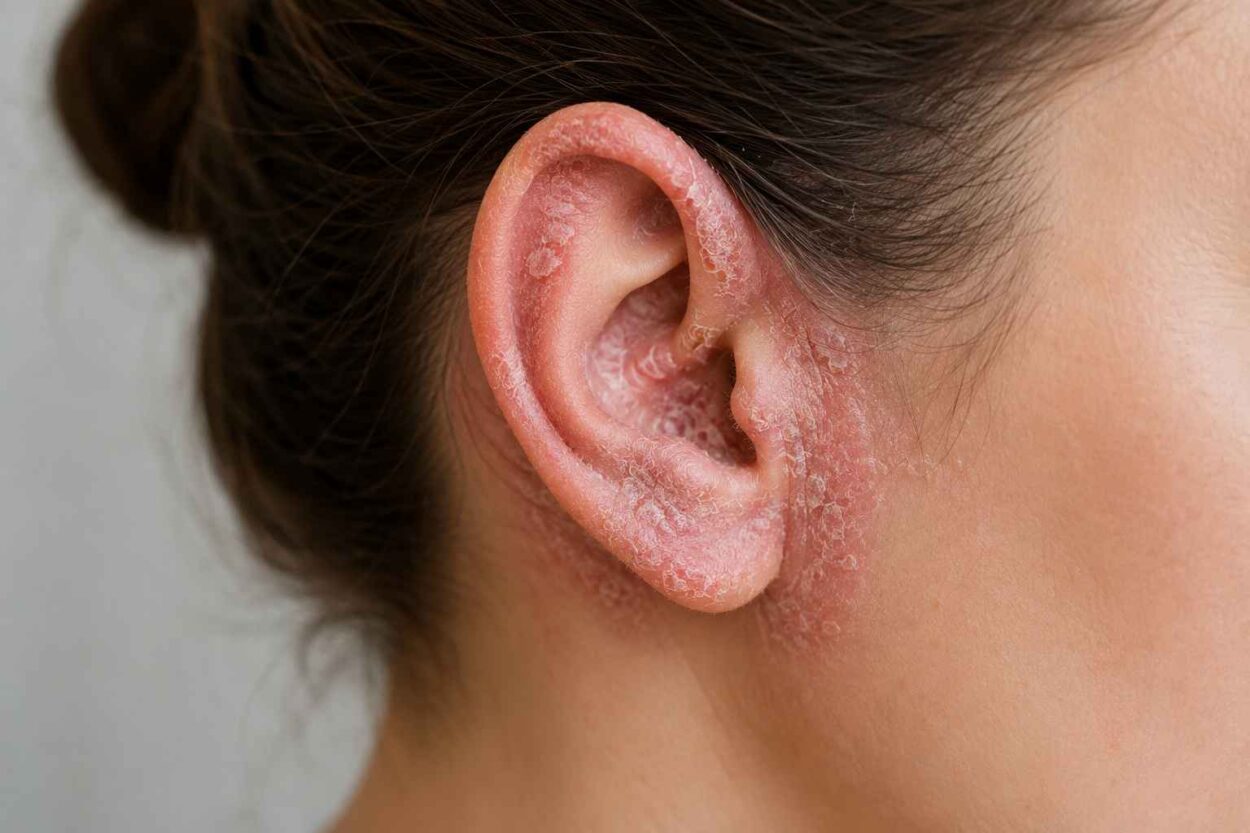
Psoriasis can create thick, dry patches with white or silvery scales. It may affect the outer ear or extend into the canal. Scales can crack, bleed and form scabs after scratching.
Heavy scale inside the canal may also trap wax and affect hearing. Medical treatment can reduce inflammation and slow the rapid production of skin cells.
Treatment
Treatment may include moisturizers, topical steroids, vitamin D-based medicines or other prescription products suitable for the delicate skin of the ear.
If psoriasis blocks the ear canal, a clinician may remove the built-up scale safely. Trying to scrape it away at home can damage the skin and eardrum.
4. Outer Ear Infection
Otitis externa affects the skin lining the ear canal. It is often called swimmer’s ear because moisture creates conditions that allow bacteria or fungi to grow.
An infection may cause intense itching at first. Pain, swelling and drainage can follow. Dried discharge can look like a scab or crust around the canal opening.
Risk increases after swimming, scratching, using cotton swabs or wearing devices that trap moisture. People with eczema or psoriasis inside the canal are also more likely to develop the condition.
Treatment
Outer ear infections usually require prescription ear drops that may contain an antibiotic, a steroid or both. A doctor may also clean debris from the ear canal so the medication can reach the affected skin.
Antibiotic ointments should not be inserted into the ear canal unless specifically recommended by a clinician.
5. Fungal Ear Infection
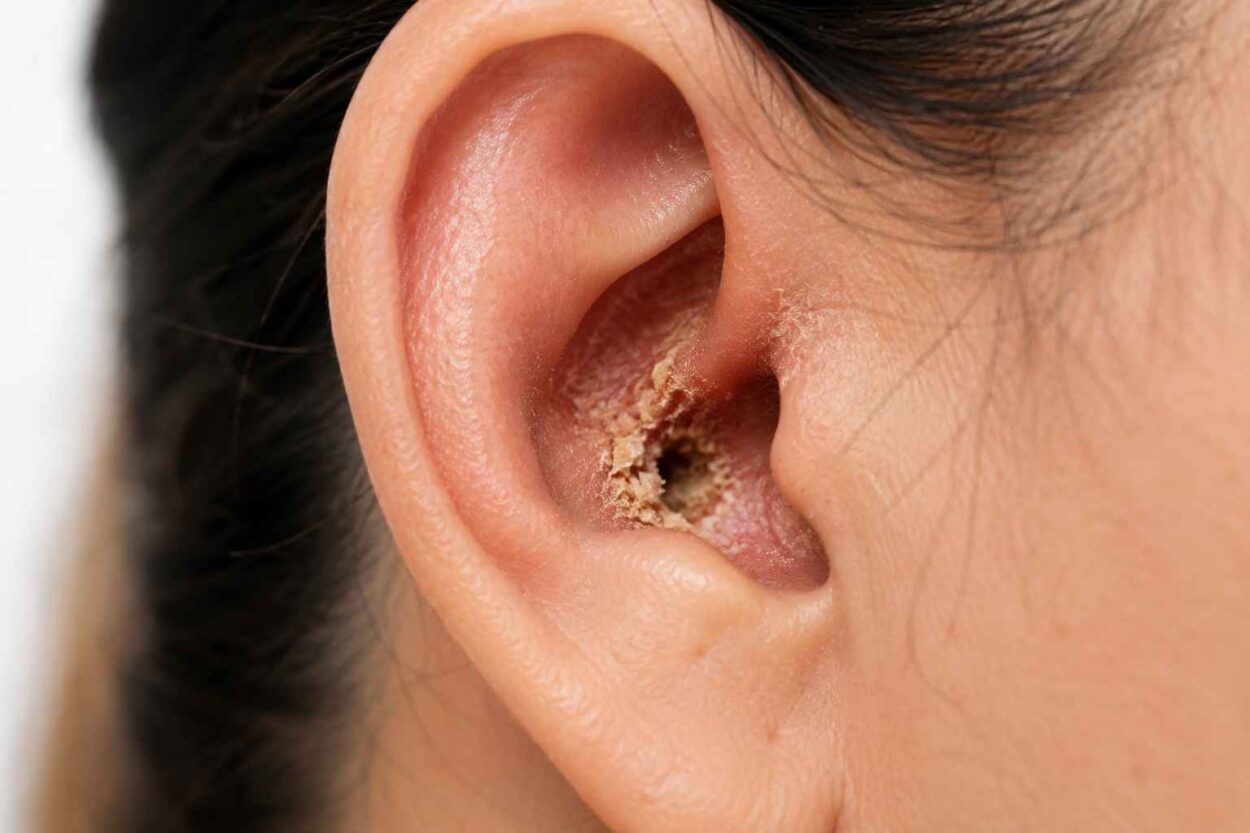
Fungal infections are less common than bacterial infections but can also cause itching, flaking, fullness and discharge. The debris may appear white, gray, yellow or black.
Warm and humid conditions raise the risk. Antibiotic ear drops used for too long can sometimes change the environment inside the canal and allow fungi to grow.
Treatment
Fungal infections require antifungal medication rather than antibiotics. A clinician usually confirms the diagnosis, cleans the ear canal and prescribes the appropriate antifungal treatment.
Routine antibiotic ointment will not treat a fungal infection.
6. New Piercings
A small amount of pale crust around a new piercing can be part of normal healing. Increasing pain, heat, swelling, pus or redness that spreads away from the hole may point to infection.
Cartilage piercings need extra care because the upper ear has less blood flow than the earlobe. A painful and swollen cartilage piercing should be examined promptly. Mayo Clinic advises seeking medical care when a cartilage piercing becomes very red, dark, painful or swollen.
Do not remove starter jewelry from an infected piercing without advice. The hole may close and trap the infection under the skin.
Treatment
Wash your hands before touching the piercing. Clean the area gently and follow the aftercare instructions provided by a qualified piercer or clinician.
A warm, clean compress may help a minor earlobe infection. Spreading redness, worsening pain, fever or cartilage involvement requires prompt medical attention.
7. Allergy to Earrings or Other Products
View this post on Instagram
Nickel is a common cause of allergic contact dermatitis. Earrings containing nickel can trigger itching, redness, blisters, cracking and crusting around the piercing.
The reaction may begin after years of wearing jewelry without a problem. Shampoos, hair dye, fragrances, hearing aids and headphone materials can also irritate sensitive skin.
The American Academy of Dermatology notes that avoiding nickel is the most effective way to prevent another allergic reaction.
Treatment
Remove or avoid the product causing the reaction whenever possible. Switching to nickel-free or hypoallergenic earrings often prevents future flare-ups.
If symptoms are significant, a doctor may recommend medication to reduce inflammation.
8. Sun Damage and Skin Cancer
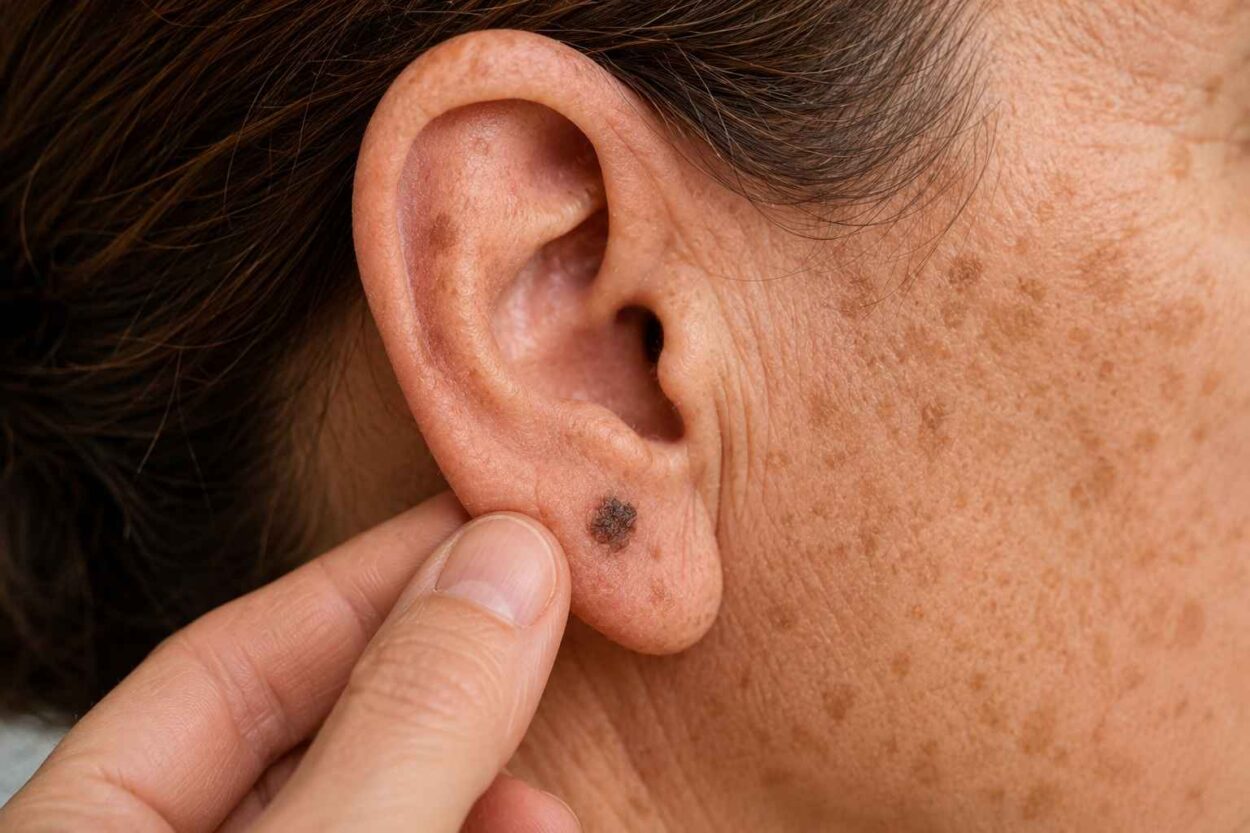
The outer ear receives a great deal of sun exposure and is easy to miss when applying sunscreen. A rough, crusty spot may sometimes be an actinic keratosis, which is a sun-damaged growth that can develop into skin cancer.
Basal cell and squamous cell cancers can also resemble a sore or scab. Warning signs include a spot that repeatedly bleeds, heals and returns, becomes larger or remains open for several weeks.
Most ear scabs are not cancer. A persistent change still deserves an examination. The American Cancer Society lists a crusty or bleeding sore that does not heal among the possible signs of common skin cancers.
Treatment
Persistent, enlarging or repeatedly bleeding lesions should be examined by a dermatologist. Early diagnosis allows precancerous changes and skin cancers to be treated before they become more serious. Avoid delaying evaluation if a sore does not heal within several weeks.
What Not to Put Inside the Ear?
Several common home treatments can irritate damaged skin or hide a more serious problem.
- Do not pour rubbing alcohol onto cracked skin.
- Do not use hydrogen peroxide repeatedly.
- Do not apply essential oils inside the canal.
- Do not perform ear candling.
- Do not scrape away crust with tweezers or cotton swabs.
- Do not use leftover prescription ear drops.
Some ear drops are unsafe when the eardrum has a hole. A clinician should examine the ear when there is drainage, significant pain or a history of eardrum problems.
How to Prevent Ear Scabs From Returning?
- Clean only the visible outer ear with a soft cloth.
- Keep fingernails away from itchy skin.
- Dry the ears after swimming or showering.
- Clean earbuds and hearing aids regularly.
- Give the skin breaks from devices that cause pressure.
- Use fragrance-free hair and skin products during a flare.
- Choose nickel-free or hypoallergenic earrings.
- Apply sunscreen to the outer ears.
- Follow the treatment plan for eczema or psoriasis.
Good ear care is gentle. The canal normally cleans itself, and aggressive cleaning often creates the injury people are trying to prevent.
Final Thoughts
A small ear scab often develops after scratching or minor irritation and heals without treatment. Repeated crusting is different. Eczema, psoriasis, infection, jewelry allergies and piercing complications can all prevent the skin from recovering.
Avoid picking the area or trying to clean deep inside the canal. Watch for pain, swelling, discharge, hearing changes and bleeding. Those signs can help a doctor distinguish dry skin from an infection or another condition that needs treatment.
A sore that will not heal should never be ignored, particularly on the sun-exposed outer ear. An examination can identify the cause and prevent weeks of unnecessary irritation.