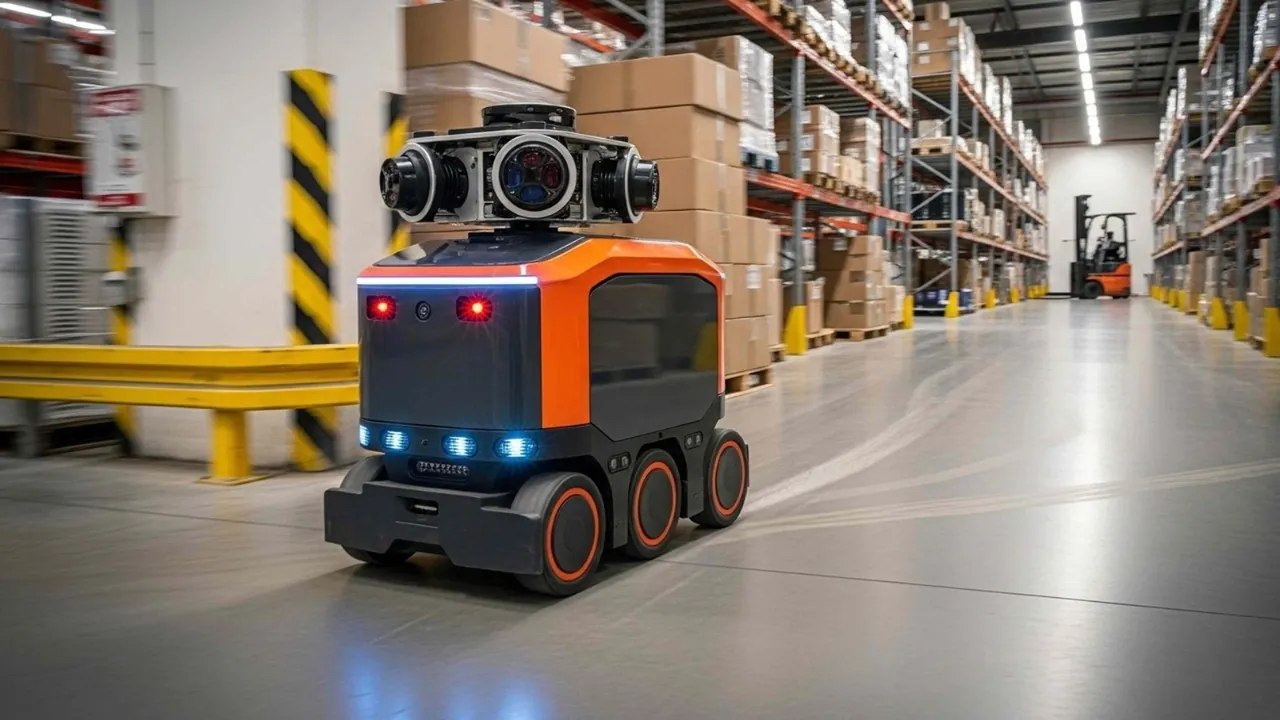
A warehouse robot rarely attracts much attention as it rolls past a rack carrying a tote or moves a pallet toward a packing station. Add thousands of new machines across North America, though, and the pattern starts revealing something larger about logistics.
According to new data from A3, North American companies ordered 17,995 industrial robots worth about $1.166 billion during the first half of 2026. Unit orders rose 2% from the same period a year earlier, while order value increased 6.6%.
Warehouses are an important part of the automation push, driven by higher labor costs, staffing pressure and expectations for faster fulfillment.
One distinction helps put the headline number in perspective: A3’s statistics track industrial robot sales across multiple North American industries. The 17,995 figure therefore covers a broader market than warehouse mobile robots alone.
Robot Spending Is Rising Faster Than Robot Volume
North American companies ordered 8,940 robots valued at $622 million in the second quarter of 2026—a year-over-year unit increase of 4.3% and a revenue increase of 21.3%, according to data from the Association for Advancing Automation (A3). https://t.co/ntOnhoAiUb
— DC Velocity (@DCVelocity) August 12, 2026
Growth in robot numbers was modest during the first six months of the year. Spending moved noticeably faster.
A3 recorded 8,940 robot orders worth $622 million during the second quarter. Unit volume increased 4.3% from Q2 2025, while revenue jumped 21.3%.
The first-half comparison shows the direction clearly:
Period
Robot units ordered
Order value
H1 2025
17,635
$1.094 billion
H1 2026
17,995
$1.166 billion
Change
+2.0%
+6.6%
The earlier figures come from A3’s 2025 report.
Faster growth in spending can come from equipment mix, pricing and greater demand for higher-value systems. For warehouse operators, robot specifications increasingly sit alongside questions about integration.
A machine has to work with conveyors, storage equipment, scanners, inventory systems and surrounding workflows.
Facilities considering automated solutions for warehousing can combine robotics with AS/RS, vertical storage, conveyors and warehouse software rather than deploying each technology independently.
A fast mobile robot achieves little when it repeatedly arrives at an overloaded packing station. Productivity depends on coordinating equipment and inventory flow across the building.
Warehouses Have Strong Economic Reasons to Automate
Labor provides one of the clearest explanations for continued investment.
According to BLS warehousing data, average hourly earnings in U.S. warehousing and storage reached $26.85 in June 2026. Meanwhile, the government’s June job openings report counted 392,000 openings across transportation, warehousing, and utilities, an increase of 97,000 from May.
Those pressures become expensive inside a distribution center operating across long shifts. Walking inventory between stations, transporting pallets, and handling repetitive material movements can consume thousands of labor hours.
Robots fit many of those jobs naturally. Autonomous mobile robots move carts or totes. Robotic arms palletize cases. Automated industrial trucks transport loads. Collaborative robots can support selected tasks in shared work areas when the application has an appropriate safety design.
Seasonal peaks make the economics even more appealing. Robot fleets can operate for longer hours during surges in orders without requiring the same increase in temporary staffing.
Robot Buyers Are Expanding Beyond Automakers
Industrial robotics in North America has deep roots in car manufacturing. Welding and assembly lines gave robot makers large, repeatable applications for decades.
Demand now comes from a wider collection of industries.
During the first half of 2026, automotive OEM robot orders declined 25% year over year. Semiconductor and electronics orders increased 35%, life sciences and pharmaceuticals rose 32%, automotive components gained 24%, and food and consumer goods climbed 17%, according to A3’s sector breakdown.
Growth across industries encourages suppliers and integrators to develop automation for facilities with very different layouts and production volumes.
Collaborative robots provide another clue. Buyers ordered 2,774 cobots worth $114 million during the first half of 2026. They represented 15.4% of all robot units recorded by A3.
Smaller footprints and relatively flexible deployment make cobots useful for operations where a large fixed automation cell would be difficult to justify.
Software Is Becoming a Major Warehouse Bottleneck
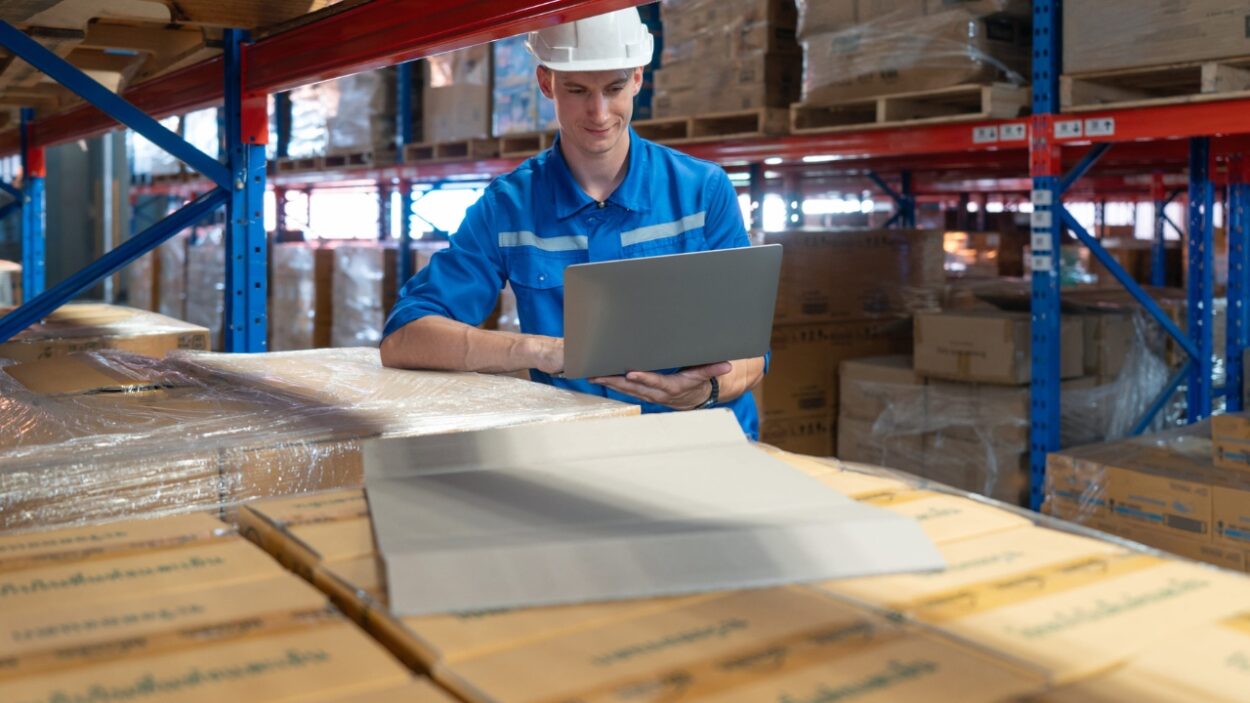
Buying robots is the visible part of automation. Coordinating them with everything already inside a facility presents a harder engineering problem.
Research published by Interact Analysis in July found that 45% of interviewees considered integration difficulty the biggest barrier to adopting additional material-transportation automation.
A modern distribution center can contain mobile robots, automated storage, conveyors, sorters, and equipment supplied by several vendors. Software has to assign tasks, manage traffic, and react when normal workflows break.
Imagine a fulfillment center during the week before Christmas. Hundreds of machines could perform perfectly and still create a traffic jam if several systems send inventory toward the same packing area simultaneously.
Warehouse control and execution software increasingly serves as an air-traffic controller for the building. Fleet size matters, but orchestration can decide whether those machines improve throughput or merely move congestion somewhere else.
Amazon Shows How Large Robot Fleets Can Become
Amazon offers a striking example of robotics at warehouse scale.
The company began deploying mobile robots after acquiring Kiva Systems in 2012. By June 2025, Amazon had deployed its one-millionth robot across a global network spanning more than 300 facilities, according to its robotics milestone announcement.
At the same time, Amazon introduced DeepFleet, an AI model built to coordinate robot movement. The company estimated that DeepFleet could improve fleet travel efficiency by 10%.
Ten percent sounds fairly ordinary until the improvement is multiplied across enormous fleets making millions of movements. Better routing can reduce congestion, shorten travel times and increase the capacity of an existing building.
Amazon’s fleet also demonstrates how warehouse automation has evolved. Specialized robots carry shelving, move carts, sort parcels, and manipulate inventory. Modern automated warehouses increasingly resemble networks of purpose-built machines coordinated through software.
What Does Growing Automation Mean for Warehouse Workers?
View this post on Instagram
Robotics will reshape warehouse jobs most clearly around repetitive transport, heavy material handling, and predictable movements.
Current labor figures still show strong demand for human workers. Automation also creates roles involving maintenance, controls, troubleshooting, systems integration, and robot fleet supervision.
People remain valuable when damaged goods appear, packaging varies, priorities suddenly change, or a process requires judgment. Machines perform especially well when tasks can be repeated thousands of times using consistent rules.
Training therefore becomes a significant part of automation strategy. A facility gains greater value from robotics when employees know how to operate automated systems, solve exceptions, and recognize when a process needs human intervention.
Nearly 18,000 Orders Point to a Gradual Shift
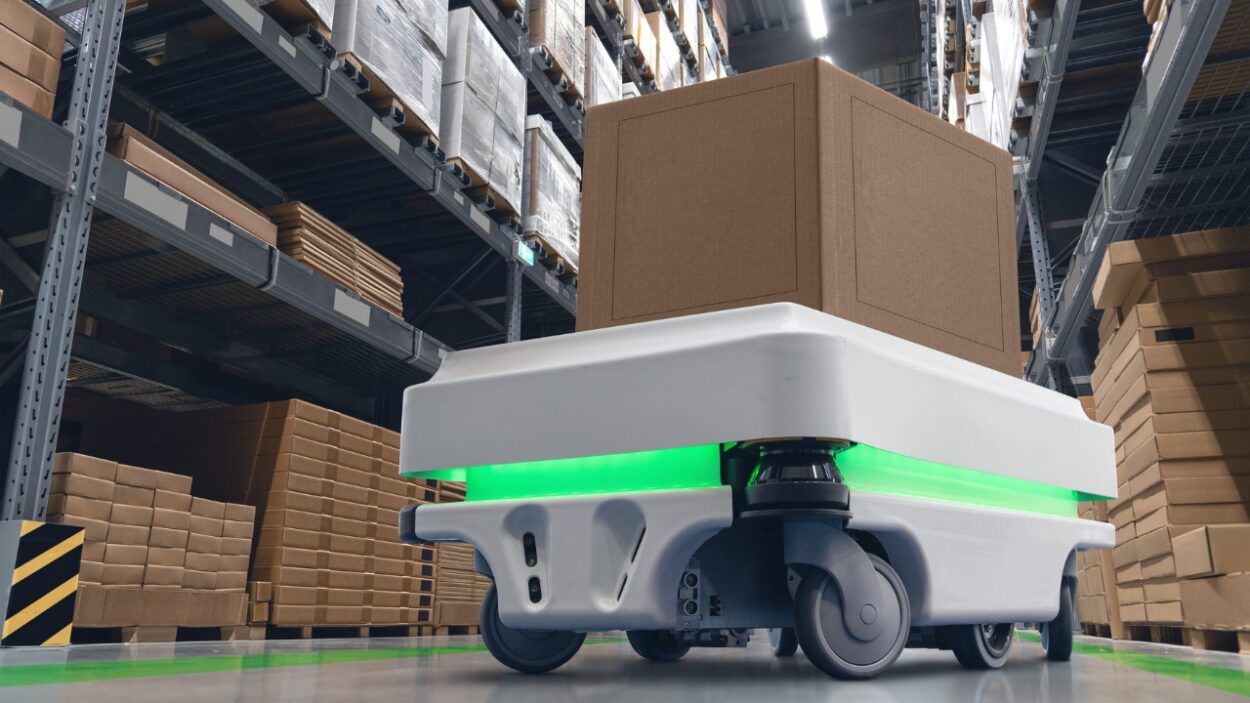
North America’s first-half numbers describe steady expansion rather than a sudden robot-buying frenzy. Spending grew faster than unit volume, industrial demand spread across more sectors, warehouse wages remained elevated, and software integration became a central operational issue.
For warehouse operators, automation is increasingly entering ordinary investment decisions. Managers are asking which movements repeat often enough to automate, how new equipment will connect with existing systems, and whether a project will produce measurable gains in throughput, capacity, or safety.
The 17,995 orders provide a useful snapshot of the wider robotics market. Inside warehouses, the deeper story concerns normalization. Robots are becoming familiar pieces of logistics infrastructure, quietly moving goods through buildings where every unnecessary minute and every extra trip down an aisle carries a cost.