
A yard rarely needs every job done on the same Saturday. Grass may demand attention every week during a spring growth spurt, while a mature shade tree can go years between meaningful pruning sessions.
A good starting rhythm is to mow roughly every 5 to 10 days during active growth, trim lawn edges with every mow or every other mow, shape formal hedges several times during the growing season, inspect trees yearly, and give planting beds light attention every week or two.
Weather, plant species, and growth rate should set the final schedule. A rainy May can double the workload. A hot, dry August may slow it dramatically. The easiest yard to maintain is one managed by visible cues rather than a calendar alone.
A Practical Yard Maintenance Schedule
Area or task
Useful starting frequency
Best cue to watch
Lawn mowing
Every 5 to 10 days during active growth
Grass reaches about 1.5 times target height
String trimming
Every mow or every other mow
Growth becomes noticeable around obstacles
Lawn edging
Every 2 to 4 weeks
Turf creeps over paths or beds
Formal hedges
3 to 5 times per growing season
New growth softens the shape
Informal shrubs
Usually one main annual prune
Flowering cycle, crowding or damaged wood
Young trees
Inspect yearly, prune every few years
Crossing or poorly placed branches
Mature trees
Inspect yearly, prune when needed
Safety, clearance or structural concerns
Flower beds
Quick check every 1 to 2 weeks
Weeds, spent flowers, diseased material
Fallen leaves
Regularly during leaf fall
Leaves begin covering the grass
Patios and paths
Sweep weekly or after storms
Debris, moss, stains, or slippery growth
Regional climate, rainfall, irrigation, and individual plant species can move any job forward or backward.
Mow the Lawn According to Growth
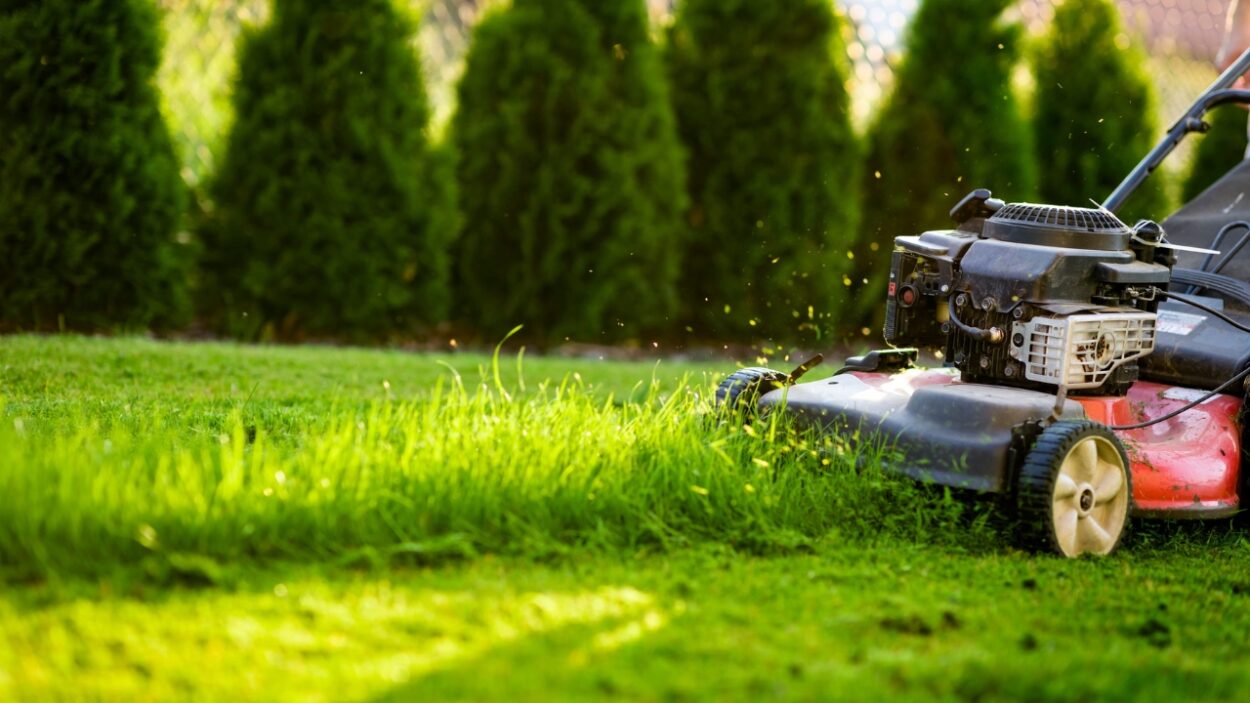
The classic Saturday mow works only when the grass happens to cooperate with a seven-day schedule.
A better approach is the one-third rule. The Illinois Extension mowing guidance recommends removing no more than one-third of the grass blade during one cutting and adjusting frequency according to growth.
Spring conditions can require mowing more than once a week, while dry summer weather may create much longer intervals.
Homeowners who want to reduce the time spent keeping up with frequent cuts can also consider automated yard care systems that handle routine mowing with less hands-on work.
For a lawn maintained at 3 inches, mowing should generally happen around the time grass reaches 4.5 inches. Cornell’s lawn mowing recommendations illustrate how higher mowing heights can lengthen the interval between cuts while leaving enough leaf surface for healthy growth.
One useful detail often surprises homeowners. Illinois Extension reports that grass clippings contain roughly 75 to 80 percent water.
Small clippings left after regular mowing break down readily and return nutrients to the lawn, so bagging every cutting is usually unnecessary when grass is being cut frequently enough.
Trim and Edge When Boundaries Lose Definition
View this post on Instagram
String trimming around fences, mailboxes, beds, and other obstacles usually fits naturally into the mowing routine. For a polished appearance, trim after every mow. In a lower-maintenance yard, every second mowing may be enough.
Edging can usually run on a slower cycle. Cutting a clear boundary along sidewalks, driveways, and planting beds every two to four weeks keeps creeping turf from gradually narrowing paths and swallowing bed lines.
Take extra care around trees. Repeated hits from a string trimmer can damage bark. A properly placed mulch ring reduces trimming work around the trunk while creating a physical buffer from lawn equipment.
Match Shrub Pruning to Flowering Time
A clipped hedge and a flowering lilac need very different treatment.
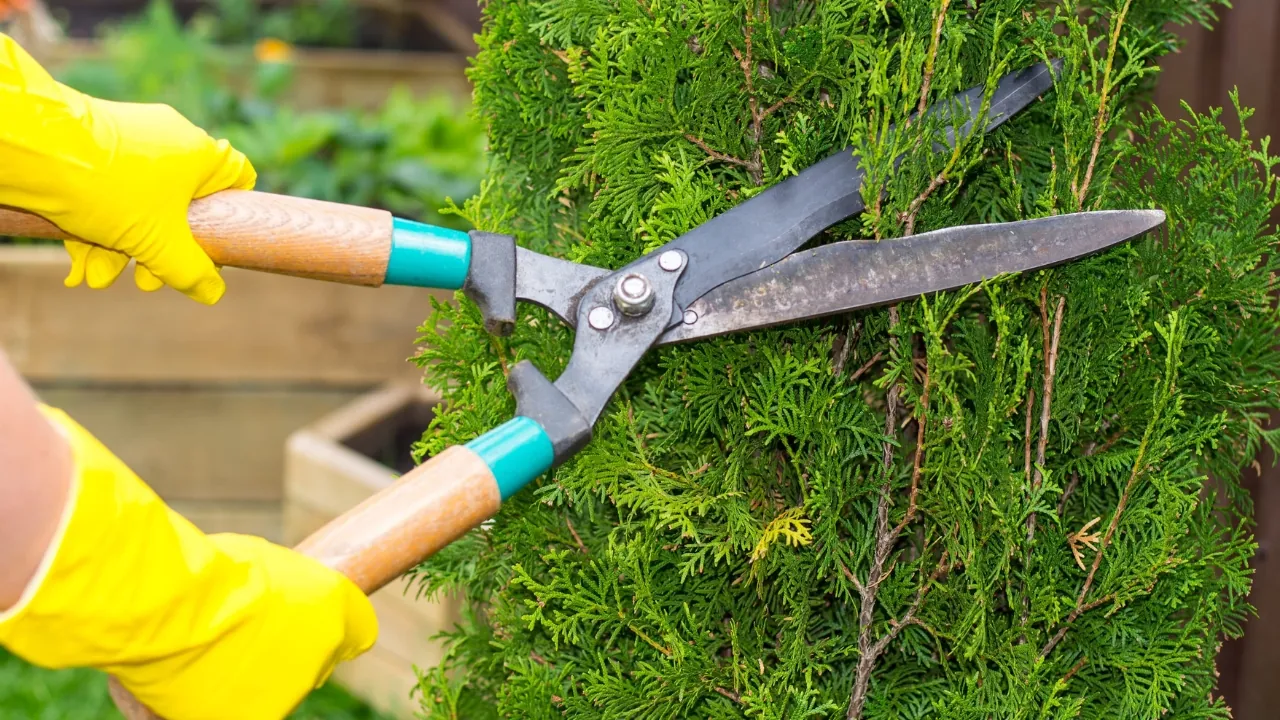
University of Georgia’s hedge pruning guidance notes that formal hedges may require shearing three to five times during the growing season to maintain a defined outline. Informal hedges can retain their natural form and receive selective pruning when branches become crowded, damaged, or oversized.
Flowering shrubs depend heavily on timing. According to Penn State pruning guidance, many spring-flowering shrubs should be pruned soon after flowering because future flower buds develop on older wood.
Lilacs, forsythia, and many azaleas belong in that group. Summer and fall bloomers commonly flower on current-season growth and can often be pruned in late winter or very early spring.
Hydrangeas are a good reminder to identify the plant before reaching for the pruners. Different hydrangea species have different flowering habits, and an unfortunately timed haircut can remove the buds a gardener has been waiting months to see.
Inspect Trees Annually and Prune Selectively
Trees deserve a yearly inspection, especially after strong wind, ice, or storms. Look for dead branches, rubbing limbs, weak attachments, damaged wood, and branches interfering with roofs, driveways, or walkways.
Young trees benefit from periodic structural pruning while their branches remain relatively small. Mature trees usually need less frequent intervention.
Penn State’s mature tree pruning advice explains that established trees with good structure may require pruning only for specific purposes and can sometimes go five to ten years between pruning cycles. Annual inspection remains valuable.
Large limbs, climbing work, and branches near utility lines should be handled by trained tree-care professionals. Early structural corrections are generally simpler than repairing major defects after branches have become large and heavy.
Give Garden Beds Small, Regular Attention
A short walk through planting beds every week or two can prevent a large cleanup later. Pull young weeds before they produce seed, remove diseased material, deadhead flowers where continued blooming is desired, and redistribute mulch where soil has become exposed.
Seasonal cleanup deserves some restraint. Illinois Extension recommends removing plant material affected by disease, since pathogens can survive in old debris.
Healthy stems and leaf litter can provide habitat for insects and other wildlife, allowing parts of a garden to remain standing during winter. Its fall garden cleanup guidance also discusses the value of leaving some habitat in place for pollinators.
A garden therefore does not need to be stripped bare every autumn. Spring can handle part of the cleanup workload.
Manage Fallen Leaves Before Grass Disappears
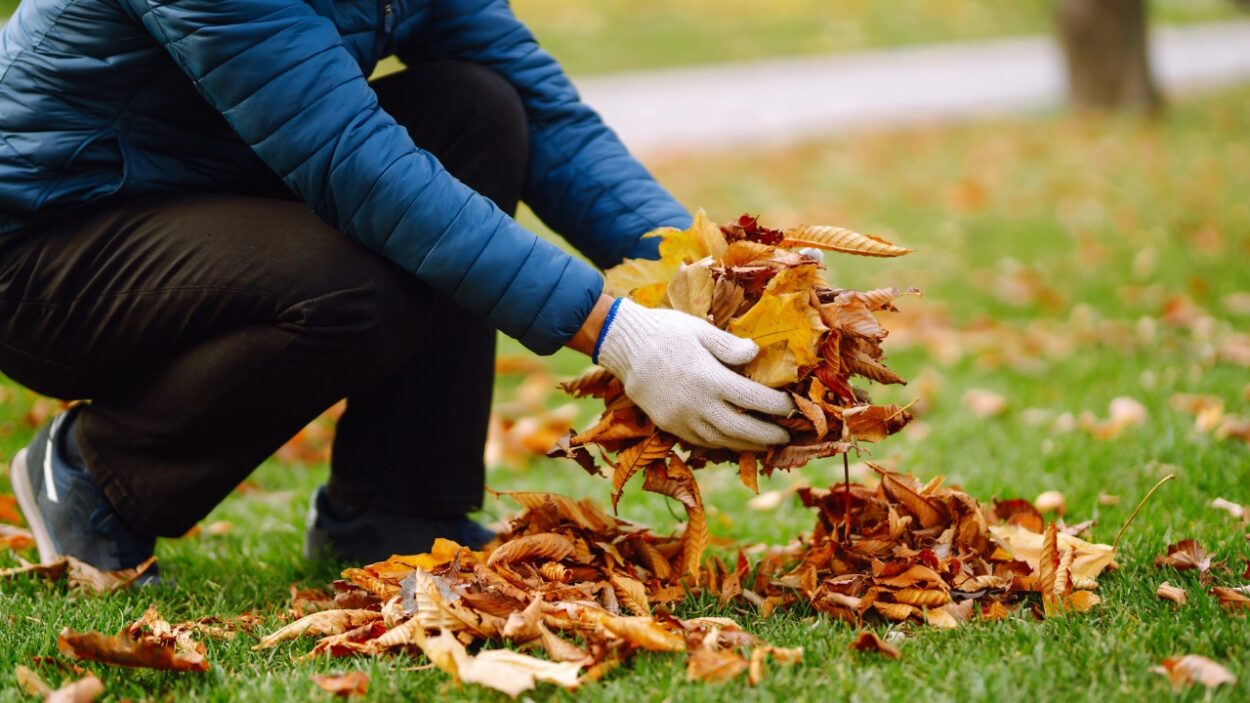
Autumn creates its own maintenance schedule because leaves can accumulate rapidly under mature deciduous trees.
A thin layer of dry leaves can often be chopped with a mower and allowed to fall between grass blades. Iowa State University’s fallen leaf guidance recommends mulching leaves finely enough that little debris remains sitting over the turf.
Heavy coverage needs attention sooner. Thick leaf layers block light and can contribute to damaged or patchy turf. University of Minnesota guidance suggests mulching while roughly half of the lawn remains visible, then collecting excess leaves for compost when coverage becomes too dense.
In heavily wooded yards, leaf management may become a weekly autumn job. Waiting for every tree to finish dropping its leaves usually creates considerably more work.
Clean Patios and Walkways by Condition
Hard surfaces respond well to a simple routine. Sweep patios and paths weekly during periods of frequent use or after storms. Remove weeds from joints when they appear and plan a deeper cleaning once or twice during the main outdoor season.
Shade and moisture can shorten the interval. A damp patio beneath trees may develop moss or algae sooner than an open, sunny walkway. Steps and drainage grates also deserve checks after storms or heavy leaf fall because wet organic debris can create slippery surfaces.
Pressure washing does not need a fixed monthly appointment. Regular sweeping and prompt removal of organic debris can postpone deeper cleaning considerably.
A Good Yard Schedule Follows the Yard
@oh__carolinaaa Teamwork makes the dream work 👩🏽🌾🏡👨🏽🌾♥️ . . . . #couple #Home #yardwork #garden #weekend #gardentok #fyp ♬ Media Naranja – La Arrolladora Banda El Limón De René Camacho
Successful yard maintenance becomes easier when each job has a visible trigger. Grass height determines mowing. Wandering edges signal trimming.
Flowering cycles guide shrub pruning. Tree condition determines when branches need attention. Leaf coverage tells you when the mower, rake, or compost pile should become involved.
A yard managed that way receives care when it actually benefits from it, leaving fewer weekends consumed by unnecessary chores.