
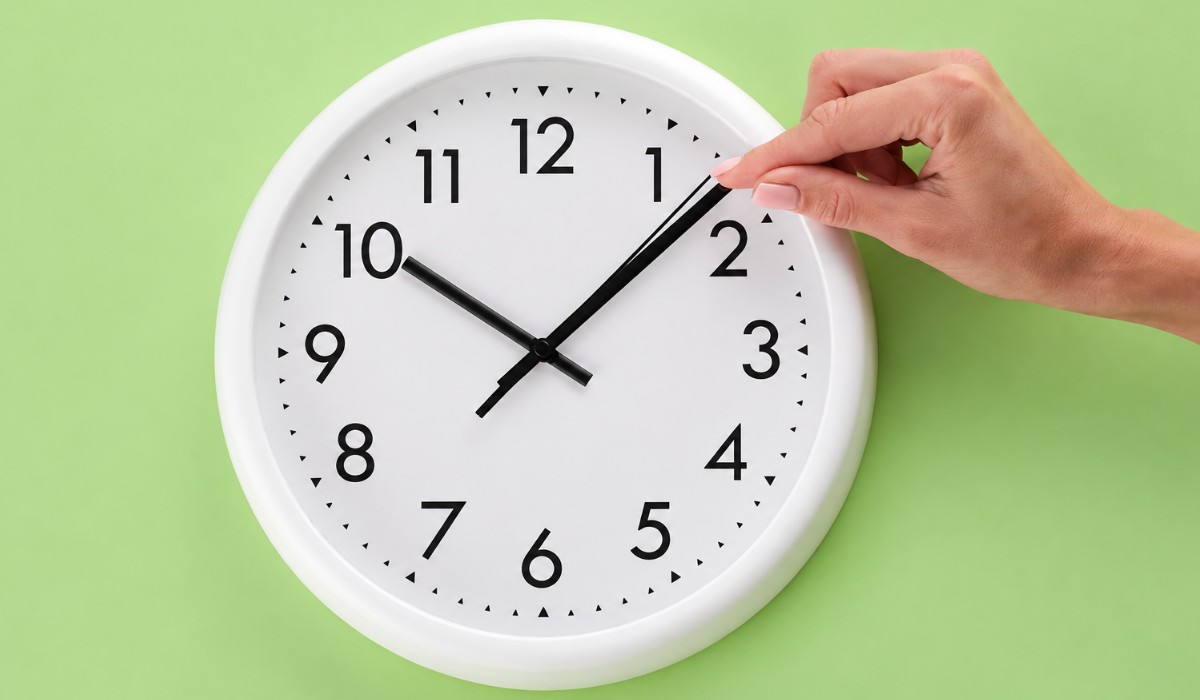
Americans will turn their clocks back one hour on Sunday, November 1, 2026, despite a major vote in Congress to end the twice-yearly changes. The Sunshine Protection Act passed the House of Representatives in July, bringing the country closer to permanent daylight saving time, but the legislation has not become law.
For millions of people, that means another Sunday morning when 2 a.m. becomes 1 a.m. Sunrise will arrive earlier according to the clock, and the evening will get dark an hour sooner. The change is particularly noticeable for people leaving work or school in the late afternoon.
The political situation has changed considerably since the last clock adjustment. The House has now approved a bill to keep daylight saving time throughout the year. The Senate, however, has yet to complete the legislation, leaving the November switch and the next scheduled change in March 2027 in place.
The Sunshine Protection Act Passed the House in July 2026
On July 14, 2026, the House of Representatives voted 308 to 117 in favor of the Sunshine Protection Act. The official House voting record confirms the result, one of the most significant developments in the long-running effort to stop changing clocks every spring and fall.
The legislation, H.R. 139, would establish permanent daylight saving time for most of the United States. Instead of returning to standard time every November, states observing daylight saving time would remain one hour ahead throughout the winter.
The measure reached the Senate on July 15 and was referred to the Committee on Commerce, Science, and Transportation. The latest recorded legislative action does not establish Senate passage or presidential approval.
That leaves a crucial step unfinished. A bill approved by one chamber of Congress does not automatically change federal law, even with a substantial majority behind it.
There is also a separate Senate version, S. 29, introduced by Republican Senator Rick Scott of Florida in January 2025. It attracted bipartisan support, but the Senate proposal remains in committee.
For anyone hoping the November switch would be the last, the House vote provides genuine progress. It does not yet provide a date when clock changes will end.
Change at 2 A.M. on November 1
Daylight saving time officially ends at 2 a.m. local time on Sunday, November 1, 2026. At that moment, clocks return to 1 a.m., repeating the previous hour.
The National Institute of Standards and Technology confirms that the 2026 daylight saving period began March 8 and ends November 1.
Most smartphones, computers and network-connected devices will make the adjustment automatically. Older clocks, certain household appliances and some vehicle displays may require manual changes.
The return to standard time gives people an additional hour on the clock overnight. It also moves sunset an hour earlier than it would appear under daylight saving time on the same date, following the same schedule described in our coverage of the 2025 daylight saving time changes.
In Minneapolis, for example, sunset on November 1 will occur shortly after 5 p.m. By November 15, it will arrive near 4:44 p.m., according to November sunrise and sunset calculations.
Winter afternoons will continue getting darker as daylight hours shorten toward December. The clock change makes that shift particularly noticeable in the first week.
Why the Federal Government Still Controls the Clock
States cannot independently decide to observe permanent daylight saving time under current federal law.
The U.S. Department of Transportation explains that states can exempt themselves from daylight saving time and remain on standard time. They cannot simply keep the advanced summer clock throughout the year.
Arizona, excluding the Navajo Nation, and Hawaii already avoid the twice-yearly changes. Puerto Rico, Guam, American Samoa, the U.S. Virgin Islands and the Northern Mariana Islands also remain on standard time throughout the year.
Other states have approved legislation supporting permanent daylight saving time, but their plans depend on changes to federal law.
A Congressional Research Service report identified 19 states with laws that would implement permanent daylight saving time once Congress permits it. Minnesota is among them, along with Colorado, Florida, Oregon and Washington.
The July 2026 congressional research report also describes proposals that would allow states more flexibility or establish permanent standard time instead.
For Minnesota residents, the state legislation does not cancel the November 1 switch. Federal authorization is still required.
Permanent Daylight Saving Time Would Keep Winter Evenings Brighter
The Sunshine Protection Act would change where daylight falls on the clock, not how many hours of sunlight a city receives.
In Minneapolis, sunset on November 1 is scheduled for 5:01 p.m. under standard time. Had daylight saving time remained in effect, the same sunset would appear near 6:01 p.m.
The trade-off arrives in the morning. Sunrise would also occur an hour later according to the clock. In a northern city during winter, that can mean children heading to school and commuters traveling before sunrise.
The House-approved bill text would advance standard time by one hour and remove the existing seasonal changeover period. Its purpose is to maintain the later clock schedule throughout the year.
Supporters emphasize the extra evening daylight for shopping, recreation and activities after work. Opponents point to darker winter mornings and the consequences for people whose schedules begin early.
Both concerns describe the same shift in daylight. The argument concerns which hours should receive more sunlight, especially during the shortest days of winter.
Sleep Researchers Prefer Permanent Standard Time
Ending clock changes has support from medical researchers, but the choice of permanent time remains disputed.
The American Academy of Sleep Medicine supports eliminating the seasonal switches and adopting permanent standard time. Its position is based on the relationship between morning sunlight and the human sleep cycle.
The Centers for Disease Control and Prevention explains that changes in daylight exposure can disrupt sleep and influence alertness, particularly when clocks move forward in spring.
The spring adjustment has been linked in research to short-term increases in traffic crashes and cardiovascular events. The autumn change creates a different adjustment, with an extra hour on the clock but earlier evening darkness. The traffic concerns are also relevant to ongoing work on freeway and highway safety in Minnesota, where road conditions and driver behavior remain important safety issues.
New national figures also show why sleep health remains a concern. A CDC report published in April 2026 found that 30.5% of American adults slept fewer than seven hours on an average day in 2024.
The sleep findings do not mean changing clocks caused that widespread shortage. They do show how many adults already begin from an insufficient amount of rest.
Researchers favoring standard time argue that earlier morning light helps keep the internal body clock aligned with daily schedules. Permanent daylight saving time would preserve brighter evenings at the cost of later winter sunrises.
America Tried Permanent Daylight Saving Time Before
The idea is not new. Congress introduced year-round daylight saving time in January 1974 during the energy crisis, hoping to reduce electricity consumption.
The experiment quickly became controversial, particularly because children were traveling to school in darkness during winter mornings.
The American Academy of Sleep Medicine notes that national support for permanent daylight saving time fell from 79% in December 1973 to 42% by February 1974. Congress eventually restored the winter return to standard time later that year.
The historical daylight saving fact sheet describes the experiment and the medical case for keeping standard time throughout the year.
The experience remains relevant because the same issue would return under the Sunshine Protection Act. Evening daylight is popular, but an extra hour of morning darkness becomes more noticeable when winter arrives.
Will Americans Change Their Clocks Again in March 2027?
Under current law, yes. Daylight saving time is scheduled to begin again on Sunday, March 14, 2027, at 2 a.m. local time.
The federal daylight saving statute establishes the second Sunday in March and the first Sunday in November as the annual transition dates for areas observing the system.
Congress could still change the law before March. However, the July House vote alone does not guarantee that the 2027 spring adjustment will be canceled.
For now, the next confirmed event is the November 1 return to standard time. Residents of Minnesota and most other states should expect darker late afternoons, earlier sunrises and another scheduled clock change in March unless Congress completes a new law.